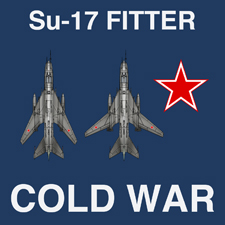
Su-17 Fitter – PDF
$2.45
The Sukhoi Su-17 “Fitter” was a Soviet supersonic variable-sweep fighter-bomber developed from the earlier Su-7. Entering service in 1970, the Su-17 combined high-speed performance with improved low-speed handling, increased operational flexibility, and a substantial ground-attack capability. Serving extensively with Soviet tactical aviation, the Fitter participated in the Soviet-Afghan War and remained in service through the final decades of the Cold War. Export derivatives, designated Su-20 and Su-22, also saw combat in numerous Middle Eastern, African, and other regional conflicts.
| Title | Range | Discount |
|---|---|---|
| Cold War Aircraft - 10% Off | 5 - 9 | 10% |
| Cold War Aircraft - 15% Off | 10 - 19 | 15% |
| Cold War Aircraft - 20% Off | 20 + | 20% |
The Sukhoi Su-17 “Fitter” was developed during the 1960s as an improved successor to the Soviet Union’s Su-7 fighter-bomber. Although the Su-7 offered excellent high-speed performance and a rugged ground-attack platform, its high takeoff and landing speeds and limited operational range restricted its effectiveness. The Sukhoi design bureau addressed these shortcomings by developing a variable-sweep wing arrangement in which the outer wing panels could move between swept and extended positions while the inner wing sections remained fixed. The resulting Su-17 retained the basic fuselage and single-engine configuration of the Su-7 while providing improved takeoff and landing characteristics, greater operational flexibility, and enhanced ground-attack capabilities. The aircraft entered Soviet service in 1970.
The Su-17 became an important component of Soviet Frontal Aviation (VVS), serving primarily as a tactical fighter-bomber and ground-attack aircraft. Throughout its development, successive versions introduced more powerful engines, improved navigation and targeting systems, expanded weapons capabilities, and increasingly sophisticated avionics. The aircraft could carry a wide variety of conventional bombs, rockets, cannon armament, and guided air-to-surface weapons. Later variants, including the Su-17M3 and Su-17M4, incorporated significant improvements in attack capability and operational effectiveness. Export versions were designated Su-20 and Su-22, with the latter becoming particularly widespread among Soviet-aligned nations.
The Su-17 saw extensive combat during the Soviet-Afghan War (1979–1989), where Soviet fighter-bomber units employed the aircraft in bombing, close air support, and interdiction missions against Afghan resistance forces. Operating from airfields in Afghanistan and neighboring Soviet territory, Su-17s conducted attacks against fortified positions, supply routes, and suspected insurgent concentrations. The introduction of increasingly effective portable surface-to-air missiles made low-altitude operations hazardous, encouraging changes in attack tactics and the use of countermeasures. The aircraft’s rugged construction and substantial weapons capacity made it a valuable strike platform despite the challenges of operating in Afghanistan’s mountainous terrain.
Export members of the Fitter family participated in numerous additional conflicts. Egyptian Su-20s saw combat during the 1973 Yom Kippur War, while Syrian Su-20 and Su-22 aircraft operated during conflicts with Israel, including the 1982 Lebanon War. Iraqi Su-22s were employed extensively during the Iran-Iraq War (1980–1988) and were also used during the 1991 Gulf War. Libyan Su-22s participated in regional confrontations, including the 1981 Gulf of Sidra incident, when two Libyan aircraft were shot down by U.S. Navy F-14 Tomcats. Following the end of the Cold War, Su-17 and Su-22 variants continued serving with several nations, demonstrating the longevity of the design. The NATO-designated “Fitter” family became one of the Soviet Union’s most widely employed variable-sweep combat aircraft.
Service Branch: Soviet Air Forces (VVS), Frontal Aviation; Russian Air Force; numerous foreign air forces operating Su-20 and Su-22 variants
Soviet Service: 1970–1991
Russian Service: 1991–1998 (withdrawn from regular service)
Number Built: Approximately 2,870 Su-17, Su-20, and Su-22 aircraft combined
What’s Included:
For both versions of the aircraft
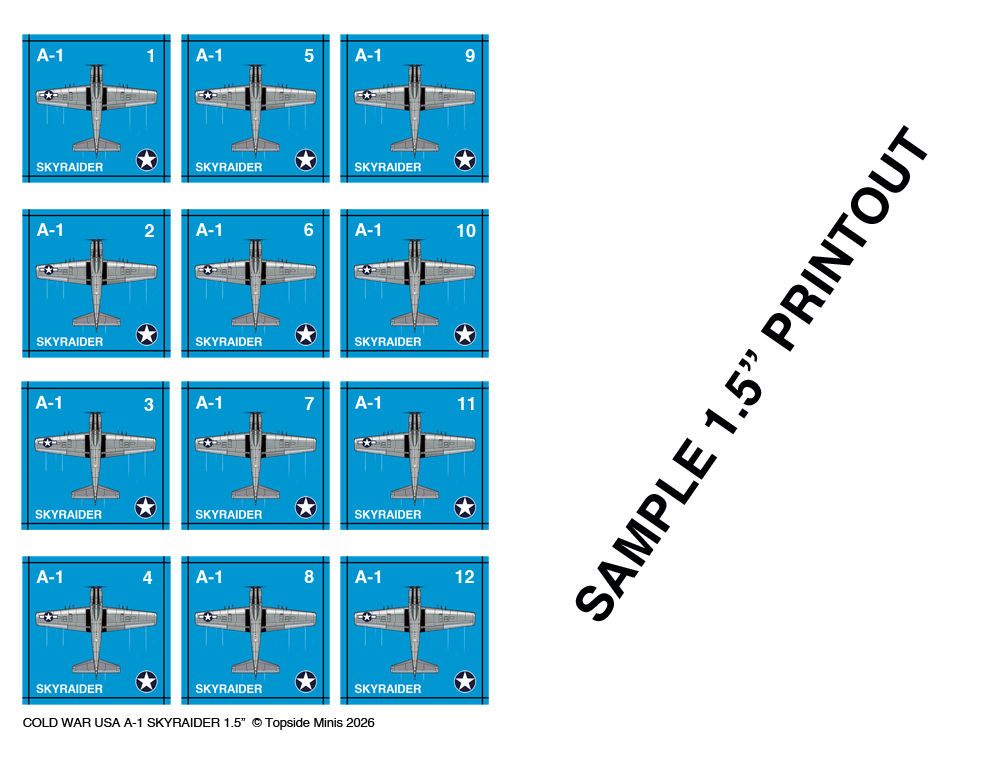
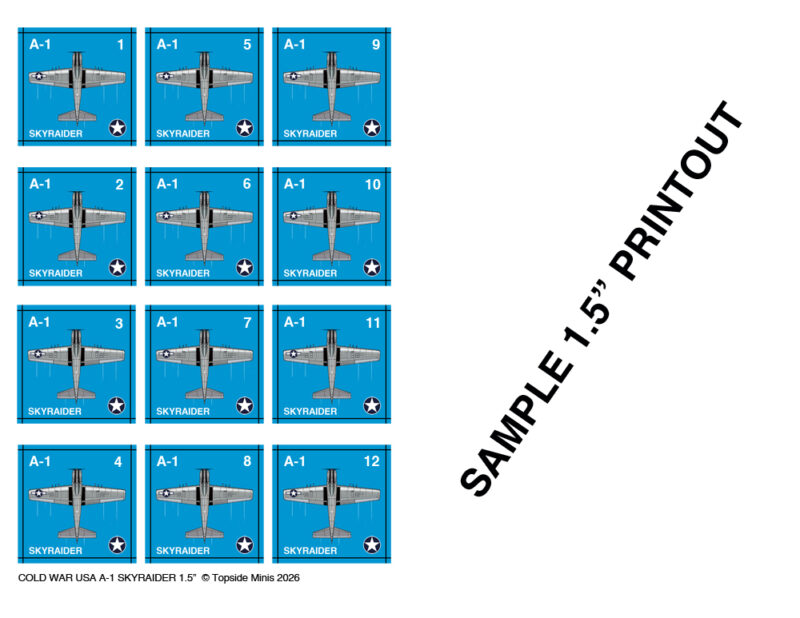
- 12 1.5” square counter images
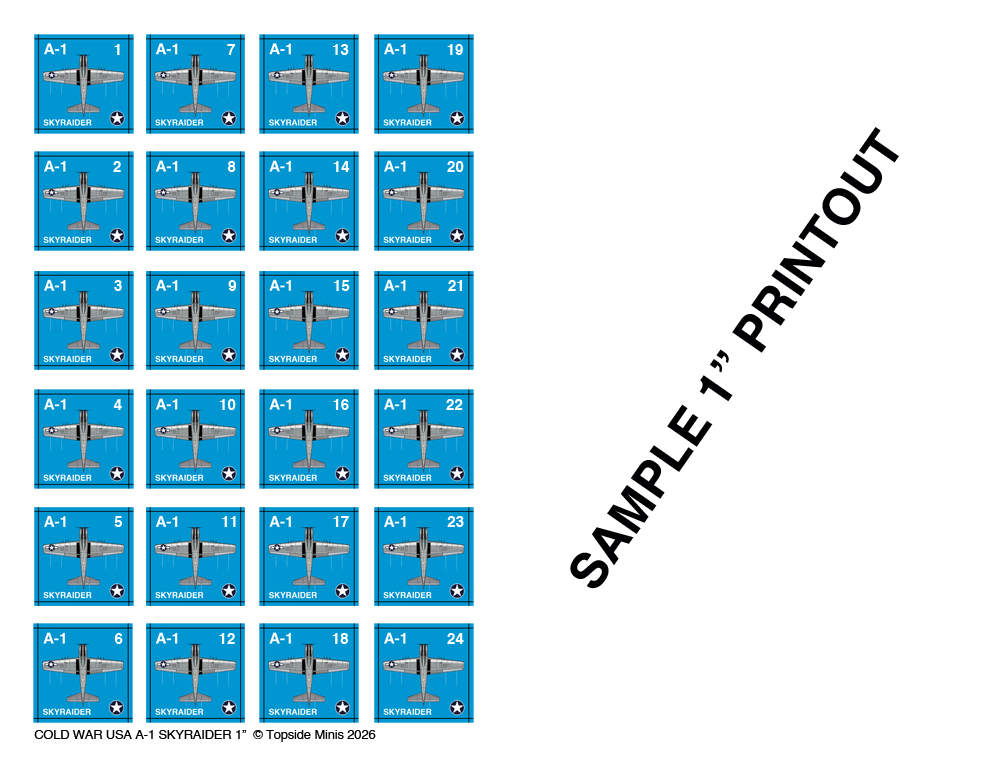
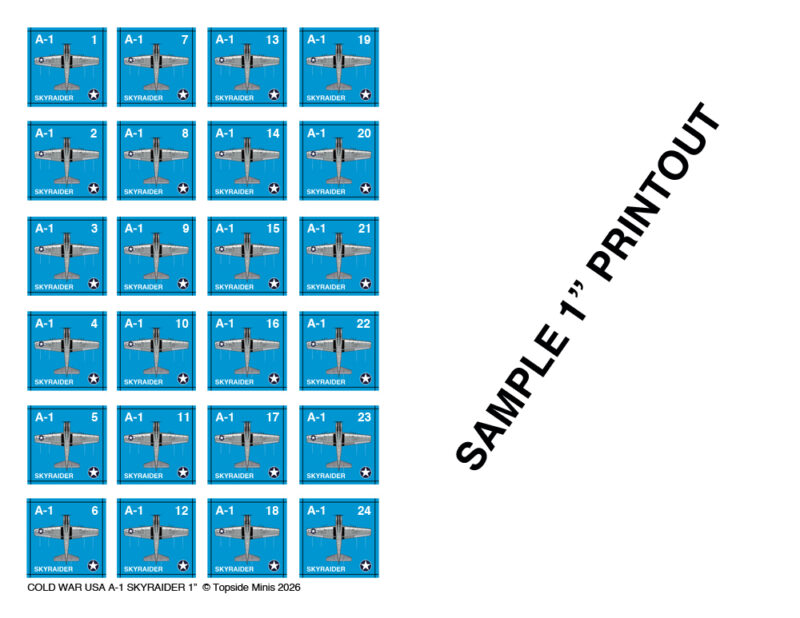
- 24 1” square counter images
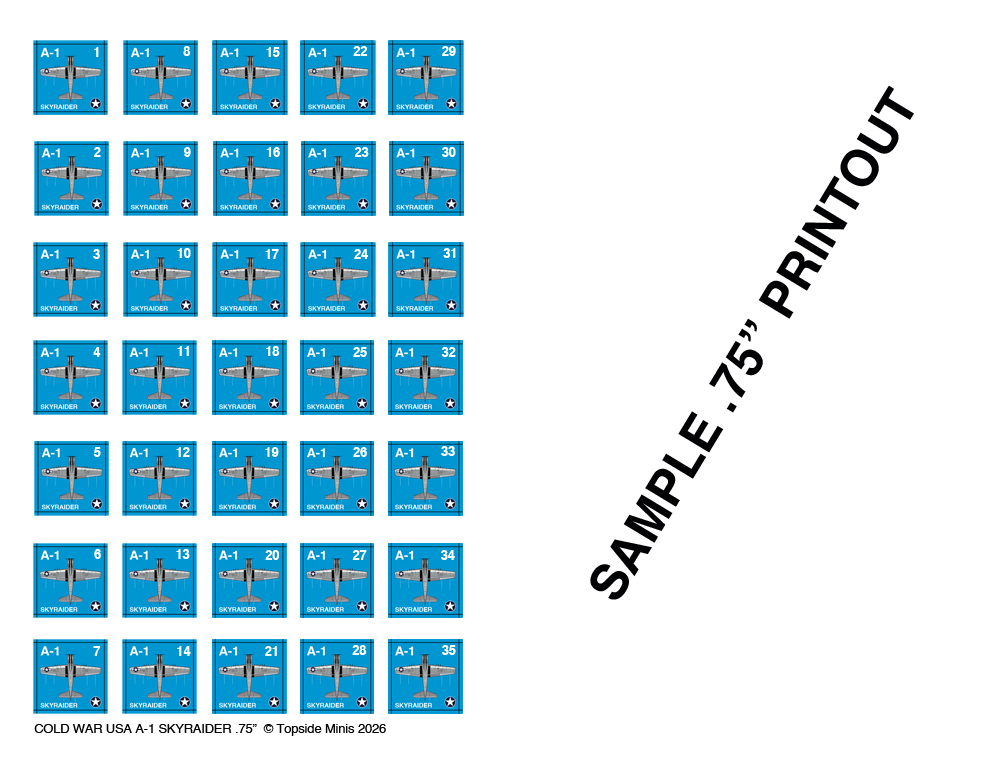
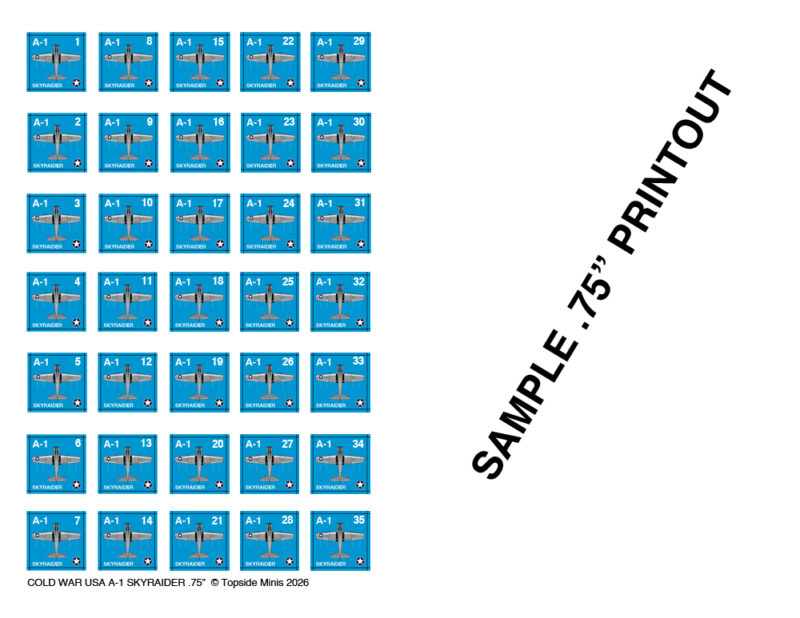
- 35 .75” square counter images
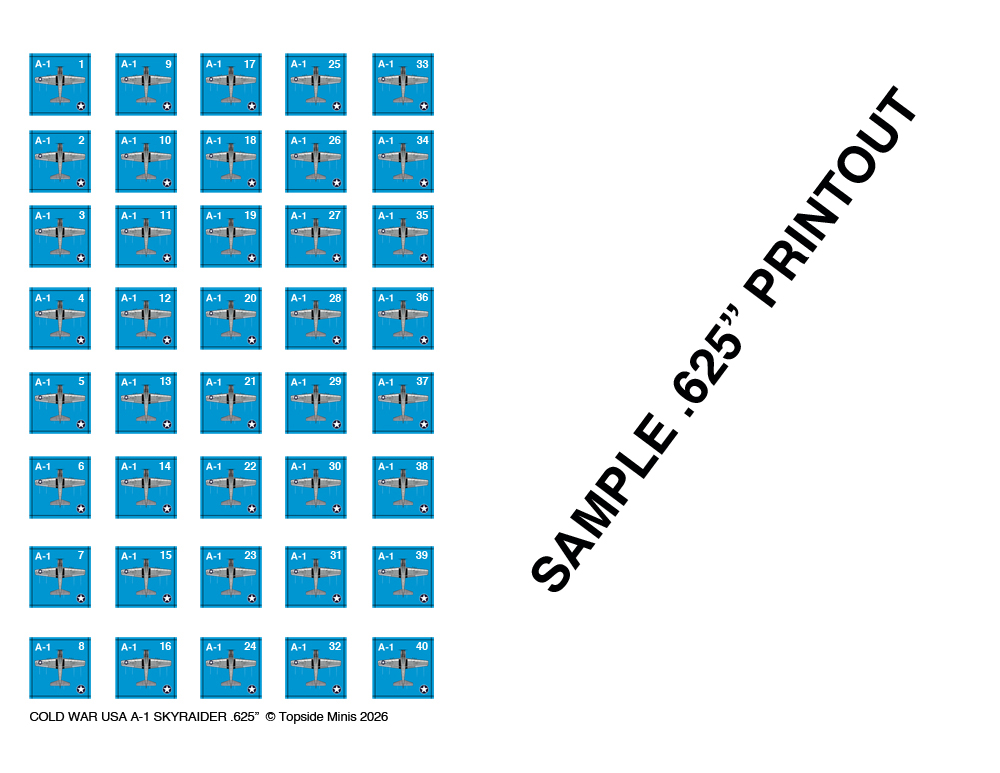
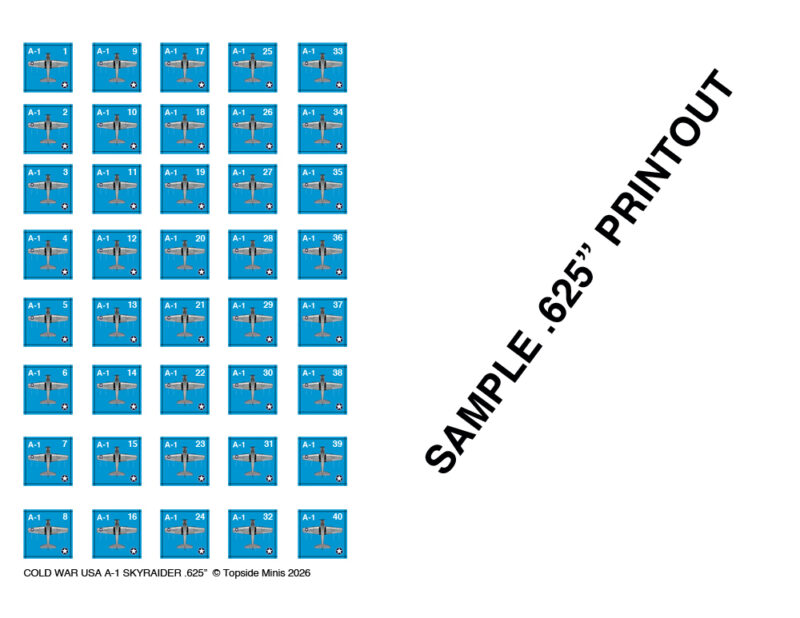
- 40 .625” square counter images
- Numbered Images to assist with game organization and tracking
- Printable PDF format for personal gaming use
Each image size is contained on a ½ sheet.
- Enables users to save paper and print 2 types of aircraft on the same page.
- Print one set of aircraft images then reverse the page in the printer and print a second type of your choice on the same page.
| Weight | N/A |
|---|---|
| Paper Size | A4 210 × 297 mm, Letter 8.5 x 11 |
Related products
Cold War Aircraft

Cold War Aircraft
Cold War Aircraft
Cold War Aircraft
Cold War Aircraft
Cold War Aircraft
Cold War Aircraft


Cold War Era