
Su-15 Flagon – PDF
$1.95
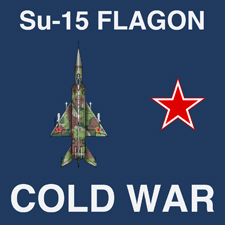
The Sukhoi Su-15 “Flagon” was a Soviet twin-engine supersonic interceptor developed to defend Soviet airspace against strategic bombers and high-altitude reconnaissance aircraft. Entering service during the 1960s, the Su-15 became one of the principal fighters of the Soviet Air Defense Forces throughout the Cold War. Equipped with radar and guided air-to-air missiles, the Flagon participated in several notable air defense incidents, including the interceptions of civilian airliners in 1978 and 1983.
| Title | Range | Discount |
|---|---|---|
| Cold War Aircraft - 10% Off | 5 - 9 | 10% |
| Cold War Aircraft - 15% Off | 10 - 19 | 15% |
| Cold War Aircraft - 20% Off | 20 + | 20% |
The Sukhoi Su-15 “Flagon” was developed during the early 1960s to provide the Soviet Union with a more capable supersonic interceptor than the earlier Su-9 and Su-11 Fishpot designs. Designed by the Sukhoi bureau, the aircraft featured two powerful turbojet engines, side-mounted air intakes, and advanced radar and missile systems. Unlike the single-engine Fishpot interceptors, the Su-15 incorporated a substantially revised configuration intended to improve speed, reliability, and interception performance. Entering operational service in 1967, the Flagon became one of the principal aircraft responsible for protecting Soviet airspace during the height of the Cold War.
The Su-15 served exclusively with the Soviet Air Defense Forces (PVO), operating as part of the Soviet Union’s extensive network of ground-controlled interception systems, radar stations, and surface-to-air missile defenses. Its primary mission was to intercept American strategic bombers, reconnaissance aircraft, and other potential intruders approaching Soviet territory. Early versions featured distinctive swept wings, while later Su-15TM variants incorporated modified double-delta wings, improved radar, and more capable air-to-air missiles. These improvements helped the Flagon remain an effective interceptor as Western aircraft and electronic countermeasures became increasingly sophisticated.
Although the Su-15 was not deployed in conventional overseas combat theaters, it participated in several significant Cold War air defense incidents. In April 1978, a Soviet Su-15 intercepted Korean Air Lines Flight 902, a civilian Boeing 707 that had strayed into Soviet airspace near the Kola Peninsula. The interceptor fired missiles at the aircraft, damaging it and forcing an emergency landing on a frozen lake. Two passengers were killed. In September 1983, a Soviet Su-15TM shot down Korean Air Lines Flight 007, a Boeing 747 that had entered restricted Soviet airspace near Sakhalin Island. All 269 passengers and crew were killed. The incident became one of the most serious international crises of the late Cold War and highlighted the dangers associated with the Soviet air defense system’s handling of unidentified aircraft.
The Su-15 remained an important Soviet interceptor throughout the 1970s and 1980s, gradually being supplemented and replaced by more advanced aircraft such as the MiG-25 Foxbat and MiG-31 Foxhound. Following the dissolution of the Soviet Union, surviving Su-15s continued serving for a limited period, particularly with the Ukrainian Air Force, before their eventual retirement. Although never exported or used extensively in conventional air combat, the NATO-designated “Flagon” became one of the most recognizable Soviet interceptors of the Cold War. Its long service life, distinctive design, and involvement in major international incidents established its place in the history of Soviet military aviation.
Service Branch: Soviet Air Defense Forces (PVO); Ukrainian Air Force
Soviet Service: 1967–1991
Post-Soviet Service: 1991–1996 (Ukraine)
Number Built: Approximately 1,290
What’s Included:
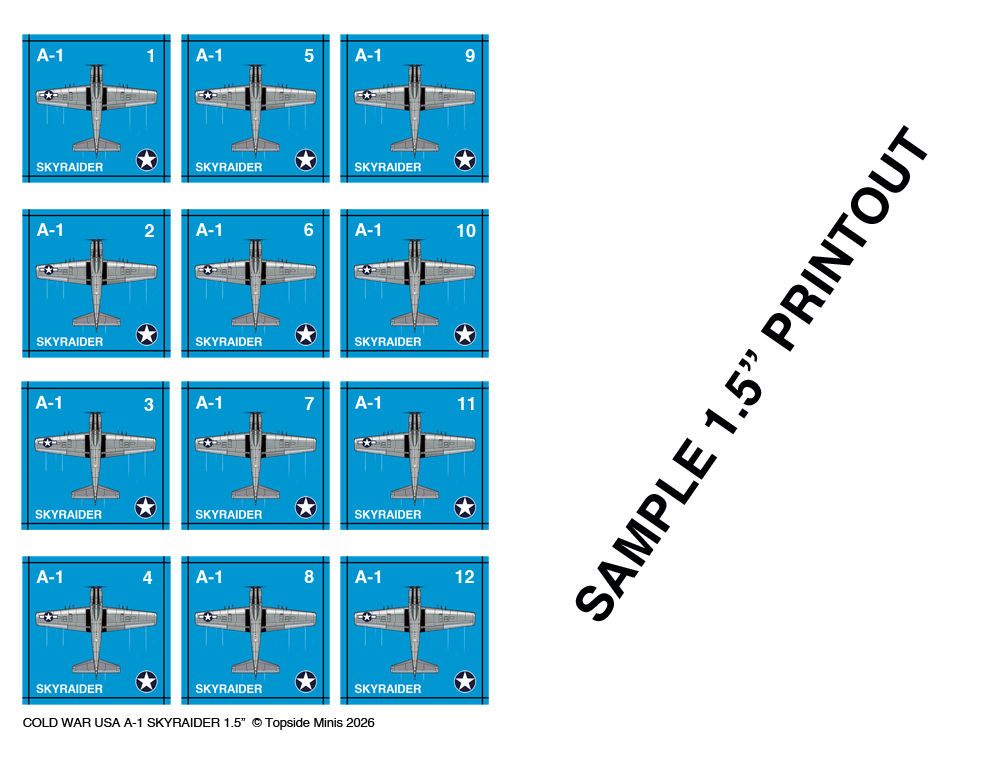
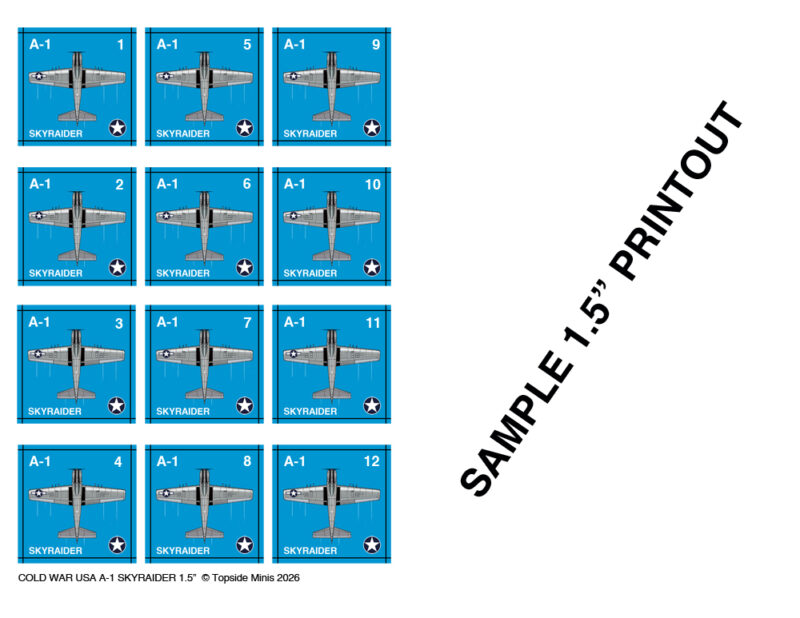
- 12 1.5” square counter images
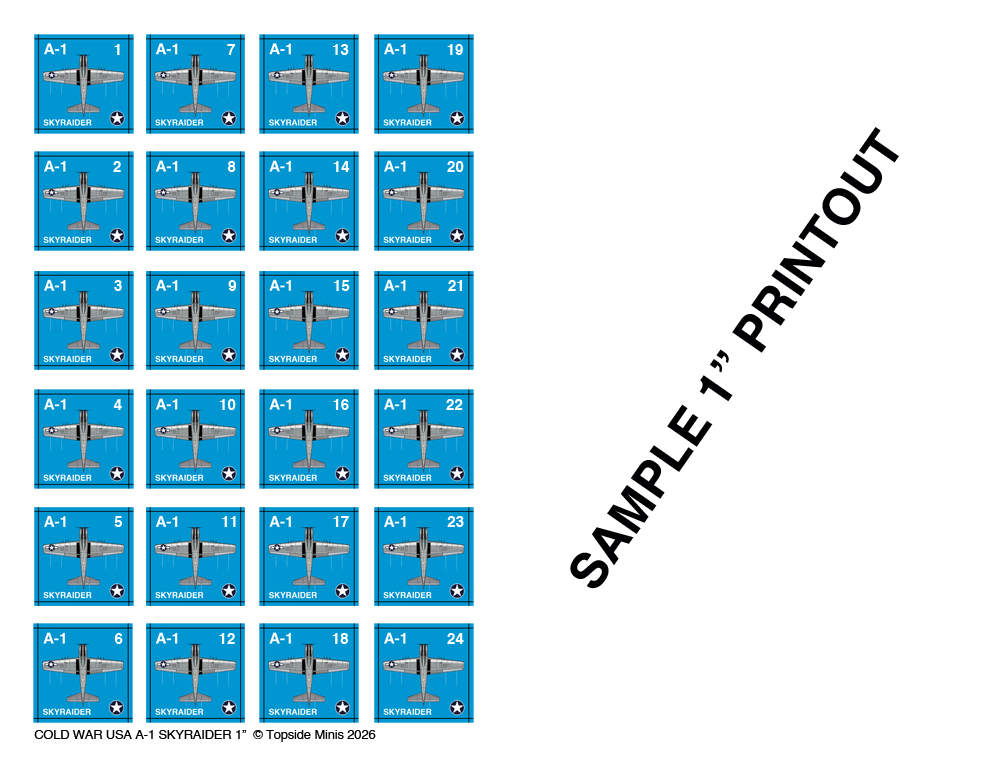
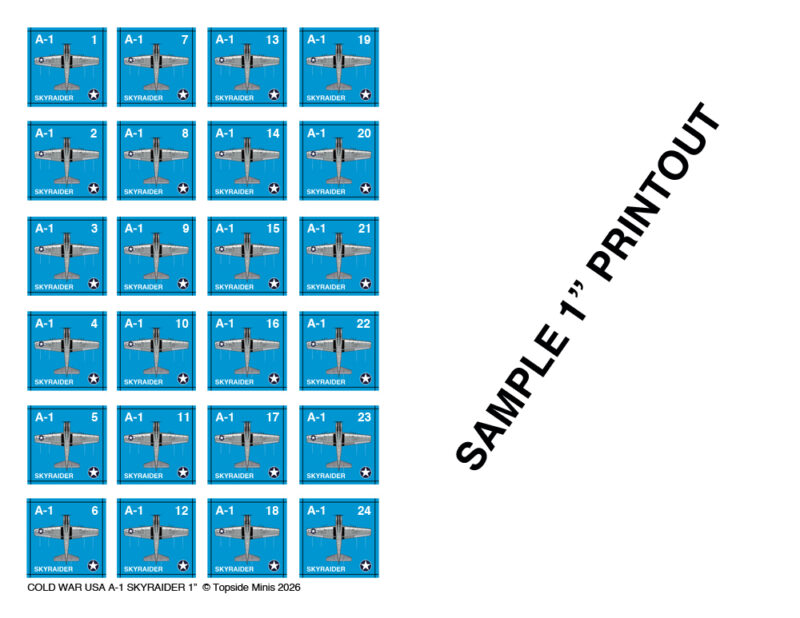
- 24 1” square counter images
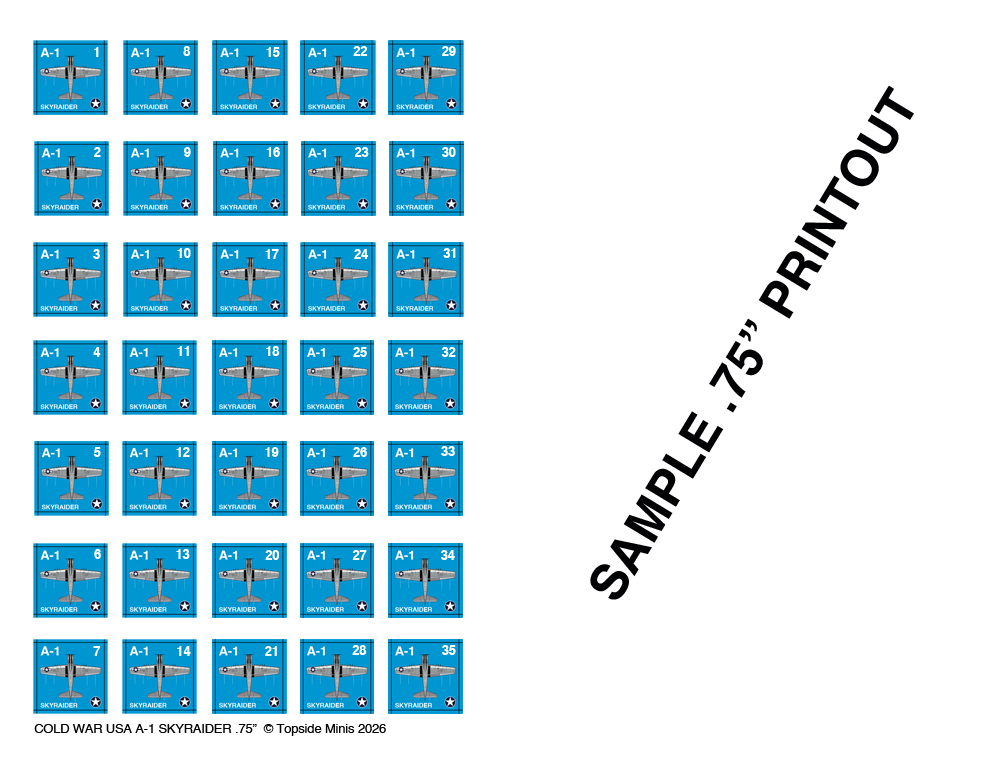
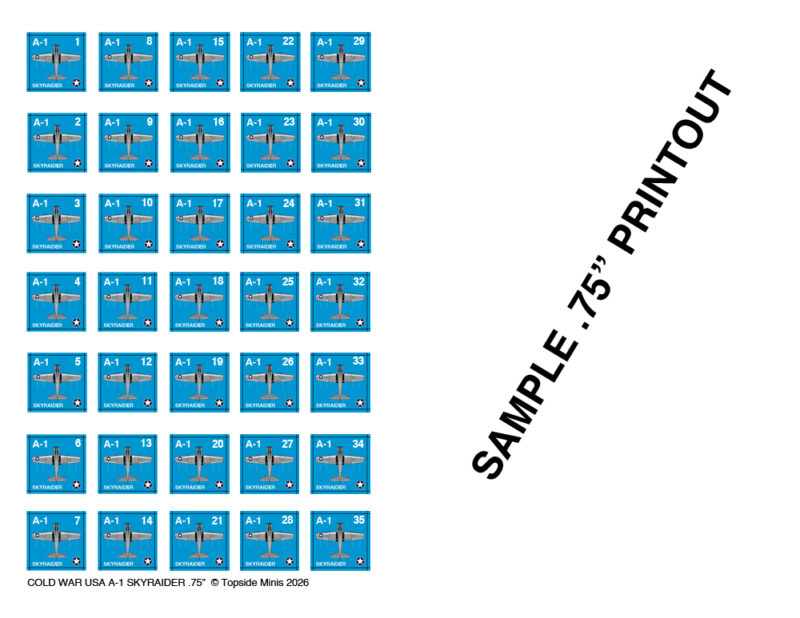
- 35 .75” square counter images
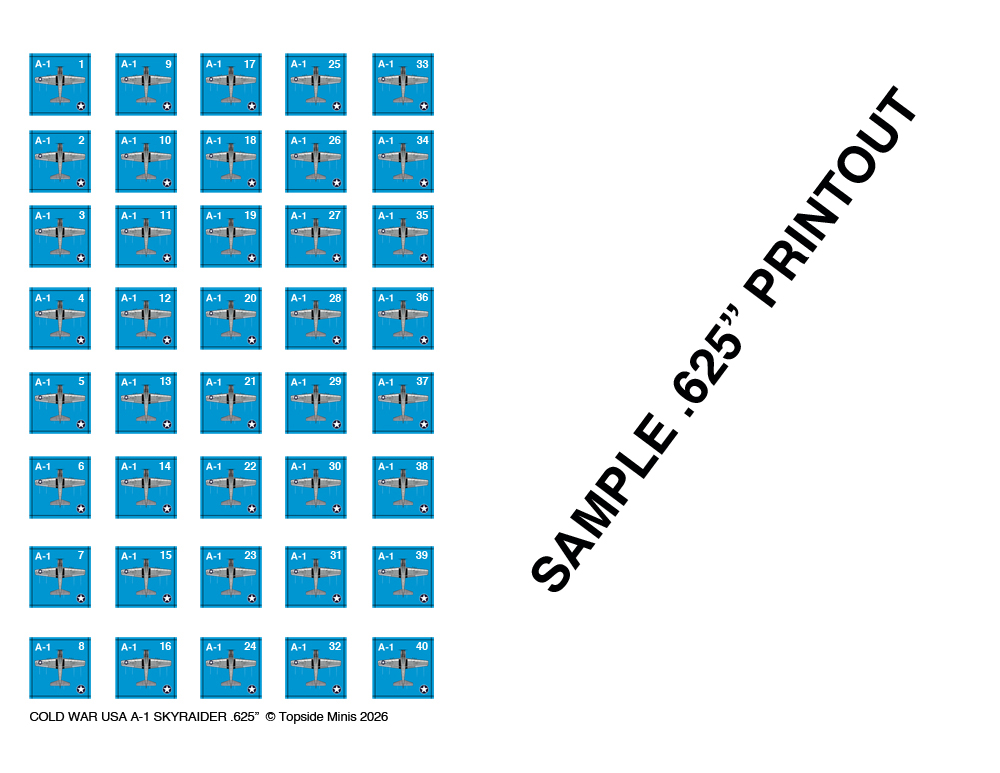
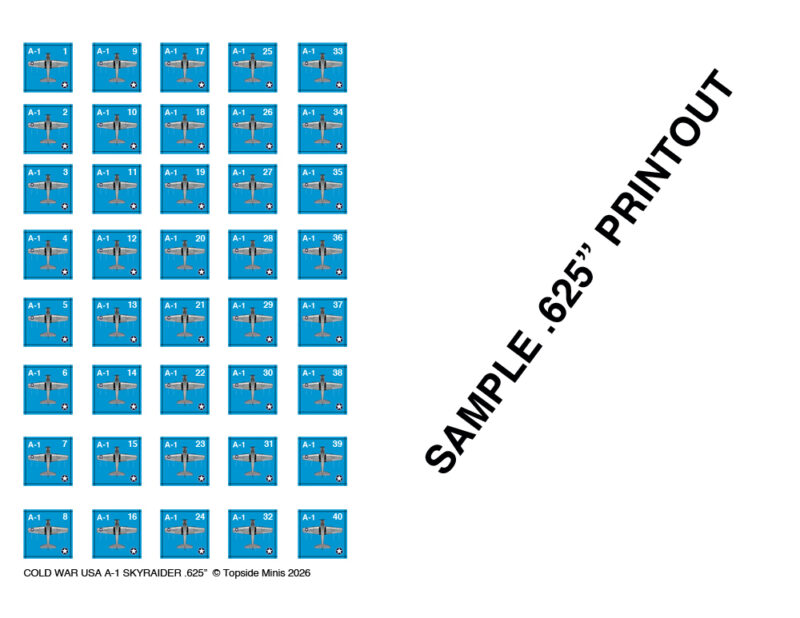
- 40 .625” square counter images
- Numbered Images to assist with game organization and tracking
- Printable PDF format for personal gaming use
Each image size is contained on a ½ sheet.
- Enables users to save paper and print 2 types of aircraft on the same page.
- Print one set of aircraft images then reverse the page in the printer and print a second type of your choice on the same page.
| Weight | N/A |
|---|---|
| Paper Size | A4 210 × 297 mm, Letter 8.5 x 11 |
Related products
Cold War Aircraft
Cold War Aircraft
Cold War Aircraft
Cold War Era
Cold War Aircraft
Cold War Aircraft

Cold War Aircraft
Cold War Aircraft