
Su-24 Fencer – PDF
$2.45
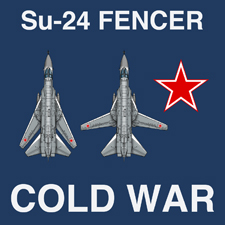
The Sukhoi Su-24 “Fencer” is a Soviet twin-engine, variable-sweep-wing tactical bomber developed for high-speed, low-altitude penetration and precision strikes against heavily defended targets. Entering operational service in 1975, the Su-24 became one of the Soviet Union’s principal all-weather strike aircraft during the Cold War. Equipped with sophisticated navigation and attack systems, the Fencer was designed to deliver conventional and nuclear weapons against strategic and tactical targets. The aircraft has subsequently participated in numerous conflicts, including the Soviet-Afghan War, Chechen Wars, Syrian Civil War, and Russo-Ukrainian War.
| Title | Range | Discount |
|---|---|---|
| Cold War Aircraft - 10% Off | 5 - 9 | 10% |
| Cold War Aircraft - 15% Off | 10 - 19 | 15% |
| Cold War Aircraft - 20% Off | 20 + | 20% |
The Sukhoi Su-24 “Fencer” was developed during the 1960s to provide the Soviet Union with a modern, all-weather tactical bomber capable of penetrating heavily defended enemy airspace at high speed and low altitude. Designed by the Sukhoi bureau as a replacement for older strike aircraft such as the Yakovlev Yak-28, the Su-24 incorporated a variable-sweep wing, two powerful turbojet engines, and a side-by-side cockpit arrangement for its pilot and navigator. Its configuration reflected the Soviet requirement for an aircraft capable of conducting deep interdiction missions against NATO airfields, command centers, transportation networks, and other high-value targets. Following an extended development and testing program, the Su-24 entered operational service in 1975.
The Su-24 became a major component of Soviet Frontal Aviation (VVS), providing a substantial improvement in all-weather strike capability over earlier Soviet fighter-bombers. Its advanced navigation and attack system, known as the Puma, combined terrain-following radar, navigation equipment, and computerized weapons delivery systems to support operations in poor visibility and adverse weather. The aircraft could carry a wide variety of conventional bombs, guided missiles, rockets, and tactical nuclear weapons. Later versions, particularly the Su-24M “Fencer-D”, introduced improved avionics, precision-guided weapons capability, and aerial refueling equipment, greatly expanding the aircraft’s operational effectiveness.
The Su-24’s combat history began during the final years of the Soviet-Afghan War (1979–1989), when Soviet aircraft conducted bombing operations against Afghan resistance positions and supply routes. Following the dissolution of the Soviet Union, Russian Su-24s participated in the First and Second Chechen Wars, conducting strikes against military positions, infrastructure, and suspected insurgent concentrations. The aircraft also saw action during the 2008 Russo-Georgian War. In 2015, Russian Su-24Ms were deployed to Syria, where they conducted extensive bombing operations during the Syrian Civil War. One Russian Su-24M was shot down by a Turkish F-16 in November 2015 following a disputed airspace violation near the Syrian-Turkish border, creating a major diplomatic confrontation between the two countries.
The Su-24 has also played a significant role in the Russo-Ukrainian War, with both Russian and Ukrainian forces operating variants of the aircraft. Ukrainian Su-24M bombers have been employed in strike missions, including the delivery of Western-supplied Storm Shadow and SCALP-EG cruise missiles against Russian military targets. Russian Su-24 variants have conducted bombing and reconnaissance operations, although both sides have suffered aircraft losses. Beyond Soviet and post-Soviet service, the Fencer was exported to several countries, including Algeria, Iraq, Libya, and Syria. Despite its Cold War origins, the Su-24 remains an important example of Soviet tactical bomber design, combining substantial weapons capacity, long-range strike capability, and variable-sweep-wing technology in an aircraft intended to operate in heavily contested airspace.
Service Branch: Soviet Air Forces (VVS); Soviet Naval Aviation; Russian Aerospace Forces; Ukrainian Air Force; various foreign air forces
Soviet Service: 1975–1991
Post-Soviet Service: 1991–present (various operators)
Number Built: Approximately 1,400 aircraft, including bomber and reconnaissance variants
What’s Included:
For both versions of the aircraft
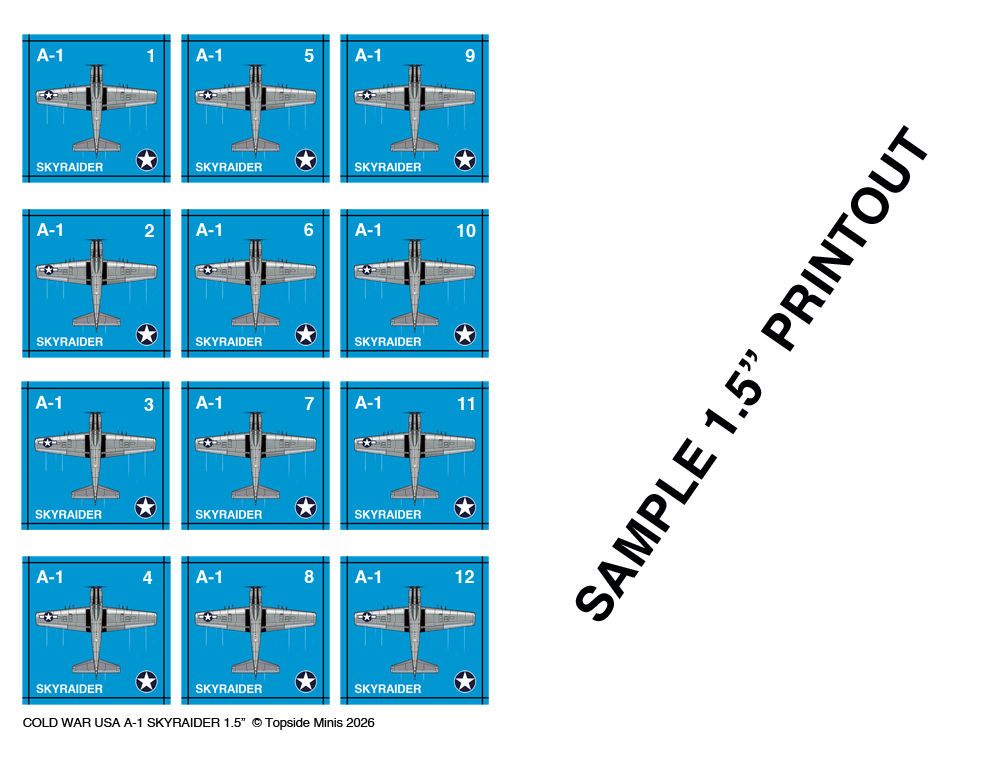
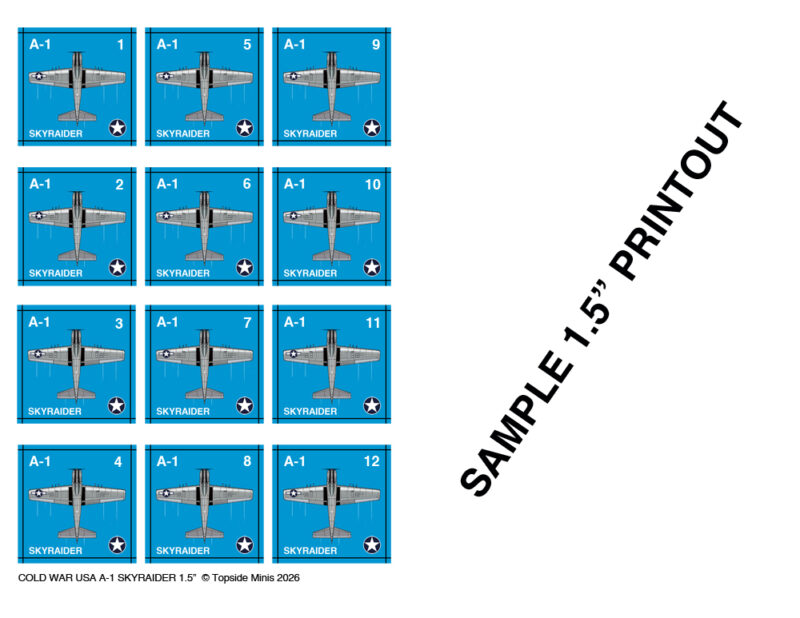
- 12 1.5” square counter images
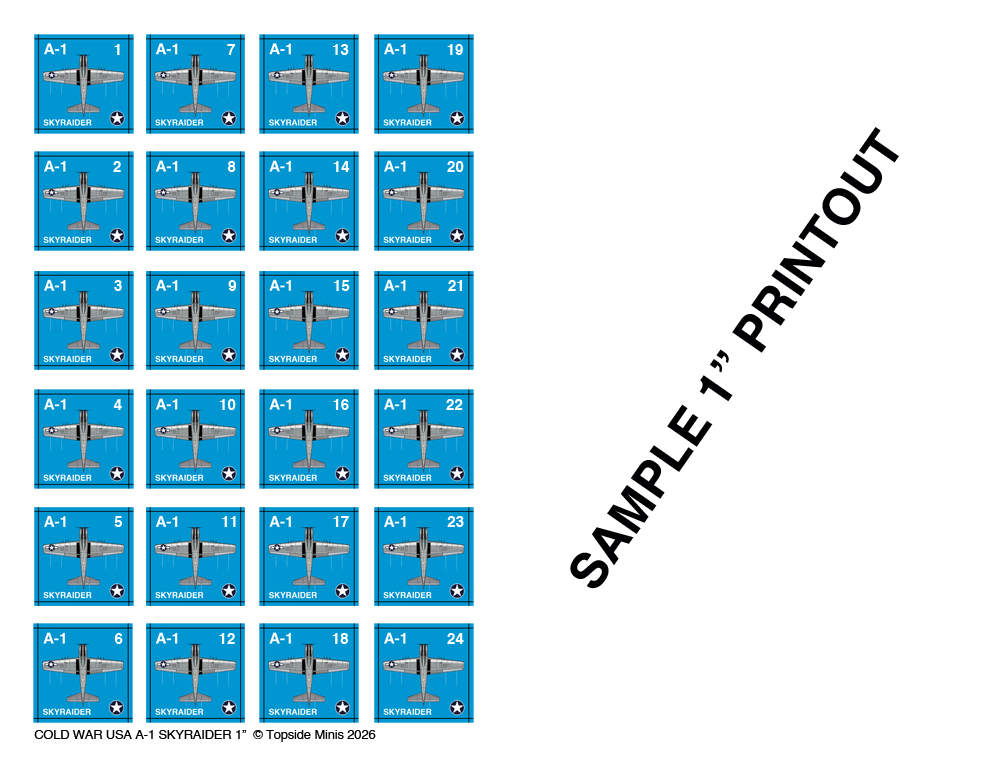
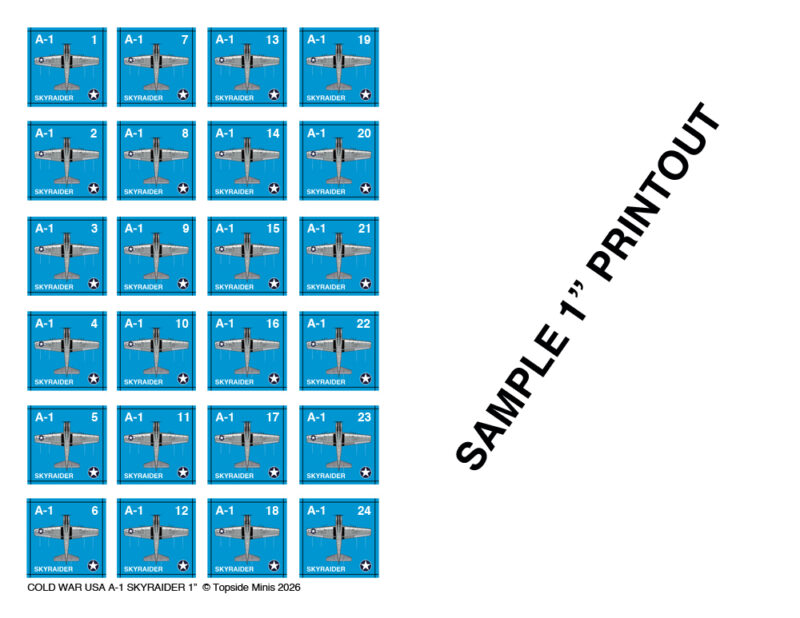
- 24 1” square counter images
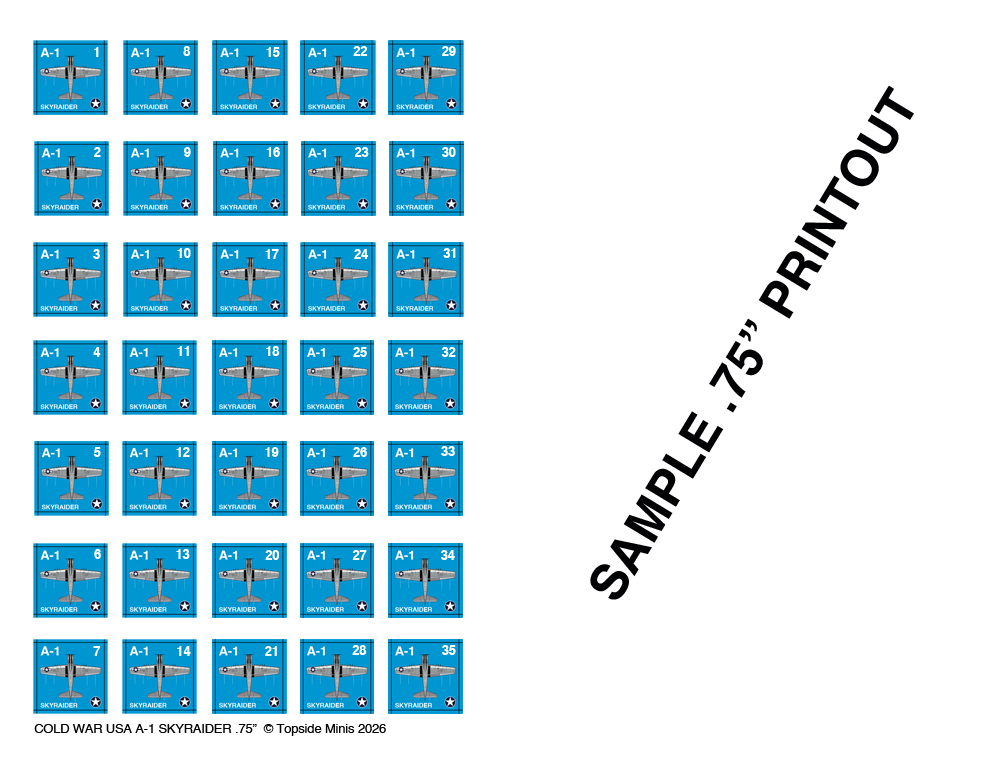
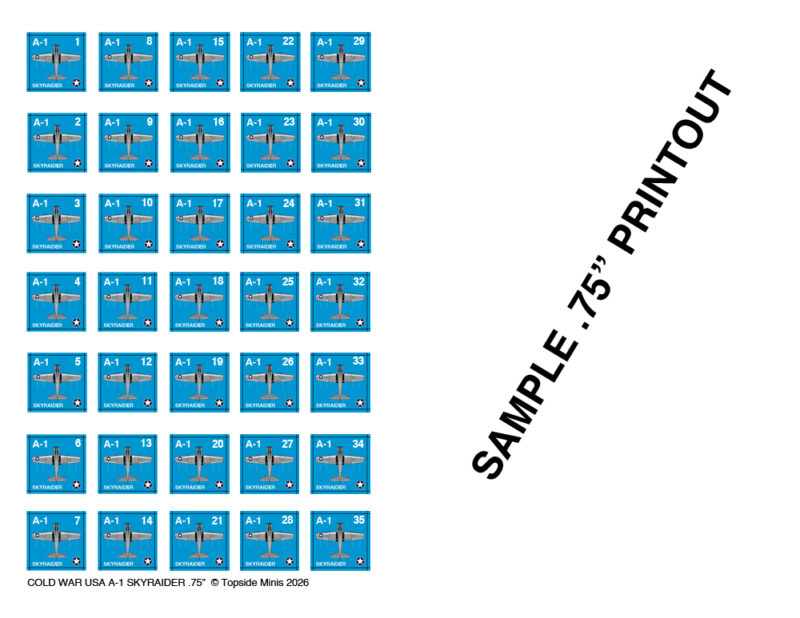
- 35 .75” square counter images
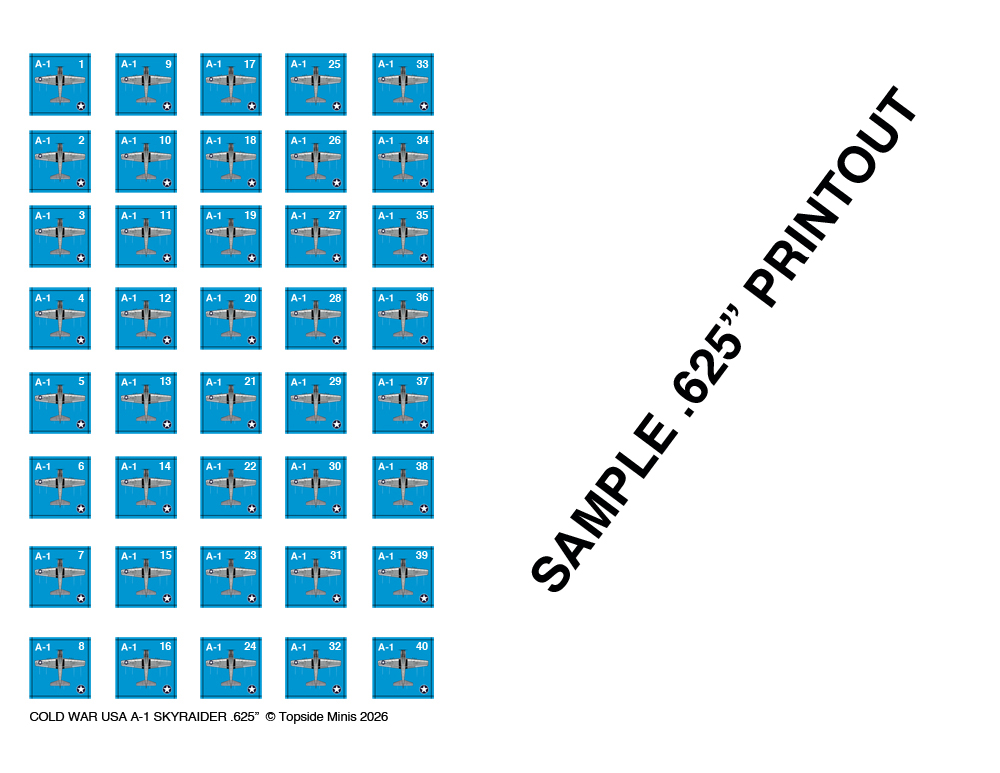
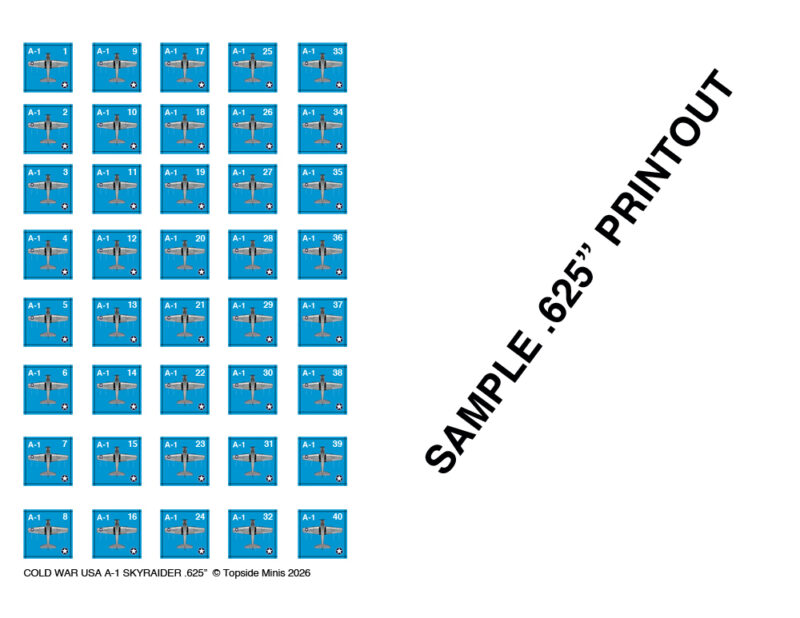
- 40 .625” square counter images
- Numbered Images to assist with game organization and tracking
- Printable PDF format for personal gaming use
Each image size is contained on a ½ sheet.
- Enables users to save paper and print 2 types of aircraft on the same page.
- Print one set of aircraft images then reverse the page in the printer and print a second type of your choice on the same page.
| Weight | N/A |
|---|---|
| Paper Size | A4 210 × 297 mm, Letter 8.5 x 11 |
Related products
Cold War Aircraft
Cold War Aircraft
Cold War Aircraft

Cold War Aircraft
Cold War Aircraft
Cold War Aircraft
Cold War Aircraft
Cold War Aircraft