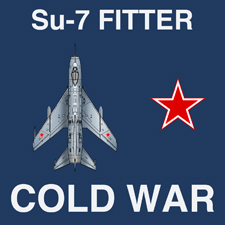
Su-7 Fitter – PDF
$1.95
The Sukhoi Su-7 “Fitter” was a Soviet supersonic fighter-bomber developed during the 1950s for tactical strike and ground-attack missions. Originally conceived as a fighter, the Su-7 became an important attack aircraft for the Soviet Air Forces and numerous Warsaw Pact and Soviet-aligned nations. It saw extensive combat during the Six-Day War, War of Attrition, Yom Kippur War, and Indo-Pakistani War of 1971, establishing itself as one of the principal Soviet-designed fighter-bombers of the early Cold War.
| Title | Range | Discount |
|---|---|---|
| Cold War Aircraft - 10% Off | 5 - 9 | 10% |
| Cold War Aircraft - 15% Off | 10 - 19 | 15% |
| Cold War Aircraft - 20% Off | 20 + | 20% |
The Sukhoi Su-7 “Fitter” was developed during the 1950s as the Soviet Union sought a new generation of supersonic combat aircraft. Originally designed by the Sukhoi bureau as a high-speed fighter, the aircraft featured sharply swept wings, a powerful turbojet engine, and a streamlined fuselage optimized for supersonic performance. Although the initial fighter version saw limited service, the design was adapted into the Su-7B fighter-bomber, which entered Soviet service in 1961. This version emphasized tactical strike and ground-attack operations, carrying bombs, rockets, and cannon armament in support of ground forces.
The Su-7B became an important component of the Soviet Air Forces’ tactical aviation during the 1960s. Designed to deliver conventional and tactical nuclear weapons against enemy troop concentrations, airfields, supply installations, and other battlefield targets, the Fitter provided Soviet forces with a fast and rugged strike aircraft. Its high-speed performance and ability to carry substantial weapons loads made it effective in low-level attack missions, although its relatively short operational range and demanding takeoff and landing characteristics presented challenges. Later variants incorporated improvements intended to increase fuel capacity and permit operations from less-developed airfields.
The Su-7 was widely exported and saw extensive combat in the Middle East. Egyptian and Syrian Su-7s participated in the 1967 Six-Day War, the subsequent War of Attrition, and the 1973 Yom Kippur War. These aircraft conducted attacks against Israeli ground forces, fortifications, and military installations, often operating in heavily defended airspace. The Fitter’s speed and rugged construction were valuable in these missions, but its limited range and vulnerability to enemy fighters and surface-to-air defenses contributed to significant combat losses.
The Su-7 also played an important role in the 1971 Indo-Pakistani War, where Indian Air Force Su-7BMK fighter-bombers conducted numerous ground-attack missions against Pakistani military positions, airfields, and transportation targets. Indian pilots employed the aircraft extensively in close air support and battlefield interdiction, demonstrating its effectiveness as a tactical strike platform. Although gradually replaced in Soviet service by more capable aircraft such as the variable-sweep Su-17, the NATO-designated “Fitter” remained operational with several foreign air forces for many years. Its widespread service and extensive combat record made the Su-7 one of the most significant Soviet fighter-bombers of the Cold War.
Service Branch: Soviet Air Forces; Indian Air Force; Egyptian Air Force; Syrian Air Force; numerous Warsaw Pact and Soviet-aligned air forces
Soviet Service: 1959–1980s
Number Built: Approximately 1,850
What’s Included:
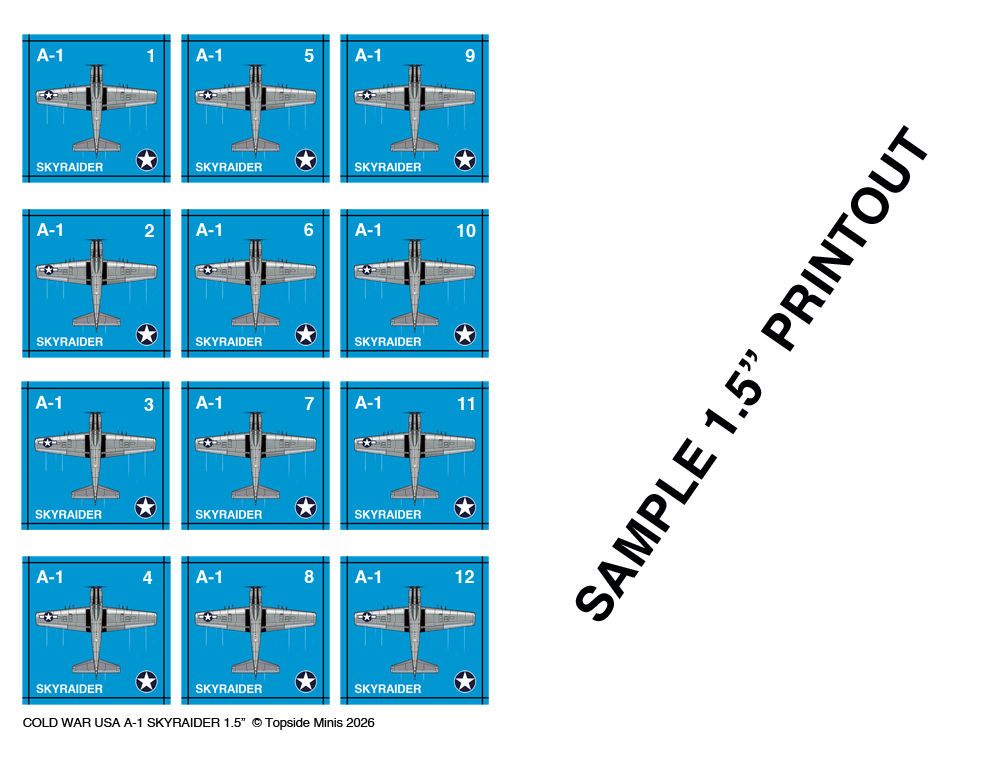
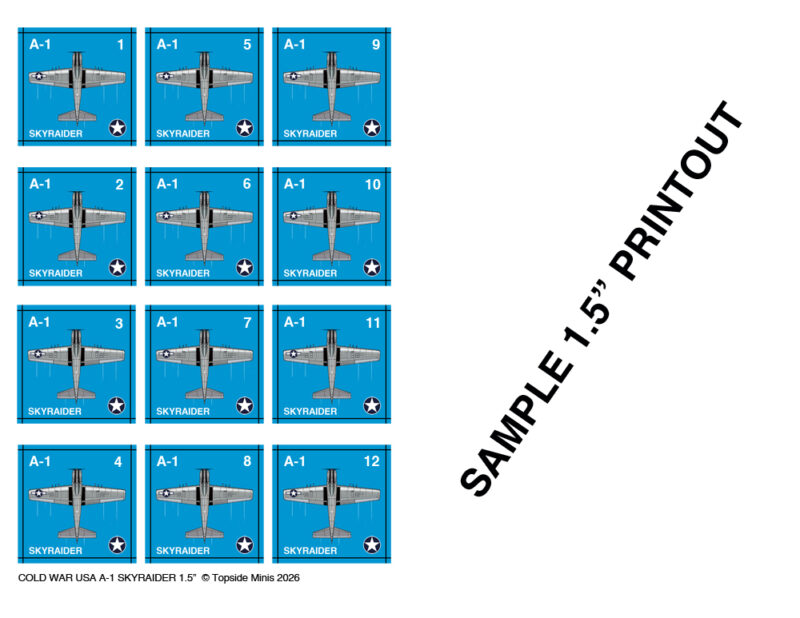
- 12 1.5” square counter images
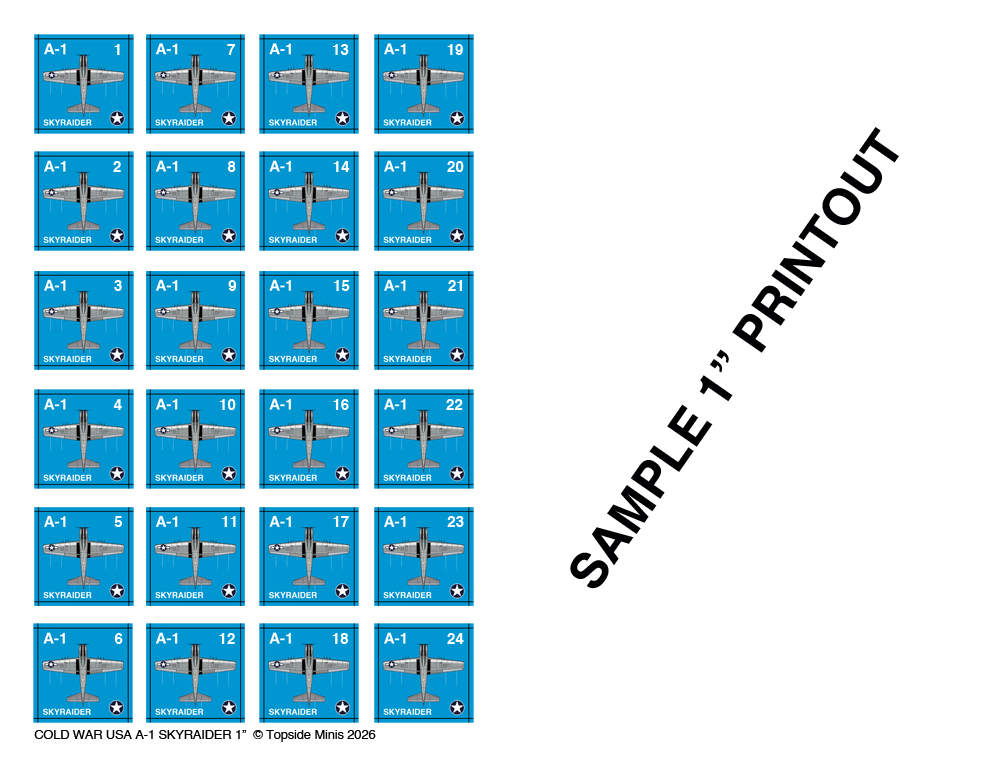
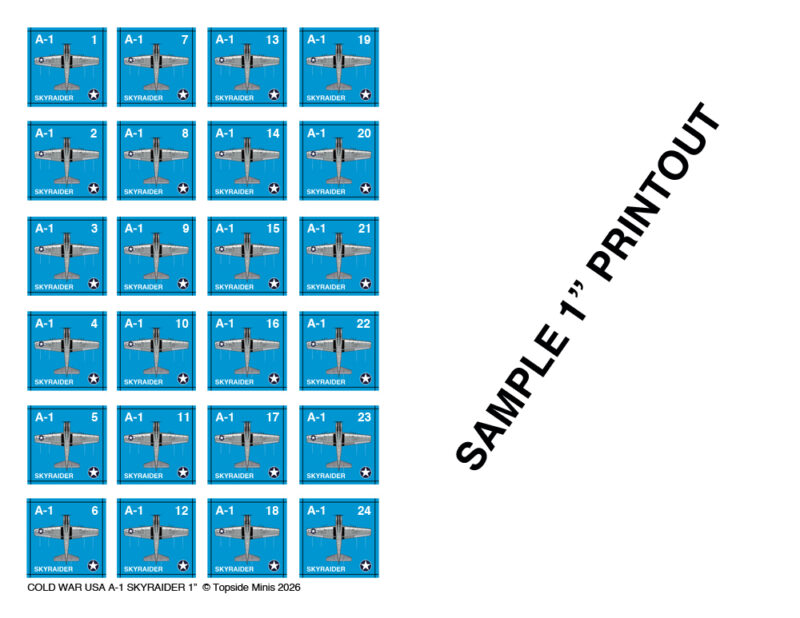
- 24 1” square counter images
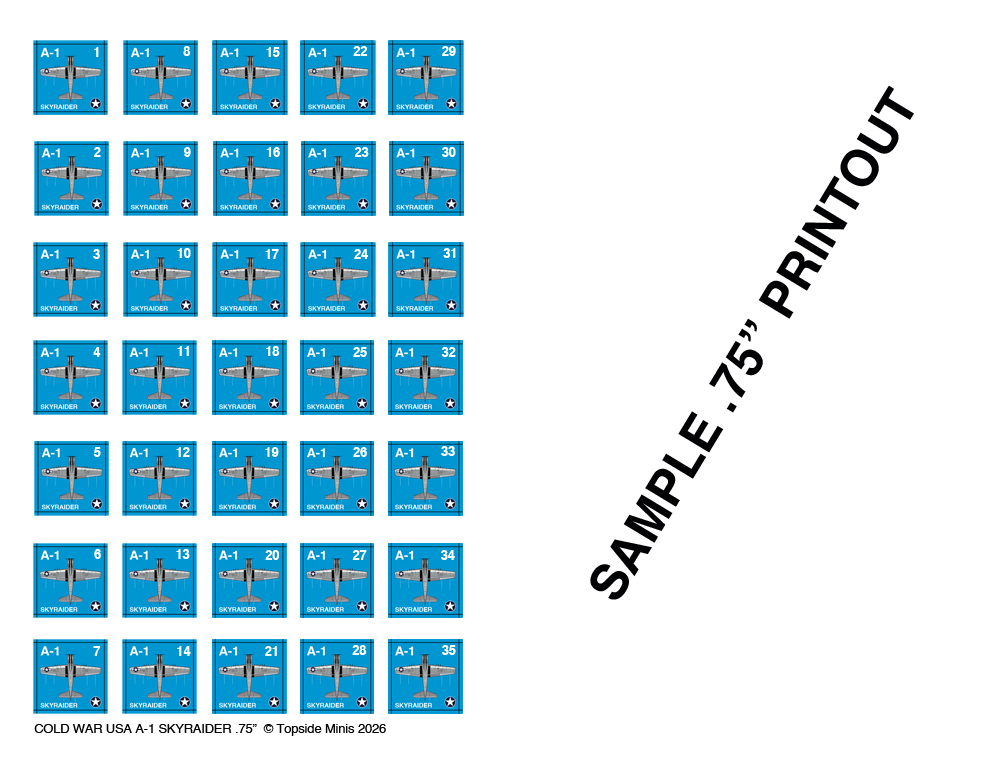
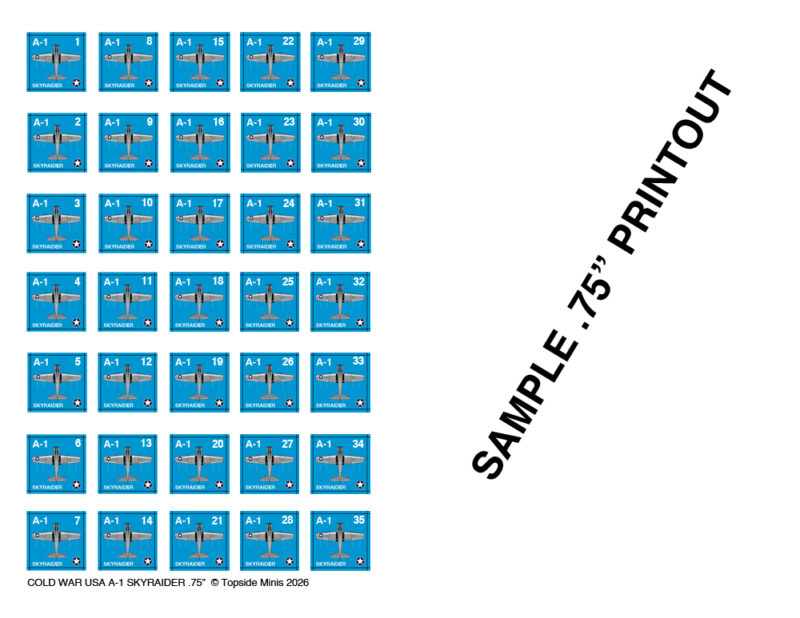
- 35 .75” square counter images
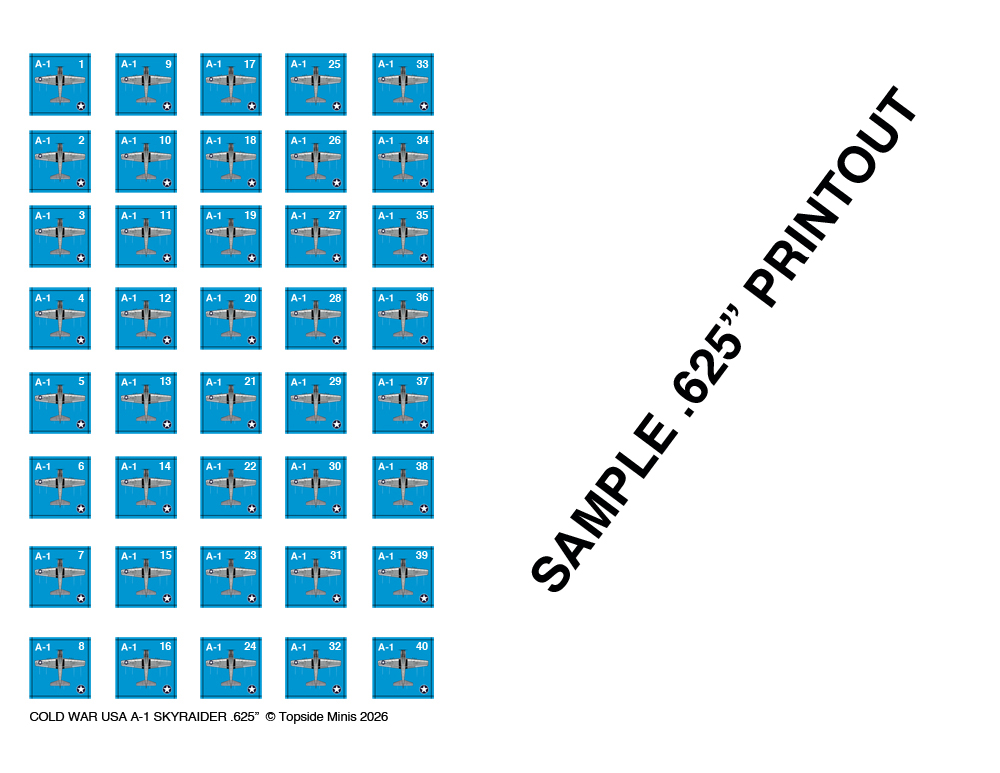
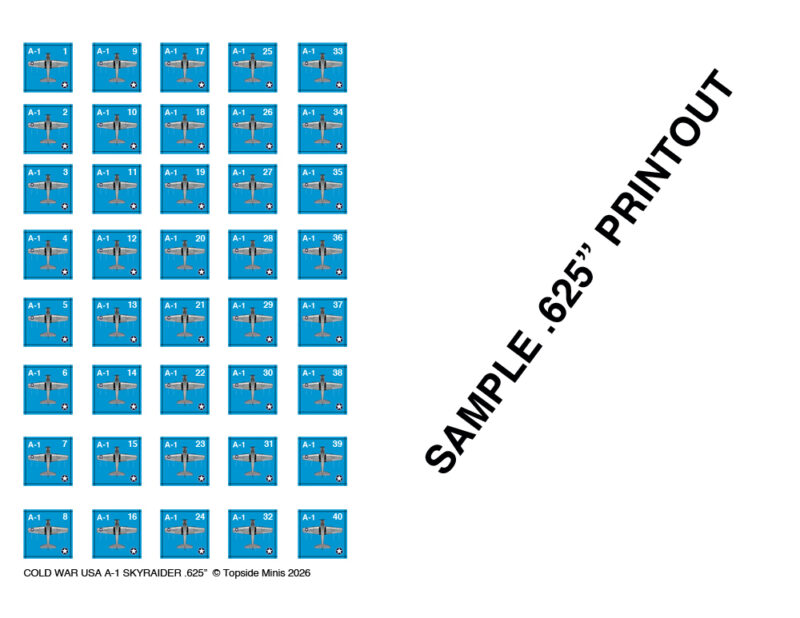
- 40 .625” square counter images
- Numbered Images to assist with game organization and tracking
- Printable PDF format for personal gaming use
Each image size is contained on a ½ sheet.
- Enables users to save paper and print 2 types of aircraft on the same page.
- Print one set of aircraft images then reverse the page in the printer and print a second type of your choice on the same page.
| Weight | N/A |
|---|---|
| Paper Size | A4 210 × 297 mm, Letter 8.5 x 11 |
Related products
Cold War Aircraft
Cold War Aircraft
Cold War Aircraft
Cold War Aircraft

Cold War Aircraft
Cold War Aircraft


Cold War Era
Cold War Aircraft