Tu-4 Bull – PDF
$1.95
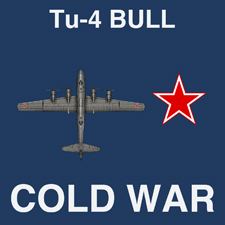
The Tupolev Tu-4 “Bull” was a Soviet four-engine strategic bomber developed through reverse engineering of the American Boeing B-29 Superfortress. Entering service in 1949, the Tu-4 provided the Soviet Union with its first practical long-range bomber capable of delivering nuclear weapons, significantly strengthening Soviet strategic aviation during the early Cold War. The aircraft served with Soviet Long-Range Aviation and was later supplied to China, where it remained in service for decades in various roles. Although the Tu-4 saw no confirmed combat service as a strategic bomber, it played an important role in the development of Soviet nuclear deterrence and long-range aviation.
| Title | Range | Discount |
|---|---|---|
| Cold War Aircraft - 10% Off | 5 - 9 | 10% |
| Cold War Aircraft - 15% Off | 10 - 19 | 15% |
| Cold War Aircraft - 20% Off | 20 + | 20% |
The Tupolev Tu-4 “Bull” was developed during the closing years of World War II as the Soviet Union sought to acquire a modern long-range strategic bomber comparable to the American Boeing B-29 Superfortress. In 1944, several American B-29 bombers made emergency landings in Soviet territory following missions against Japan. Although the Soviet Union was not yet at war with Japan, Soviet authorities retained the aircraft, providing the Tupolev design bureau with examples of advanced American bomber technology. Under the direction of Andrei Tupolev, Soviet engineers undertook an extensive reverse-engineering program to reproduce the B-29 using Soviet manufacturing methods, materials, and equipment. The resulting Tu-4 first flew in May 1947 and entered operational service in 1949, becoming the Soviet Union’s first mass-produced modern strategic bomber.
The Tu-4 became a major component of Soviet Long-Range Aviation (Dalnaya Aviatsiya), providing the Soviet Union with a significantly improved ability to conduct long-distance bombing operations. Powered by four Shvetsov ASh-73TK radial engines, the aircraft retained the general configuration of the B-29, including its pressurized crew compartments, remote-controlled defensive gun turrets, and substantial internal bomb capacity. Unlike the American bomber, the Tu-4 employed Soviet-designed 23 mm cannon armament in its defensive turrets. The aircraft was adapted to carry both conventional and nuclear weapons, and in October 1951 a Tu-4 participated in the Soviet Union’s first airborne nuclear bomb test. Its introduction represented an important development in Soviet strategic capabilities during the opening years of the Cold War.
Although the Tu-4 was designed for strategic bombing, it did not participate in major confirmed combat operations while serving with the Soviet Air Forces. During the Korean War (1950–1953), Soviet Tu-4 bombers remained available for strategic missions but were not committed to bombing operations over Korea. Their presence nevertheless contributed to the broader military confrontation between the Soviet Union and the United States during the early Cold War. The aircraft also served as a platform for experimental equipment and specialized missions, including reconnaissance, electronic warfare, and early airborne missile development. As Soviet aviation technology advanced, the Tu-4 was gradually superseded by more capable bombers, particularly the Tupolev Tu-16 jet bomber and the Tu-95 turboprop strategic bomber.
Following its withdrawal from front-line Soviet service, the Tu-4 continued operating in specialized roles, while several aircraft were transferred to the People’s Republic of China. Chinese Tu-4s served with the People’s Liberation Army Air Force, where some were modified for reconnaissance, electronic warfare, and airborne early warning experiments. Several Chinese aircraft were re-engined with turboprops, extending their operational usefulness well beyond the type’s original Soviet service life. The Tu-4’s significance extended beyond its operational career, as the reverse-engineering program helped Soviet industry develop advanced manufacturing techniques, pressurization systems, electrical equipment, and long-range aviation technology. The NATO-designated “Bull” became a symbol of the Soviet Union’s rapid postwar development of strategic air power and an important predecessor to the more advanced bombers of the Cold War.
Service Branch: Soviet Air Forces (Long-Range Aviation); People’s Liberation Army Air Force (China)
Soviet Service: 1949–1960s
Chinese Service: 1950s–1980s
Number Built: Approximately 847 aircraft
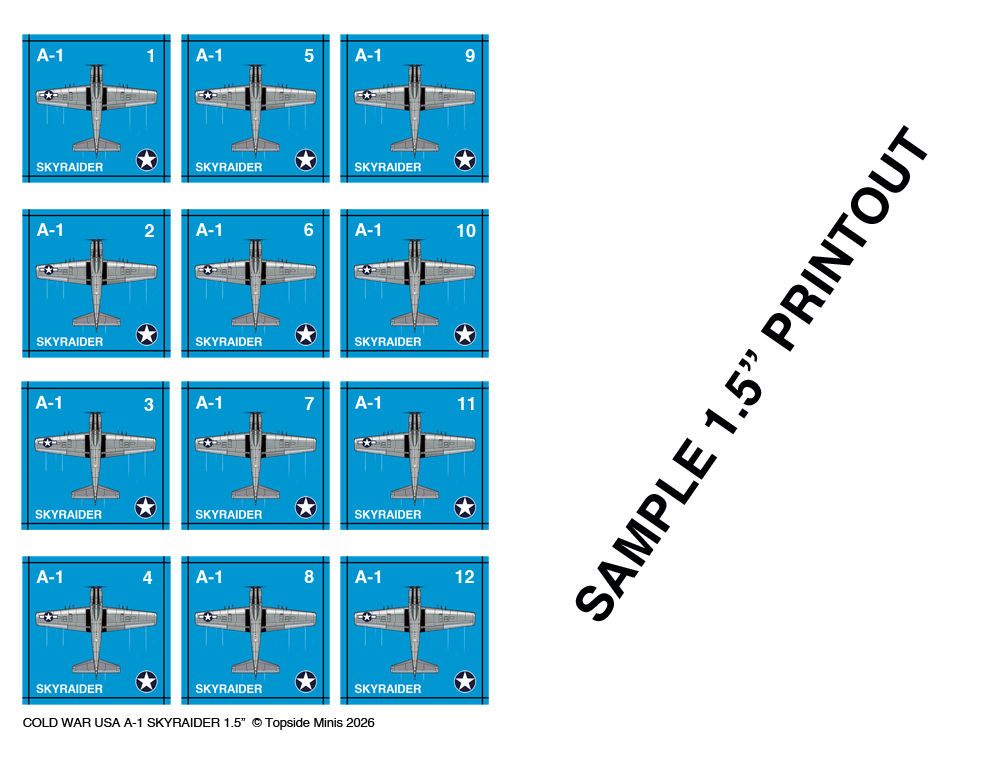
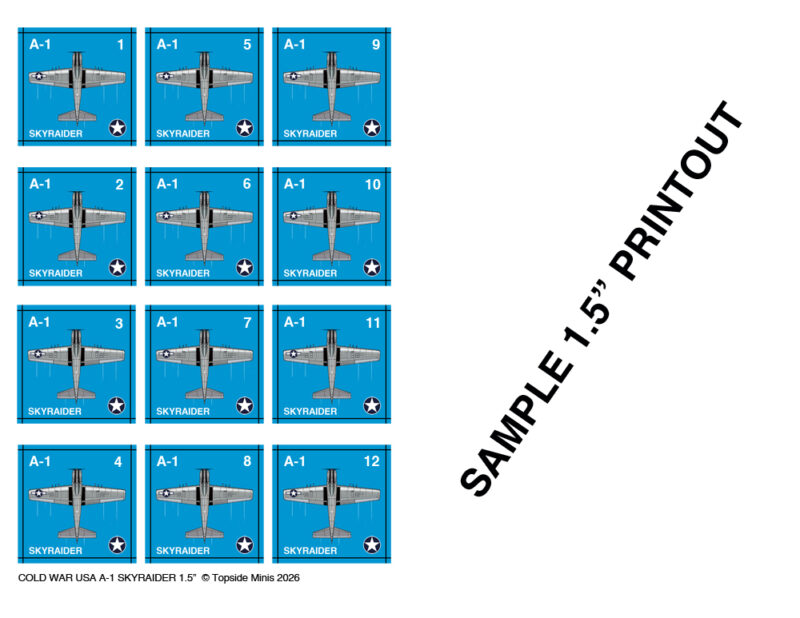
- 12 1.5” square counter images
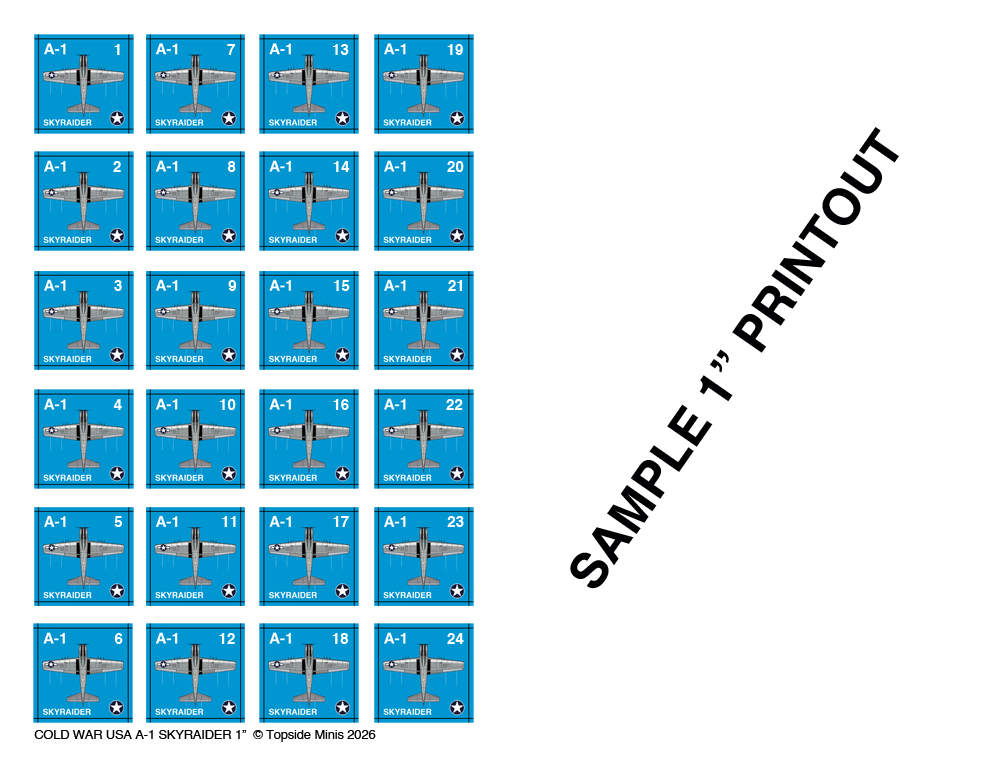
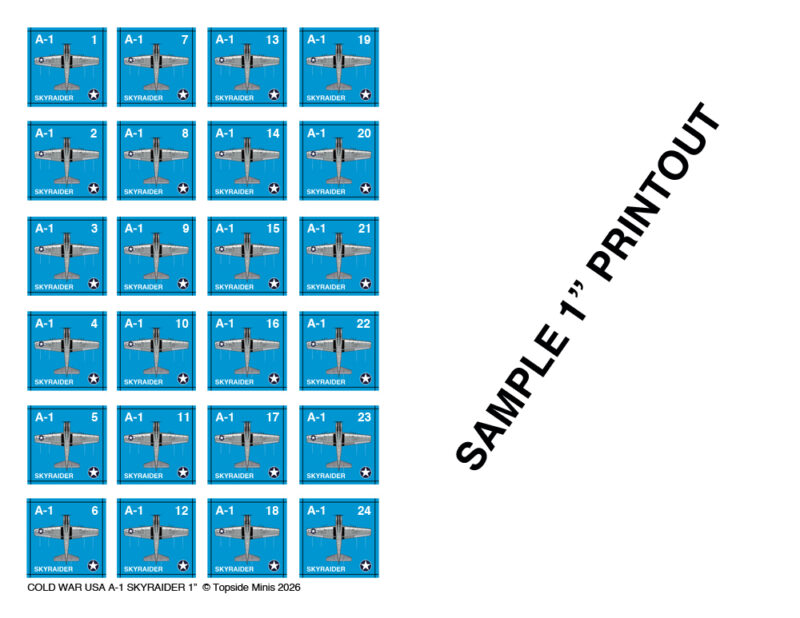
- 24 1” square counter images
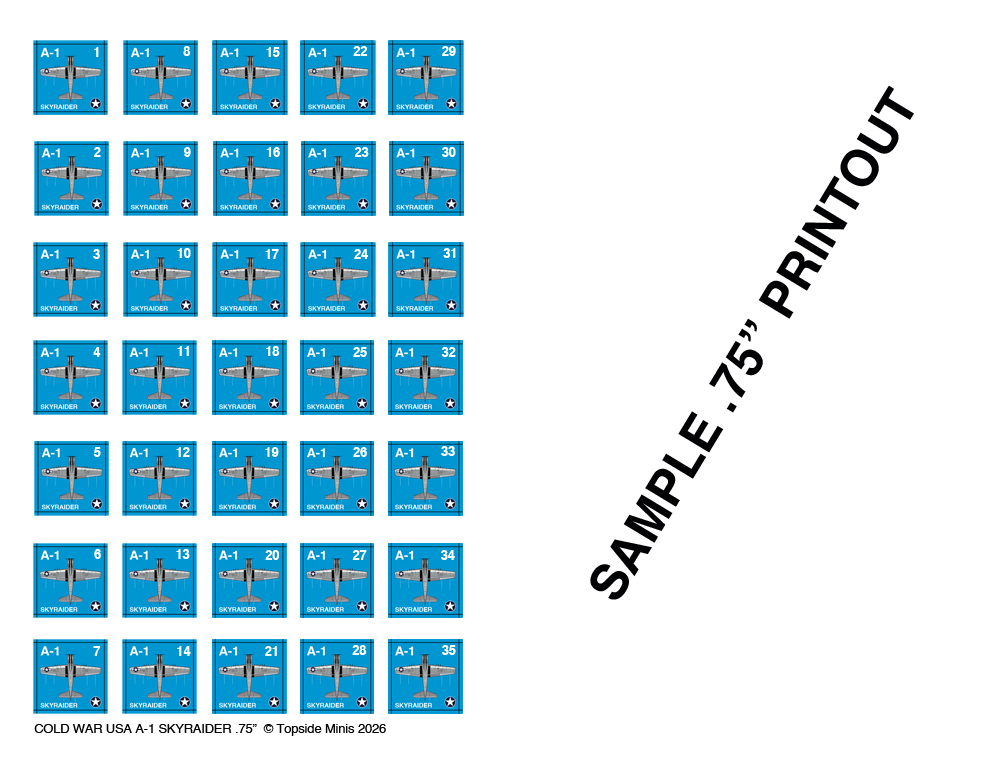
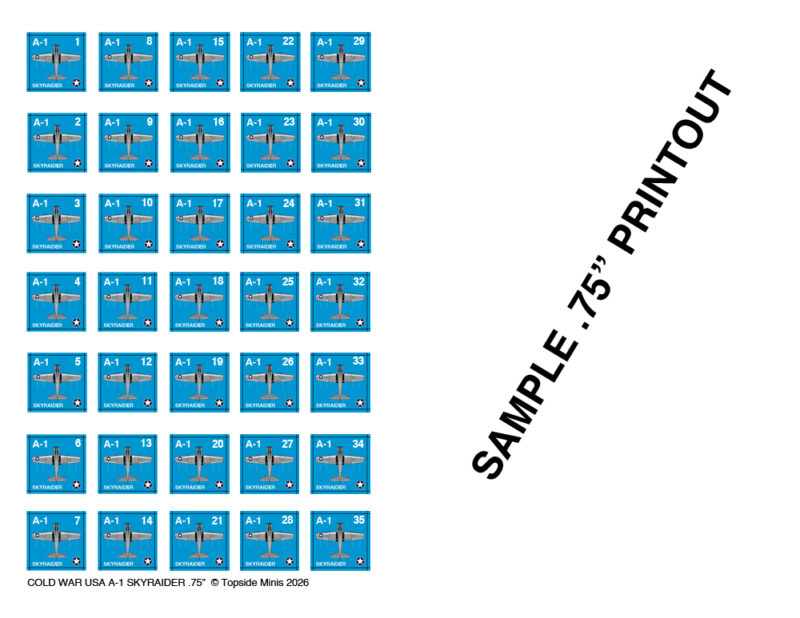
- 35 .75” square counter images
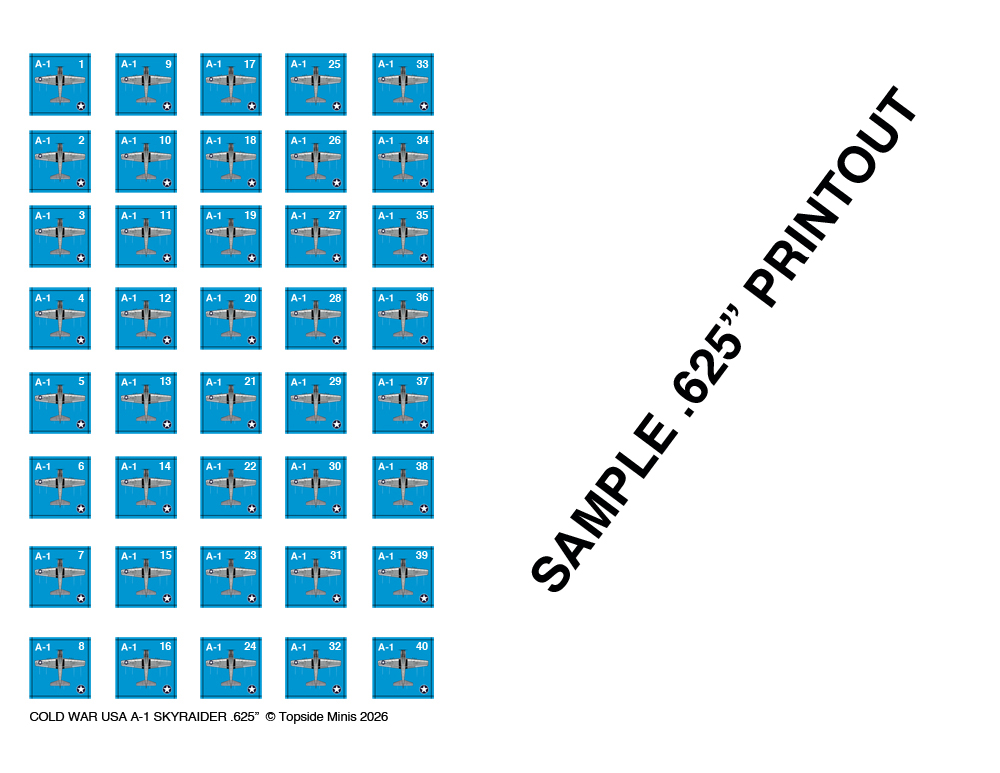
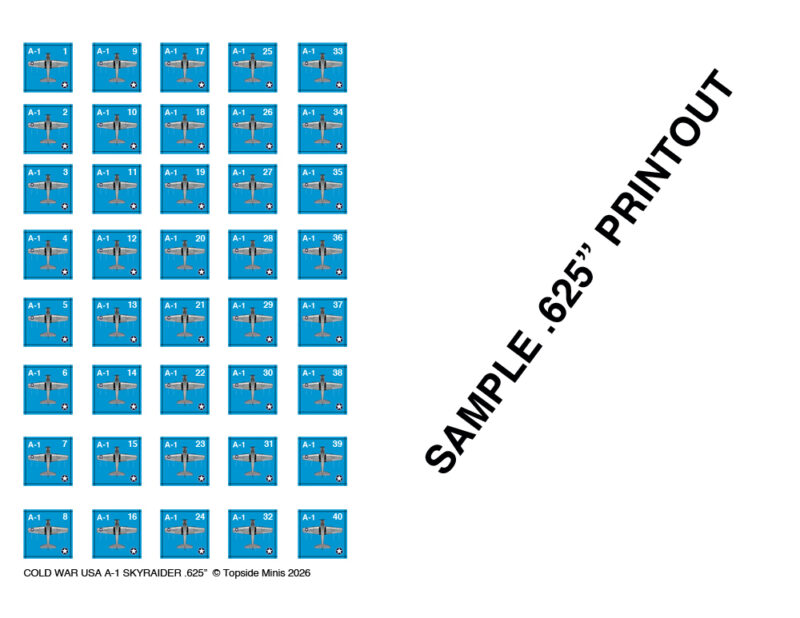
- 40 .625” square counter images
- Numbered Images to assist with game organization and tracking
- Printable PDF format for personal gaming use
Each image size is contained on a ½ sheet.
- Enables users to save paper and print 2 types of aircraft on the same page.
- Print one set of aircraft images then reverse the page in the printer and print a second type of your choice on the same page.
| Weight | N/A |
|---|---|
| Paper Size | A4 210 × 297 mm, Letter 8.5 x 11 |
Related products
Cold War Aircraft
Cold War Aircraft
Cold War Aircraft
Cold War Aircraft
Cold War Aircraft
Cold War Aircraft
Cold War Aircraft


Cold War Era