Su-30 Flanker – PDF
$1.95
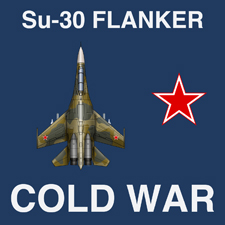
The Sukhoi Su-30 “Flanker” is a Soviet-developed, twin-engine, two-seat multirole fighter derived from the Su-27UB. Originally conceived during the final years of the Cold War as a long-range interceptor capable of coordinating fighter operations, the Su-30 evolved into a highly capable air superiority and strike aircraft. Featuring advanced radar, long-range performance, and a versatile weapons system, the Flanker entered Russian service in the early 1990s. Later variants have participated in numerous conflicts, including the Ethiopian-Eritrean War, Syrian Civil War, and Russo-Ukrainian War.
| Title | Range | Discount |
|---|---|---|
| Cold War Aircraft - 10% Off | 5 - 9 | 10% |
| Cold War Aircraft - 15% Off | 10 - 19 | 15% |
| Cold War Aircraft - 20% Off | 20 + | 20% |
The Sukhoi Su-30 “Flanker” was developed during the late 1980s as an advanced two-seat derivative of the Su-27 fighter family. Based on the Su-27UB operational trainer, the aircraft was originally conceived as a long-range interceptor capable of conducting extended air defense missions while coordinating the activities of other fighters. The Sukhoi design bureau modified the two-seat configuration to accommodate improved navigation, communications, and mission-management equipment, allowing the second crew member to assist with complex interception operations. The prototype Su-27PU, which formed the basis of the Su-30, first flew in 1989. The aircraft entered limited Russian service during the early 1990s, following the dissolution of the Soviet Union.
The original Su-30 was intended primarily for long-range air defense and fighter command missions, combining the Su-27’s excellent maneuverability, powerful engines, substantial fuel capacity, and advanced air-to-air weapons with the advantages of a two-person crew. Its development reflected the Soviet requirement to defend vast areas of territory, particularly regions where ground-based radar coverage and fighter control facilities were limited. Early Su-30 aircraft retained much of the Su-27UB’s aerodynamic configuration, including its broad blended wing, twin vertical stabilizers, and tandem cockpit. Subsequent versions introduced improved radar systems, aerial refueling capabilities, enhanced electronic warfare equipment, and increasingly sophisticated air-to-ground weapons, transforming the aircraft into a versatile multirole fighter.
Following the end of the Cold War, the Su-30 evolved into one of Russia’s most successful export combat aircraft. Major variants included the Su-30MKI, developed for India with thrust-vectoring engines, canards, and advanced avionics; the Su-30MKK, produced for China with a different avionics and weapons configuration; and the Su-30SM, introduced into Russian service during the 2010s. These aircraft differed significantly in equipment and capabilities, although they retained the basic twin-engine, two-seat Flanker configuration. The Su-30 family was adopted by numerous nations, including India, China, Algeria, Malaysia, Vietnam, Indonesia, and Venezuela, becoming an important component of their air defense and strike forces.
The Su-30’s combat history developed primarily during the twenty-first century. Indian Su-30MKIs have conducted air defense and combat patrol operations during periods of confrontation with Pakistan, including the 2019 India-Pakistan aerial engagements. Russian Su-30SM fighters participated in operations during the Syrian Civil War, providing air cover and conducting strike missions. The aircraft has also been employed extensively during the Russo-Ukrainian War, where Russian Su-30SM fighters have conducted air superiority, interception, and ground-attack missions, while Ukrainian forces have claimed or documented the destruction of several aircraft. Although the original Su-30 emerged from a late-Cold-War interceptor program, its subsequent development produced a family of advanced multirole fighters that remain important in modern military aviation. The Su-30 represents a major evolutionary step between the original Su-27 air superiority fighter and the more specialized and technologically advanced members of the Flanker family.
Service Branch: Russian Air Force; Russian Naval Aviation; Indian Air Force; Chinese People’s Liberation Army Air Force and Naval Aviation; numerous foreign air forces
Soviet Development: 1989–1991 (Su-27PU prototype program)
Russian Service: 1992–present
Number Built: More than 600 aircraft across the Su-30 family, with production continuing in later variants
What’s Included:
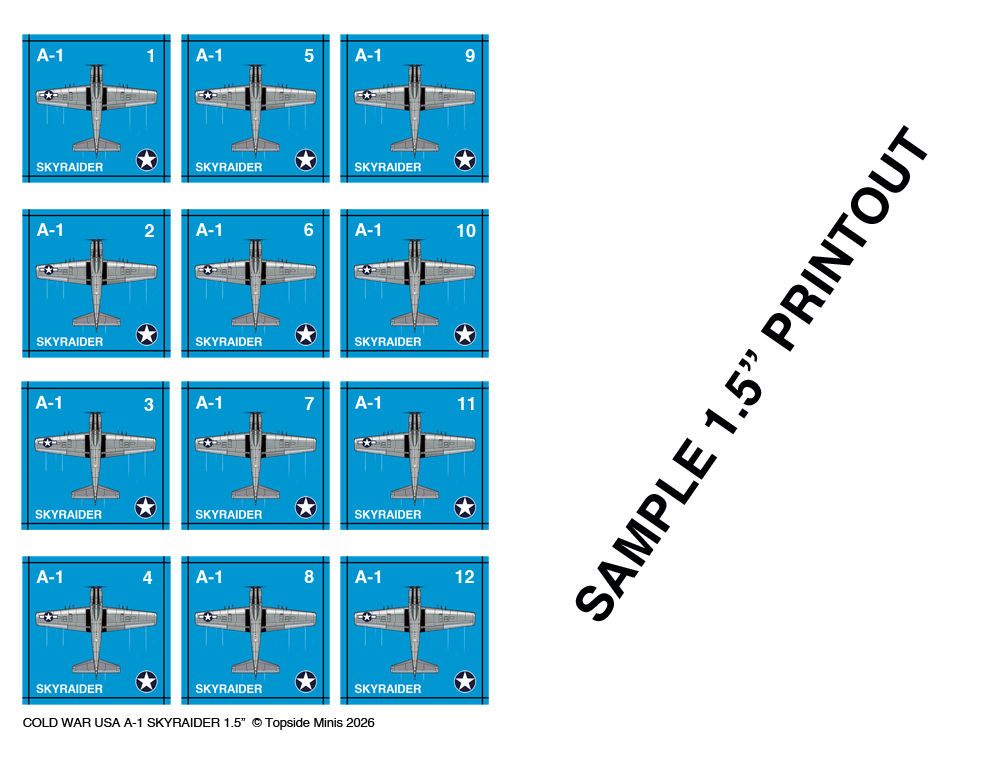
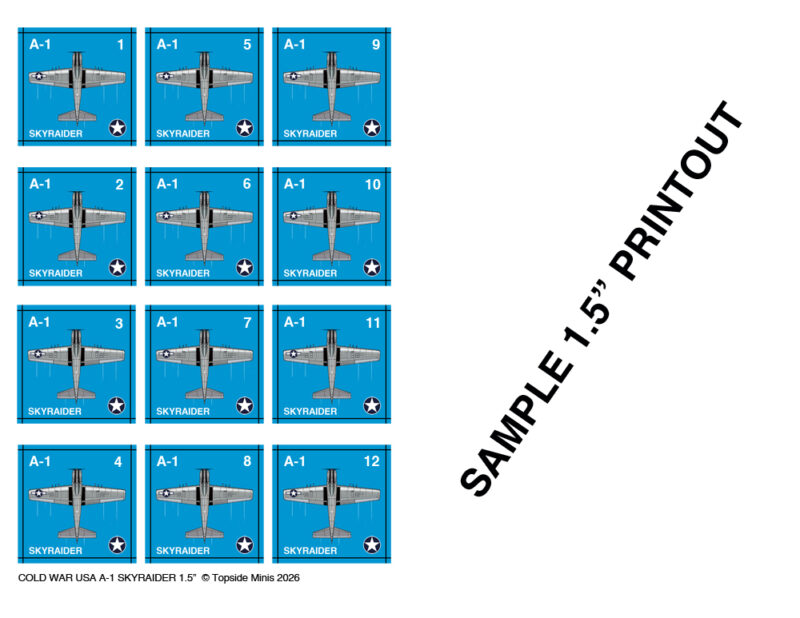
- 12 1.5” square counter images
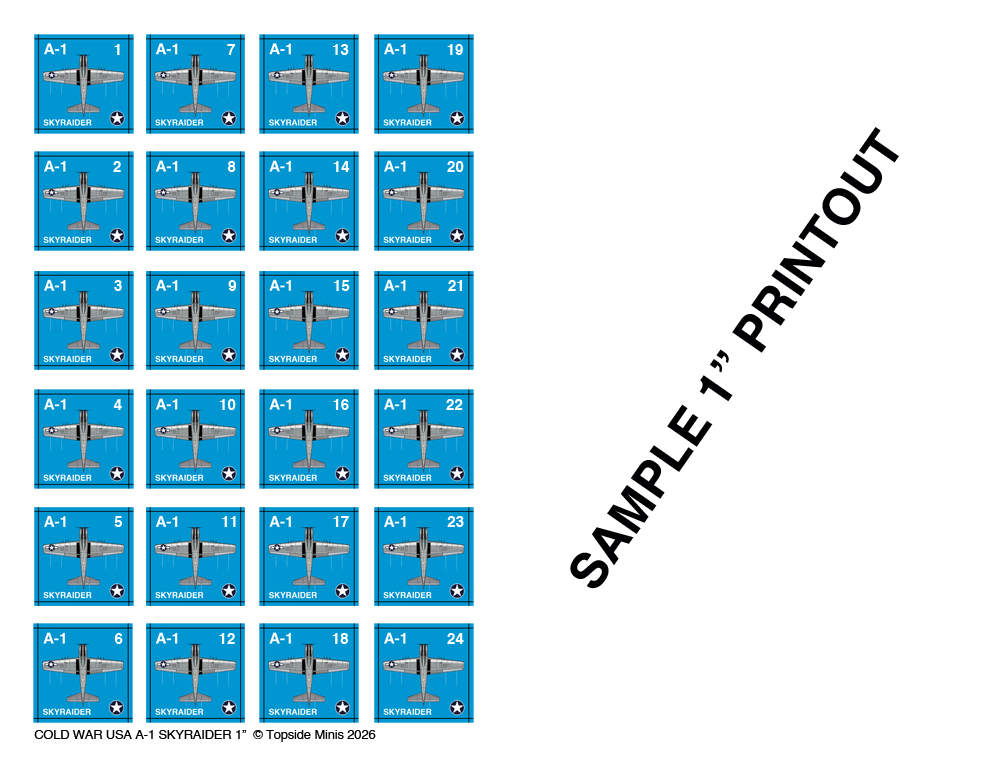
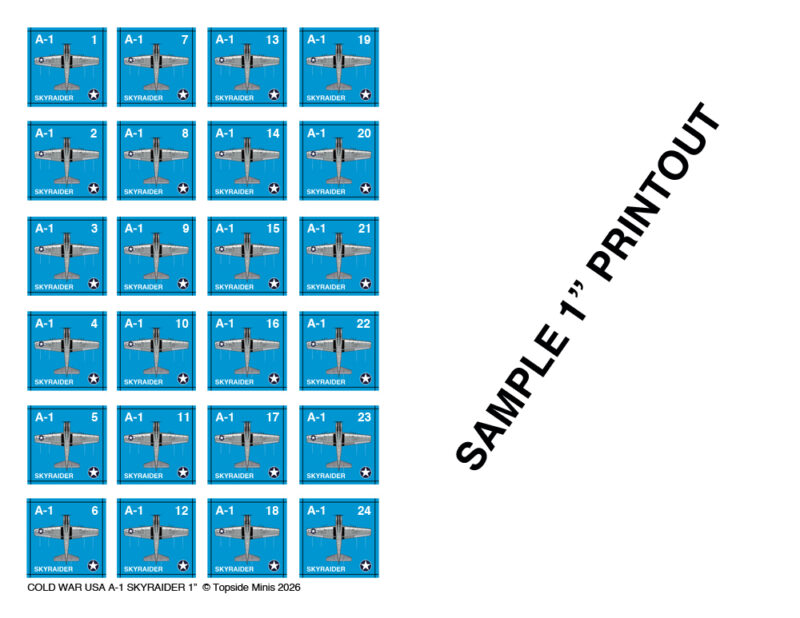
- 24 1” square counter images
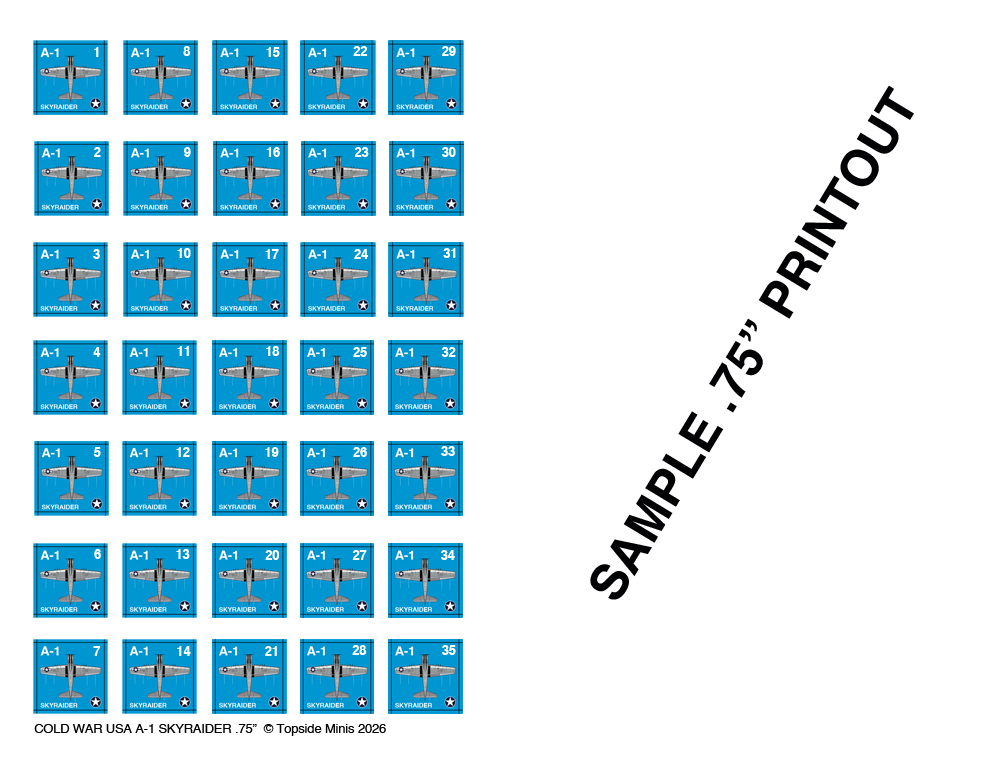
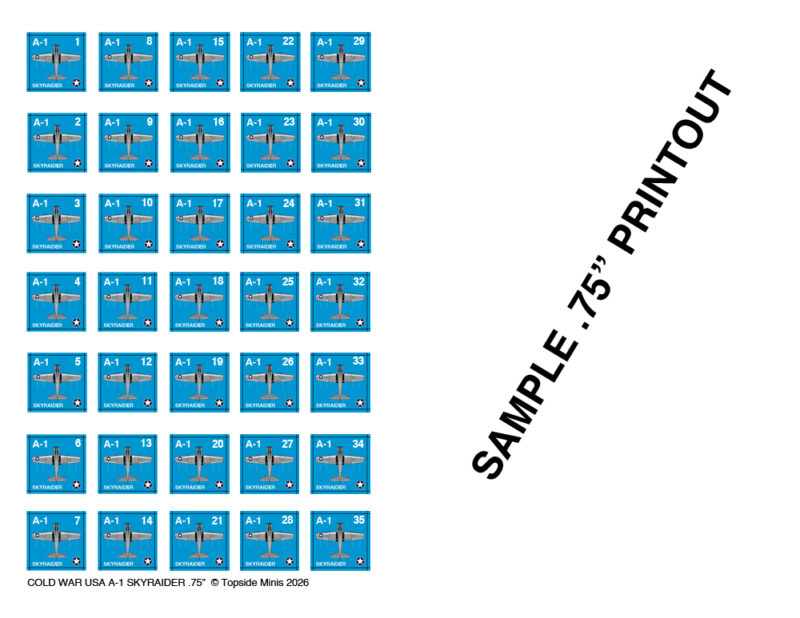
- 35 .75” square counter images
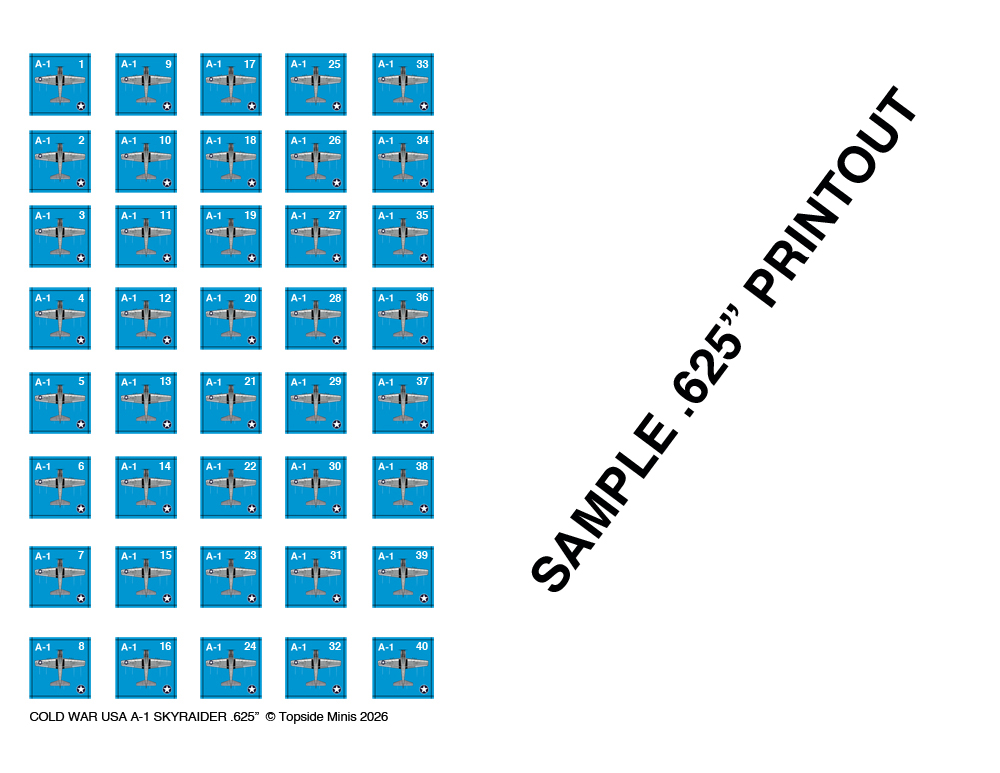
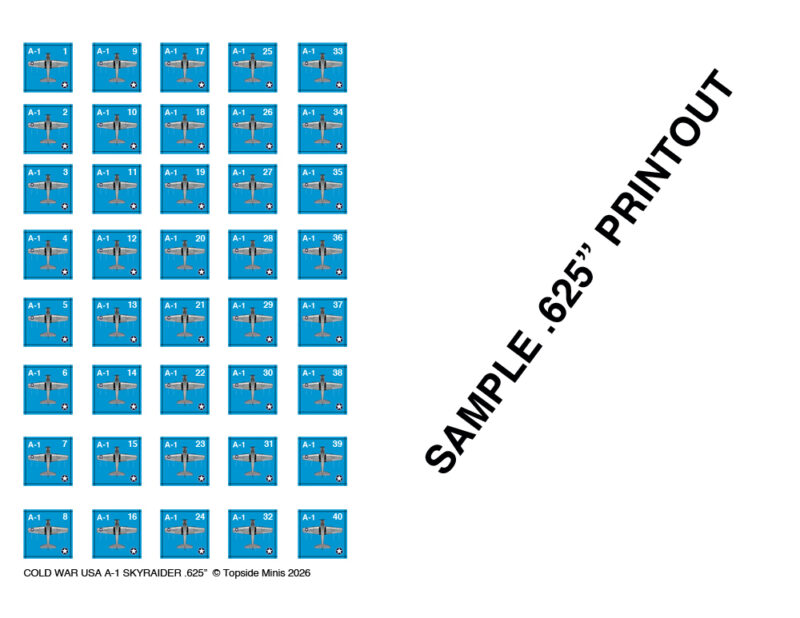
- 40 .625” square counter images
- Numbered Images to assist with game organization and tracking
- Printable PDF format for personal gaming use
Each image size is contained on a ½ sheet.
- Enables users to save paper and print 2 types of aircraft on the same page.
- Print one set of aircraft images then reverse the page in the printer and print a second type of your choice on the same page.
| Weight | N/A |
|---|---|
| Paper Size | A4 210 × 297 mm, Letter 8.5 x 11 |
Related products

Cold War Aircraft
Cold War Aircraft
Cold War Aircraft

Cold War Aircraft
Cold War Aircraft
Cold War Aircraft

Cold War Aircraft
Cold War Aircraft