
Su-33 Flanker – PDF
$1.95
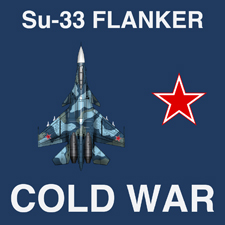
The Sukhoi Su-33 “Flanker-D” is a Russian twin-engine, supersonic carrier-based air superiority fighter developed from the Soviet Su-27. Originally designated Su-27K, the aircraft was designed to operate from the Soviet Navy’s new generation of aircraft carriers. Featuring folding wings, forward canards, reinforced landing gear, and an arresting hook, the Su-33 combined the performance of the Flanker family with the specialized requirements of naval aviation. First flown in 1987 and entering operational service during the 1990s, the Flanker-D became the principal fixed-wing fighter aboard the aircraft carrier Admiral Kuznetsov and later participated in Russian military operations during the Syrian Civil War.
| Title | Range | Discount |
|---|---|---|
| Cold War Aircraft - 10% Off | 5 - 9 | 10% |
| Cold War Aircraft - 15% Off | 10 - 19 | 15% |
| Cold War Aircraft - 20% Off | 20 + | 20% |
The Sukhoi Su-33 “Flanker-D” was developed during the 1980s as a carrier-capable derivative of the Soviet Su-27 air superiority fighter. Originally designated the Su-27K, the aircraft was designed to equip the Soviet Navy’s emerging generation of large aircraft-carrying cruisers, particularly the vessel that would eventually become the Admiral Kuznetsov. The Sukhoi design bureau substantially modified the Su-27 to accommodate the demanding requirements of carrier operations, incorporating folding wings and horizontal stabilizers, strengthened landing gear, an arresting hook, and improved low-speed handling characteristics. Forward-mounted canards were added to enhance aerodynamic performance and control during carrier approaches. The prototype first flew in August 1987, and the aircraft conducted its first carrier landing aboard the then-named Tbilisi in November 1989.
The Su-33 was intended primarily for fleet air defense and air superiority missions, protecting Soviet naval formations against hostile aircraft, maritime patrol aircraft, and carrier-based strike fighters. Powered by two Saturn AL-31F3 turbofan engines, the aircraft retained the Su-27’s excellent maneuverability, long-range performance, and substantial air-to-air weapons capability. Its armament included a 30 mm cannon and a variety of radar-guided and infrared-guided air-to-air missiles, including the R-27 and R-73. Unlike American carrier fighters operating from catapult-equipped aircraft carriers, the Su-33 was designed to launch from a ski-jump flight deck and recover using arresting wires. This arrangement eliminated the need for catapults but imposed limitations on aircraft launch weight, particularly when carrying substantial fuel and weapons loads.
Although developed during the final years of the Cold War, the Su-33 did not enter regular operational service before the dissolution of the Soviet Union in 1991. Following the breakup of the USSR, the aircraft entered service with Russian Naval Aviation, becoming the principal carrier-based fighter assigned to the Admiral Kuznetsov. During the 1990s and 2000s, Su-33s participated in fleet exercises, air defense patrols, and naval deployments, providing Russia with a limited but important fixed-wing carrier aviation capability. Unlike the land-based Su-27, the Su-33 was produced in relatively small numbers, reflecting the limited size of Russia’s aircraft carrier fleet and the financial difficulties experienced during the post-Soviet period.
The Su-33’s first significant combat deployment occurred during the Russian intervention in the Syrian Civil War in 2016, when aircraft operating from the Admiral Kuznetsov conducted strike missions against targets in Syria. Although originally designed primarily for air superiority, the aircraft was employed in ground-attack operations using conventional bombs. The deployment highlighted both the flexibility and limitations of Russia’s carrier aviation capabilities. In December 2016, a Su-33 was lost during an attempted carrier landing after an arresting cable failure, although the pilot successfully ejected. As the Russian Navy gradually introduced the MiG-29K as an additional carrier-based fighter, the Su-33 continued to represent an important example of Soviet naval aviation development. The NATO-designated “Flanker-D” remains distinctive for its combination of the Su-27’s aerodynamic design with the specialized equipment required for carrier operations.
Service Branch: Russian Naval Aviation; Soviet Naval Aviation (development and pre-service evaluation)
Soviet Development: 1987–1991 (Su-27K prototype and carrier trials)
Russian Service: 1990s–present (limited fleet)
Number Built: Approximately 35–36 aircraft, including prototypes and production examples
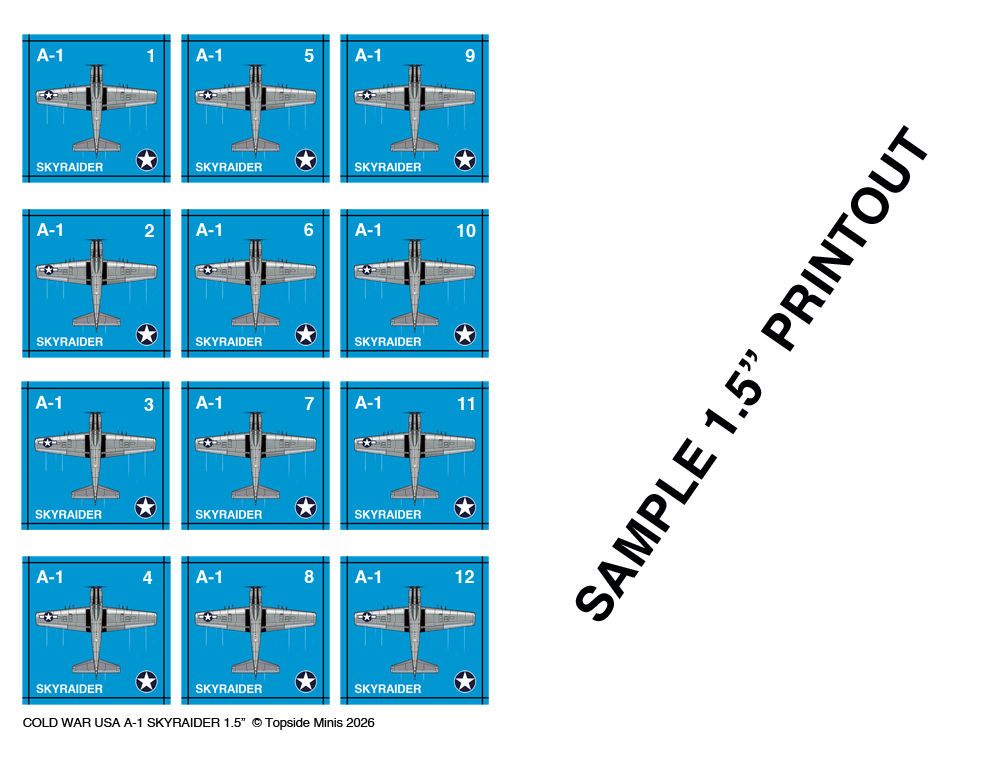
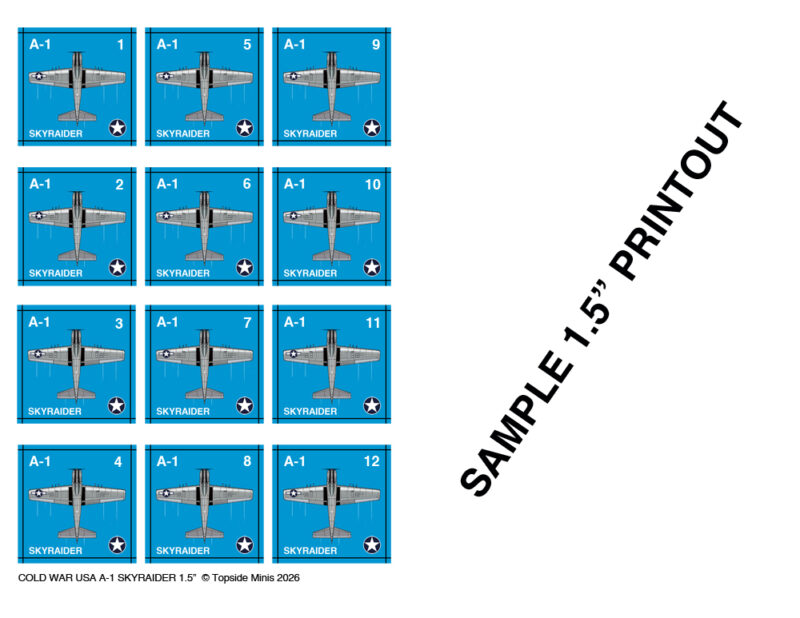
- 12 1.5” square counter images
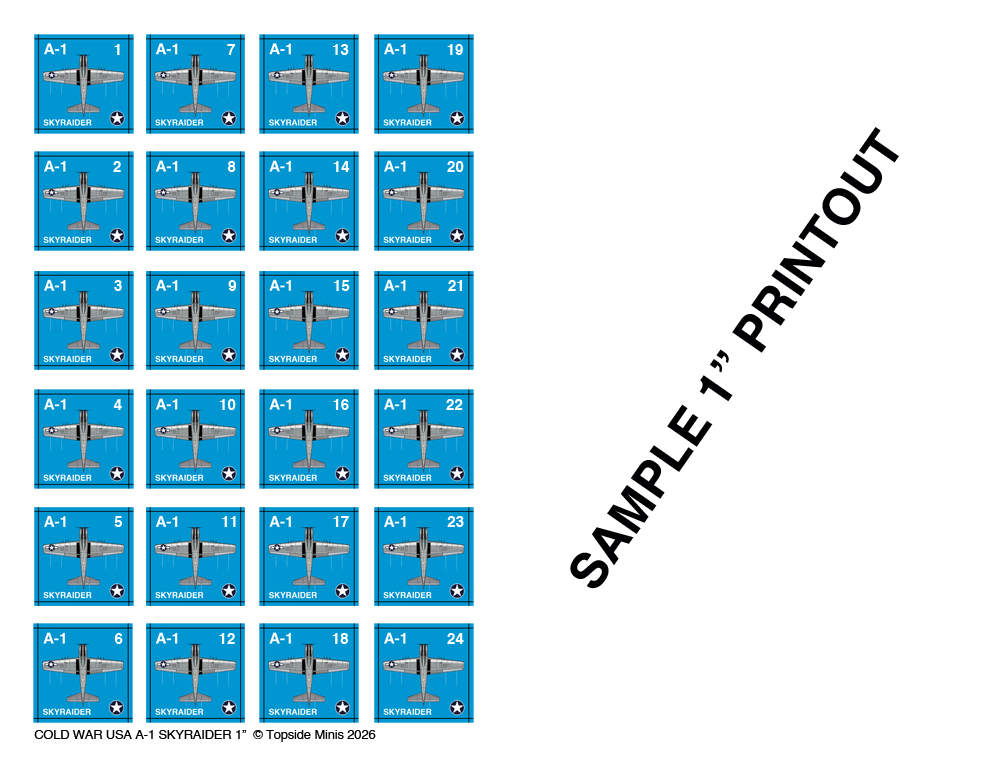
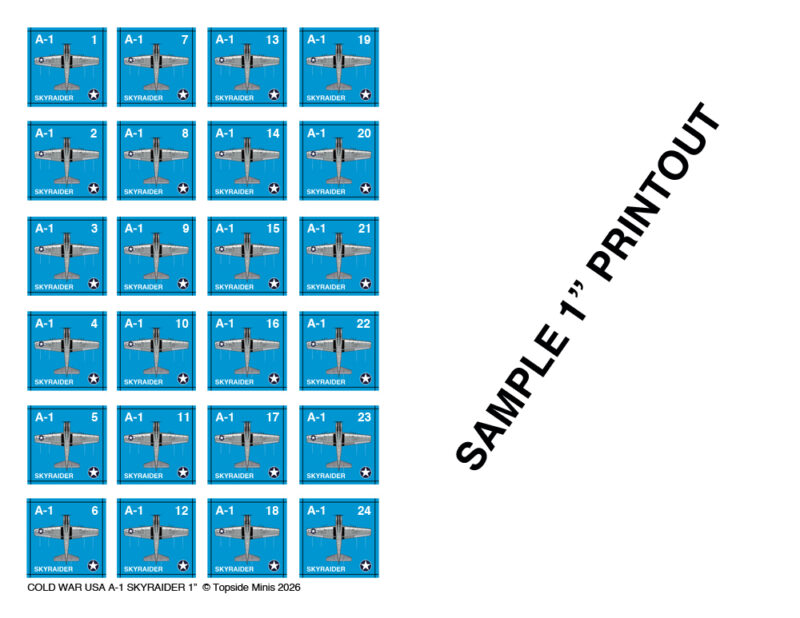
- 24 1” square counter images
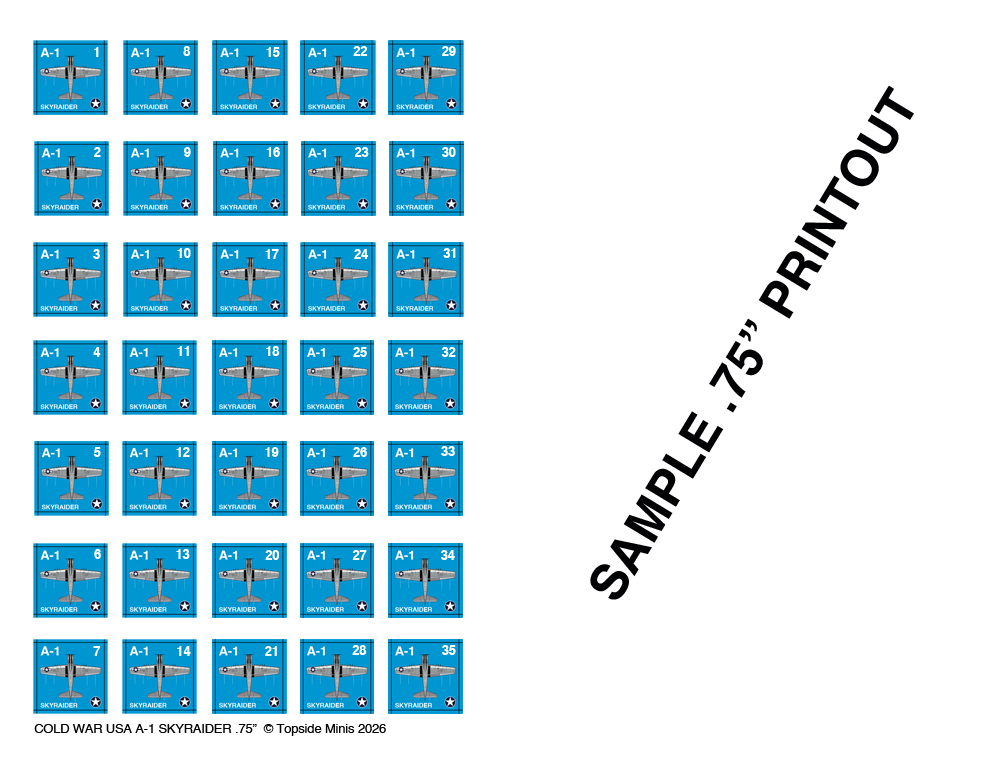
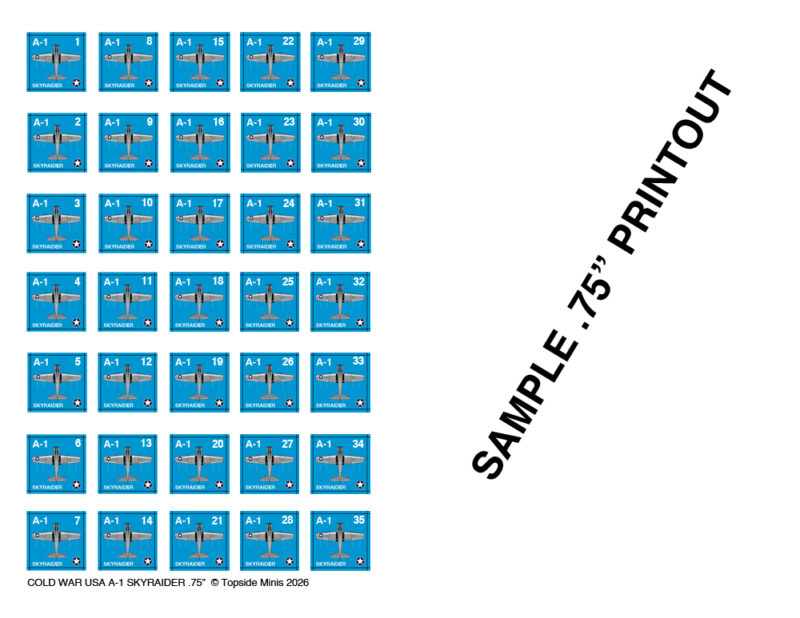
- 35 .75” square counter images
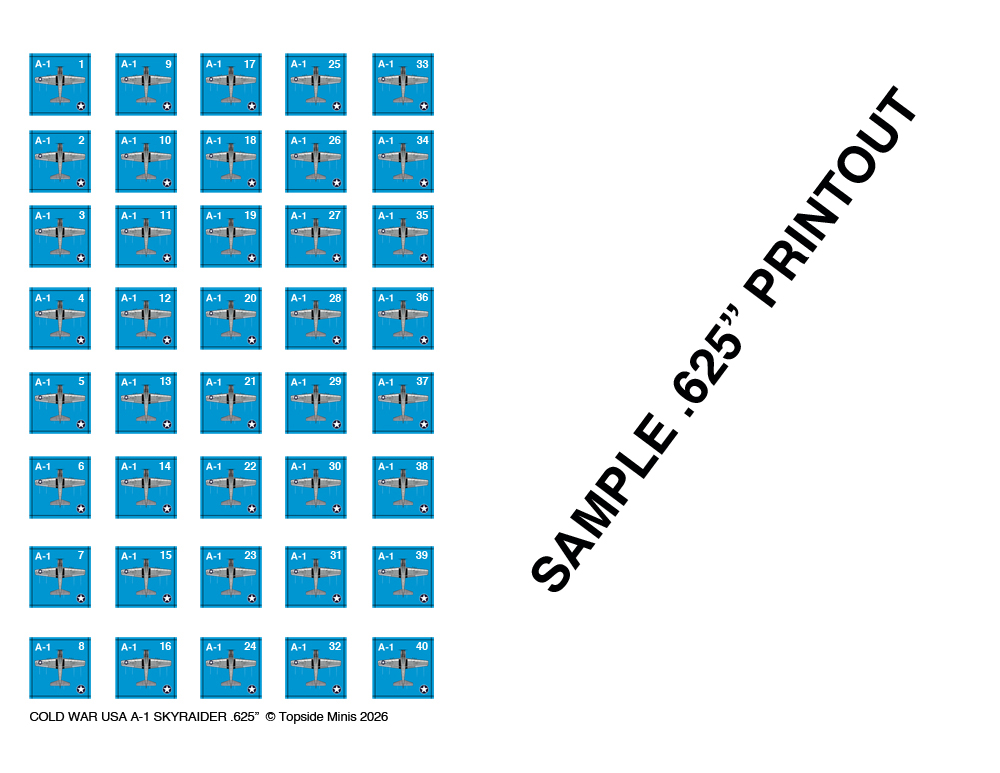
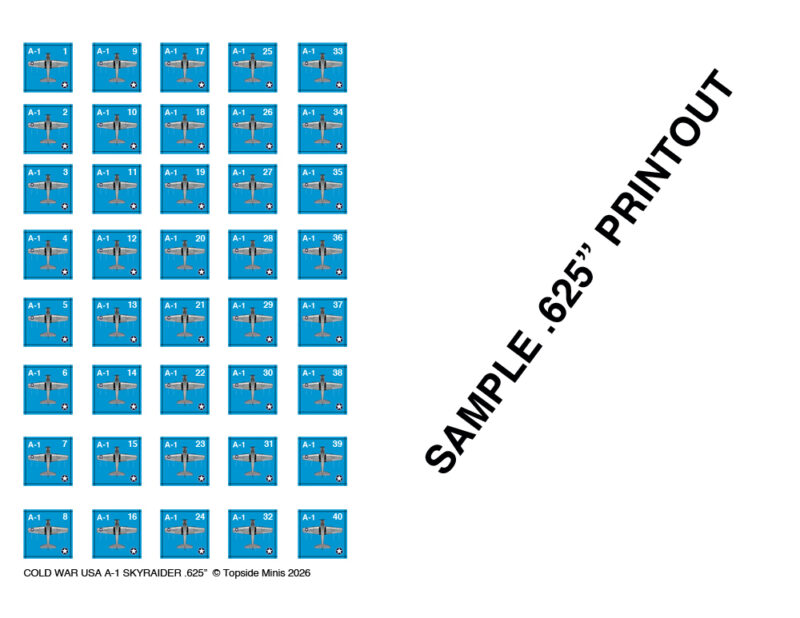
- 40 .625” square counter images
- Numbered Images to assist with game organization and tracking
- Printable PDF format for personal gaming use
Each image size is contained on a ½ sheet.
- Enables users to save paper and print 2 types of aircraft on the same page.
- Print one set of aircraft images then reverse the page in the printer and print a second type of your choice on the same page.
| Weight | N/A |
|---|---|
| Paper Size | A4 210 × 297 mm, Letter 8.5 x 11 |
Related products
Cold War Aircraft
Cold War Aircraft
Cold War Aircraft
Cold War Era

Cold War Aircraft
Cold War Aircraft
Cold War Aircraft
Cold War Aircraft