
Tu-95 Bear – PDF
$1.95
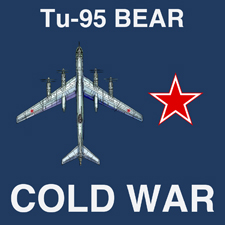
The Tupolev Tu-95 “Bear” was a Soviet four-engine turboprop strategic bomber developed during the early Cold War to provide intercontinental nuclear and conventional strike capabilities. Entering service in 1956, the Tu-95 became one of the Soviet Union’s principal long-range bombers, conducting strategic patrols, nuclear deterrence missions, and maritime reconnaissance operations. Later variants were adapted to carry long-range cruise missiles, extending the aircraft’s operational usefulness well beyond the Cold War. Distinguished by its swept wings and four contra-rotating propeller engines, the Bear remained in Russian service for decades and participated in combat operations in Syria and Ukraine.
| Title | Range | Discount |
|---|---|---|
| Cold War Aircraft - 10% Off | 5 - 9 | 10% |
| Cold War Aircraft - 15% Off | 10 - 19 | 15% |
| Cold War Aircraft - 20% Off | 20 + | 20% |
The Tupolev Tu-95 “Bear” was developed during the early 1950s as the Soviet Union sought an intercontinental strategic bomber capable of striking distant targets without relying on forward airbases. Designed by the Tupolev bureau, the aircraft combined a large swept-wing airframe with four powerful Kuznetsov NK-12 turboprop engines, each driving a pair of contra-rotating propellers. This unusual propulsion arrangement provided exceptional fuel efficiency while allowing the aircraft to achieve speeds approaching those of contemporary jet bombers. The prototype first flew in November 1952, and the Tu-95 entered operational service in 1956. Its combination of range, payload, and endurance made it one of the most successful strategic bomber designs of the Cold War.
The Tu-95 became a central component of Soviet Long-Range Aviation and the Soviet nuclear deterrent. Early versions were designed to deliver conventional and nuclear bombs against strategic targets, while later variants incorporated advanced navigation systems and long-range missile capabilities. The Tu-95K and Tu-95KD were developed to carry the Kh-20 nuclear cruise missile, allowing attacks against defended targets from greater distances. Subsequent developments culminated in the Tu-95MS “Bear-H”, introduced during the 1980s as a dedicated cruise-missile carrier capable of launching Kh-55 missiles. Specialized versions also performed maritime reconnaissance and electronic intelligence missions, while the related Tu-142 aircraft was developed for long-range maritime patrol and anti-submarine warfare.
Throughout the Cold War, Tu-95 aircraft conducted extensive long-range patrols over the Arctic, Atlantic, and Pacific Oceans. These missions frequently brought Soviet bombers into contact with NATO interceptors, particularly aircraft of the United States, Canada, Norway, and the United Kingdom. The Bear became a familiar symbol of the strategic rivalry between NATO and the Warsaw Pact, with its distinctive silhouette and powerful turboprop engines making it readily recognizable. Although the Tu-95 did not conduct conventional bombing operations during the Cold War, its primary purpose was to provide a credible nuclear strike capability against distant targets. Maritime reconnaissance variants also supported Soviet naval operations by locating and tracking Western naval forces, including aircraft carrier groups.
Following the dissolution of the Soviet Union, the Tu-95 continued serving with Russian Long-Range Aviation, undergoing successive modernization programs to improve its navigation, communications, and weapons systems. The Tu-95MS participated in combat for the first time during Russian operations in Syria in 2015, launching long-range cruise missiles against targets associated with militant organizations. During the Russo-Ukrainian War, Tu-95MS aircraft have been employed extensively as stand-off missile carriers, launching cruise missiles against Ukrainian military and civilian infrastructure. Modernized Tu-95MSM aircraft incorporate improved avionics and compatibility with newer weapons, including the Kh-101 cruise missile. Despite its origins in the early 1950s, the NATO-designated “Bear” remains one of the longest-serving strategic bomber families in aviation history.
Manufacturer: Tupolev Design Bureau
Service Branch: Soviet Air Forces (Long-Range Aviation); Soviet Naval Aviation; Russian Aerospace Forces (Long-Range Aviation)
Soviet Service: 1956–1991
Post-Soviet Service: 1991–present (Russia)
Number Built: Approximately 500 Tu-95 aircraft across the principal bomber and missile-carrier variants; excludes the related Tu-142 maritime patrol family
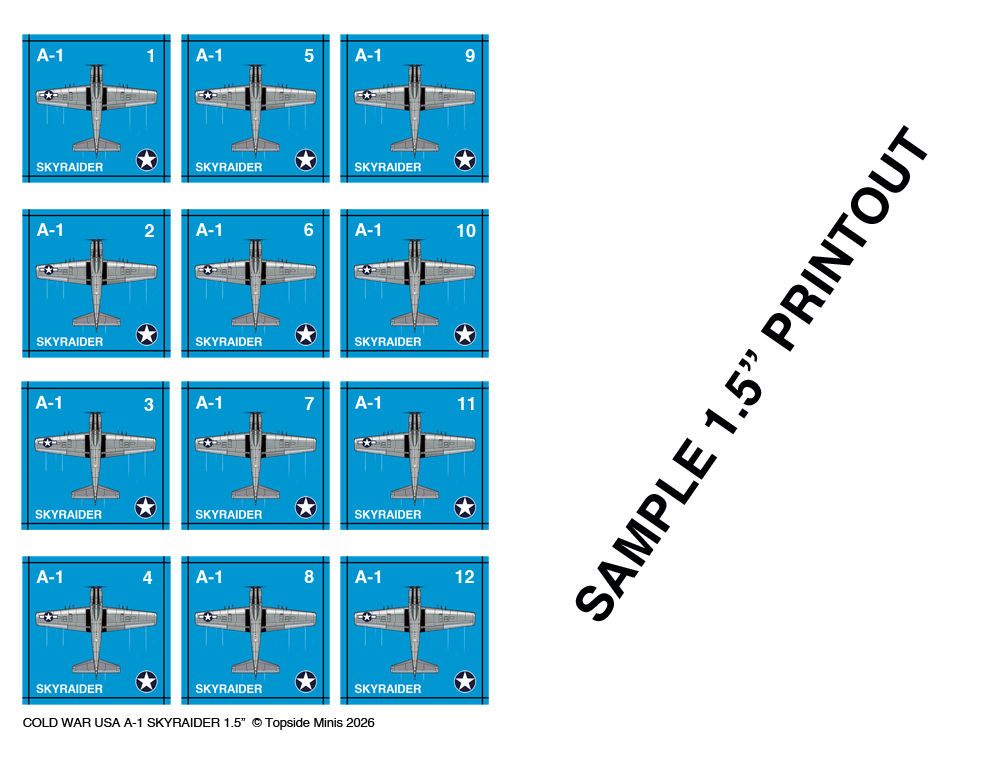
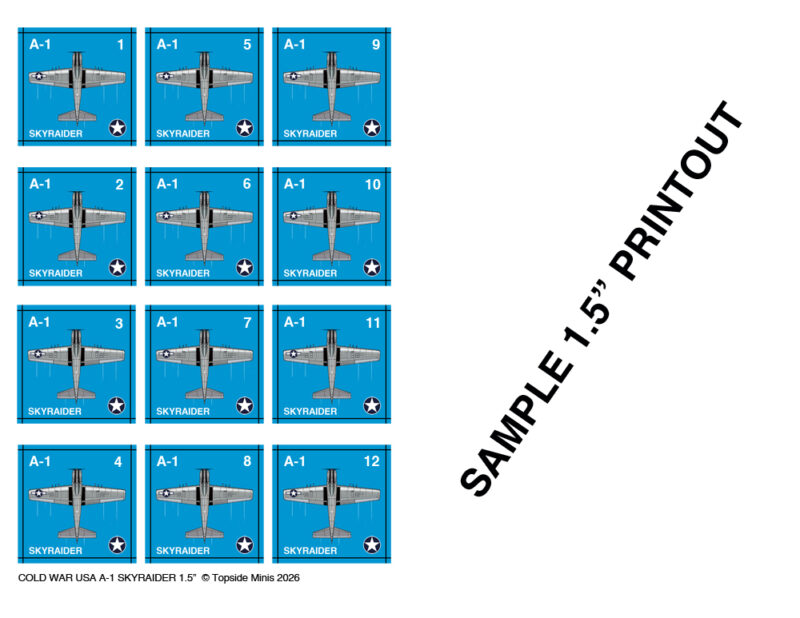
- 12 1.5” square counter images
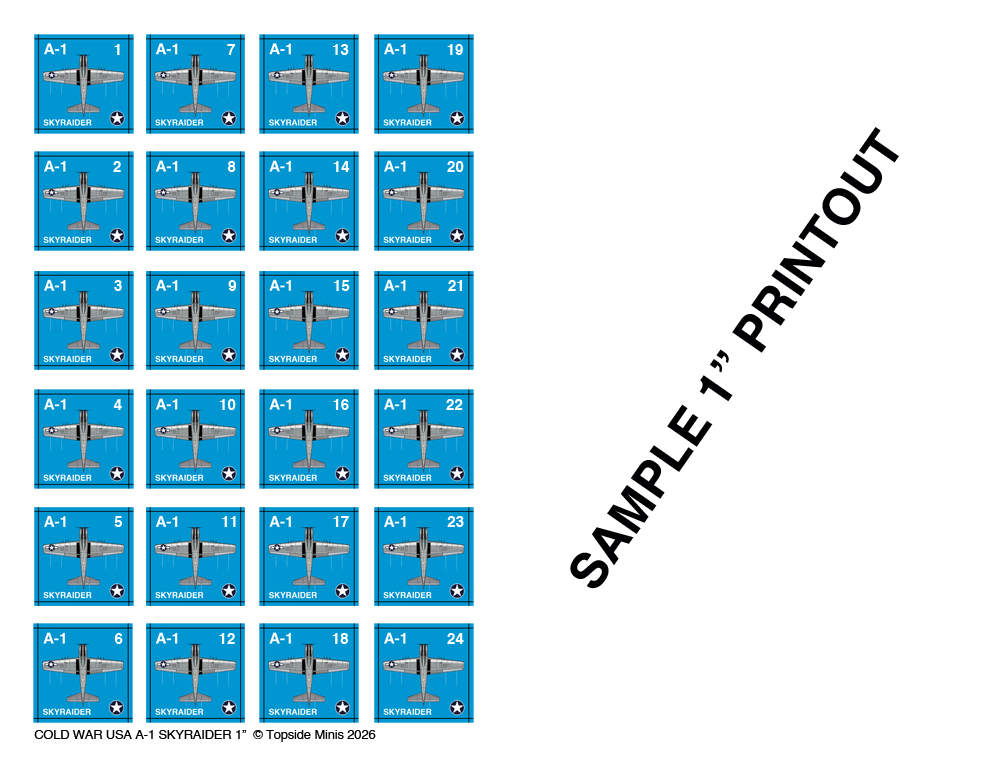
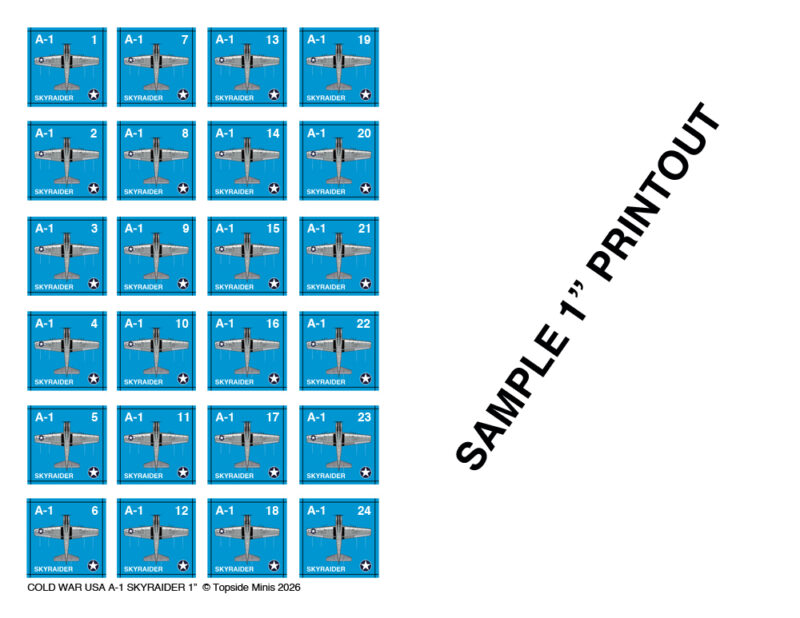
- 24 1” square counter images
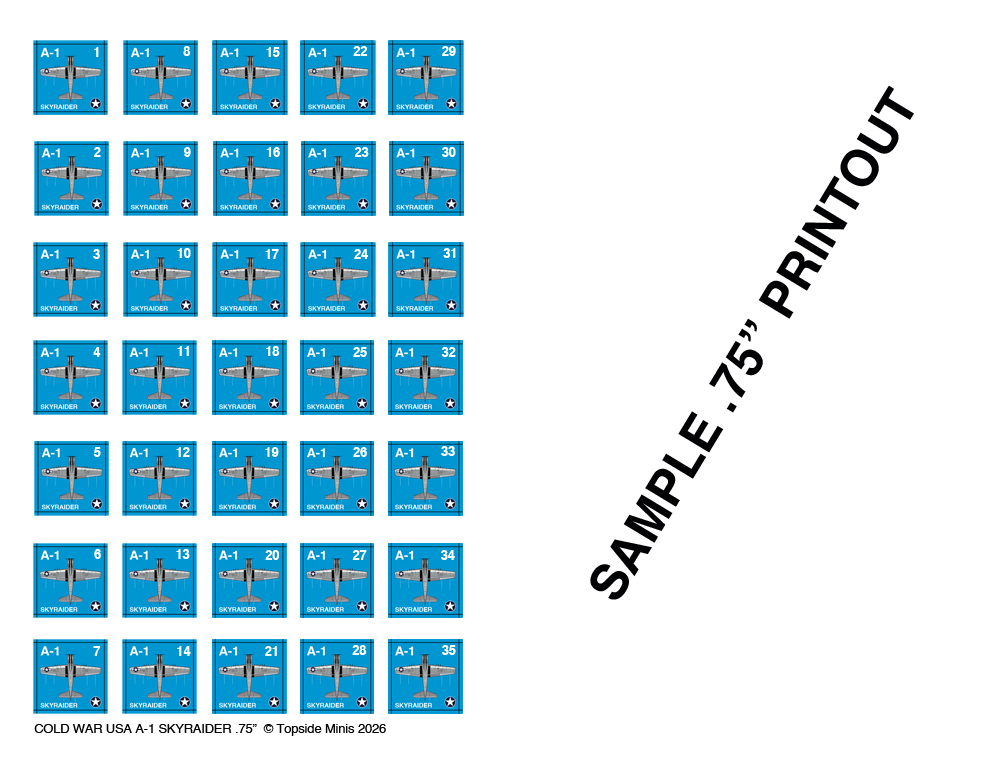
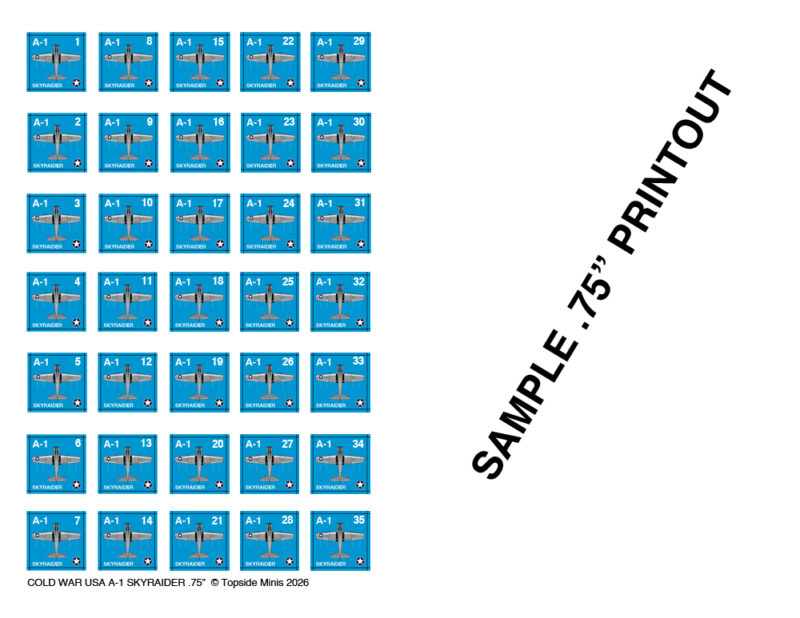
- 35 .75” square counter images
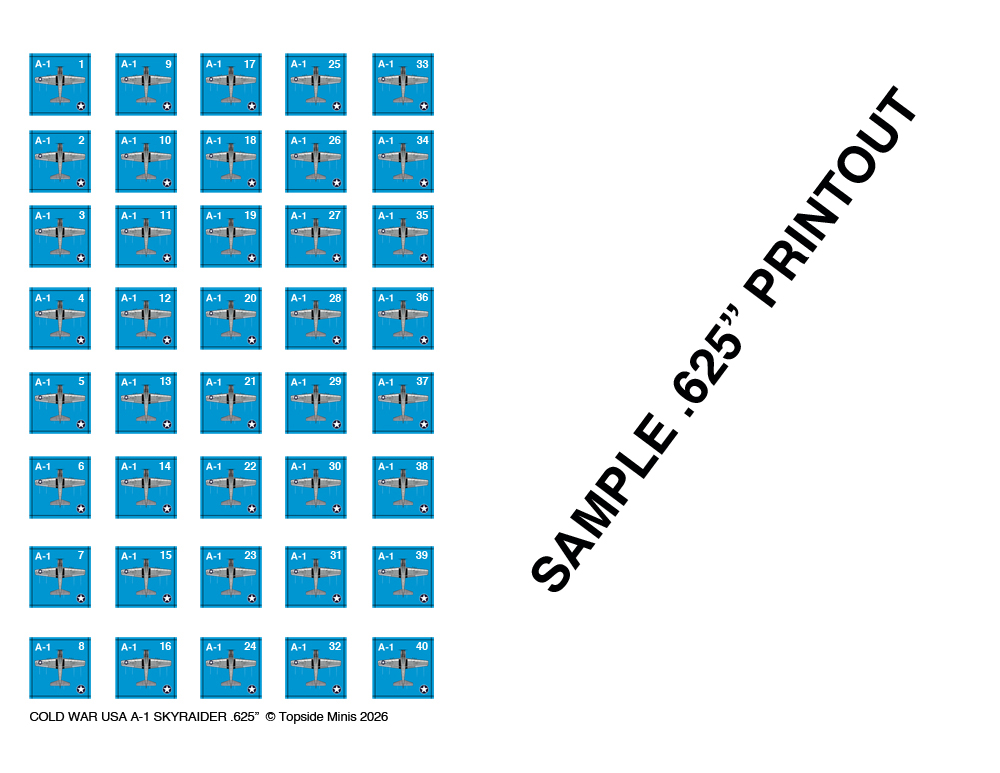
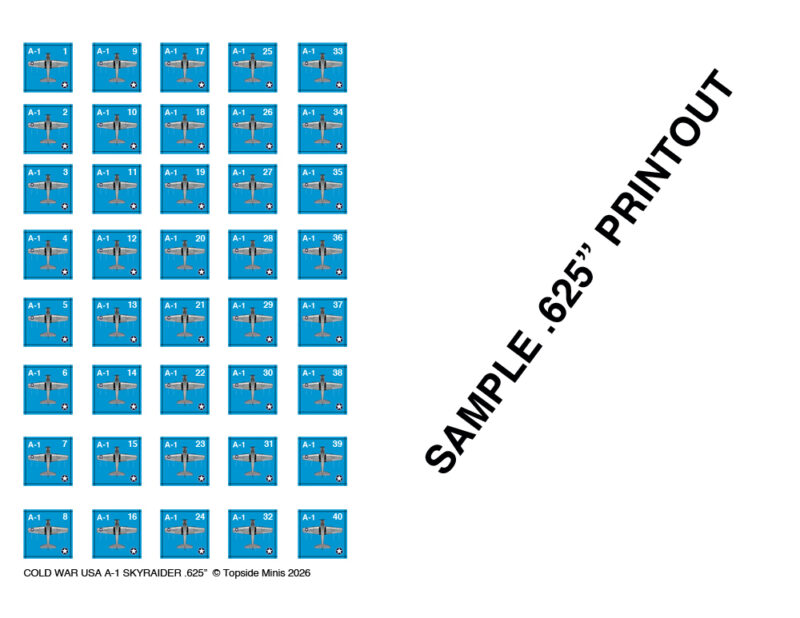
- 40 .625” square counter images
- Numbered Images to assist with game organization and tracking
- Printable PDF format for personal gaming use
Each image size is contained on a ½ sheet.
- Enables users to save paper and print 2 types of aircraft on the same page.
- Print one set of aircraft images then reverse the page in the printer and print a second type of your choice on the same page.
| Weight | N/A |
|---|---|
| Paper Size | A4 210 × 297 mm, Letter 8.5 x 11 |
Related products

Cold War Aircraft
Cold War Aircraft

Cold War Aircraft
Cold War Aircraft
Cold War Aircraft
Cold War Aircraft

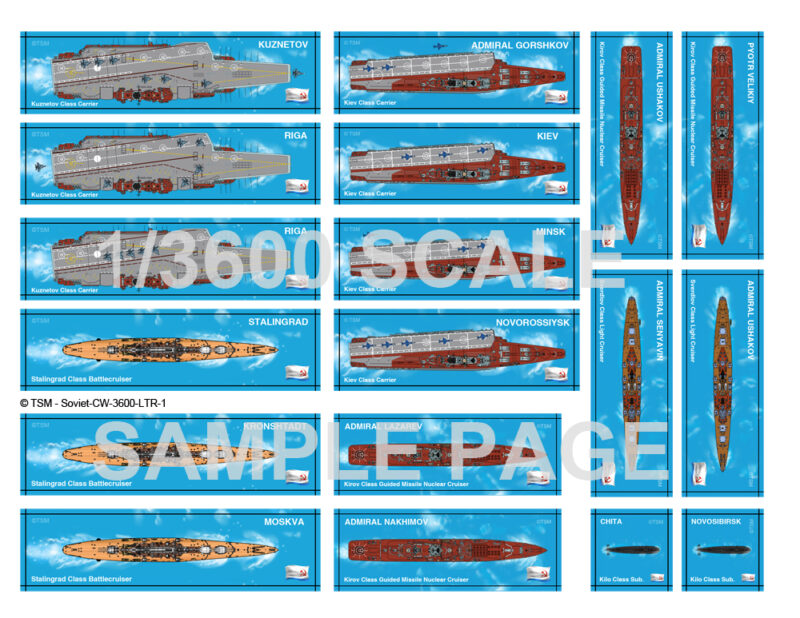
Cold War Era
Cold War Aircraft