
Tu-160 Blackjack – PDF
$2.45
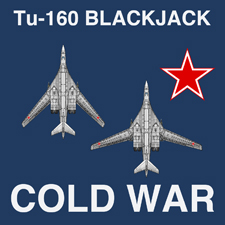
The Tupolev Tu-160 “Blackjack” was a Soviet four-engine, supersonic strategic bomber developed during the late Cold War for long-range nuclear and conventional strike missions. Entering operational service in 1987, the Tu-160 became the largest and heaviest combat aircraft ever placed into production, featuring variable-sweep wings, powerful turbofan engines, and the ability to carry long-range cruise missiles. Designed to penetrate or strike beyond sophisticated enemy air defenses, the Blackjack served as a major component of Soviet and later Russian strategic aviation. Modernized Tu-160 aircraft have participated in combat operations in Syria and Ukraine, demonstrating the continued importance of the design in Russian long-range aviation.
| Title | Range | Discount |
|---|---|---|
| Cold War Aircraft - 10% Off | 5 - 9 | 10% |
| Cold War Aircraft - 15% Off | 10 - 19 | 15% |
| Cold War Aircraft - 20% Off | 20 + | 20% |
The Tupolev Tu-160 “Blackjack” was developed during the 1970s as the Soviet Union sought a new generation of supersonic strategic bombers capable of conducting intercontinental nuclear strike missions. Designed by the Tupolev bureau, the aircraft incorporated variable-sweep wings, a streamlined fuselage, and four powerful Kuznetsov NK-32 afterburning turbofan engines. These features allowed the Tu-160 to combine exceptional range and weapons capacity with speeds exceeding Mach 2 at high altitude. The prototype first flew in December 1981, and the aircraft entered operational service in 1987. With a maximum takeoff weight exceeding 270 metric tons, the Tu-160 became the largest and heaviest combat aircraft ever placed into production, representing the culmination of Soviet Cold War strategic bomber development.
The Tu-160 was designed primarily for long-range nuclear and conventional strategic strike missions. Unlike earlier bombers that relied heavily on penetrating defended airspace to release conventional bombs, the Blackjack was optimized to carry long-range air-launched cruise missiles capable of striking targets from considerable distances. Its two internal weapons bays could accommodate rotary launchers carrying up to twelve Kh-55 nuclear cruise missiles, providing the ability to attack multiple strategic targets during a single mission. Later modernization programs expanded the aircraft’s compatibility with advanced conventional and nuclear cruise missiles, including the Kh-101 and Kh-102 families. The Tu-160’s variable-sweep wings allowed efficient long-range cruising with the wings extended and high-speed flight with the wings swept rearward, providing considerable flexibility during strategic operations.
During the final years of the Cold War, Tu-160 bombers entered service with Soviet Long-Range Aviation, strengthening the Soviet Union’s ability to conduct strategic nuclear operations against distant targets. The aircraft was intended to operate as part of the Soviet nuclear deterrent, complementing land-based intercontinental ballistic missiles, submarine-launched ballistic missiles, and other long-range bombers. Following the dissolution of the Soviet Union in 1991, a number of Tu-160 aircraft remained at their operational base in newly independent Ukraine. Most of these aircraft were subsequently dismantled under disarmament arrangements, while eight were transferred to Russia in 1999–2000 as part of a settlement involving energy debts. Russia retained the Tu-160 as an important component of its strategic bomber force, gradually restoring and modernizing the surviving aircraft.
The Tu-160 first participated in combat operations during Russian military intervention in Syria in November 2015, launching long-range conventional cruise missiles against targets associated with militant organizations. During the Russo-Ukrainian War, Russian Tu-160 aircraft have been employed as stand-off missile carriers, launching cruise missiles against targets throughout Ukraine, including attacks affecting civilian infrastructure. Modernization programs have produced the Tu-160M, incorporating updated avionics, navigation systems, electronic warfare equipment, and improved engines. Russia has also pursued renewed production of the aircraft using modernized manufacturing processes. Known by the NATO reporting name “Blackjack” and the Russian nickname “White Swan”, the Tu-160 remains one of the world’s most powerful strategic bombers and a prominent symbol of Soviet and Russian long-range aviation.
Manufacturer: Tupolev Design Bureau; Kazan Aircraft Production Association
Service Branch: Soviet Air Forces (Long-Range Aviation); Russian Air Force and Aerospace Forces (Long-Range Aviation)
Soviet Service: 1987–1991
Post-Soviet Service: 1991–present (Russia)
Number Built: Approximately 36 original-production aircraft, including prototypes and test aircraft; additional modernized new-production aircraft have been built
What’s included for both versions:
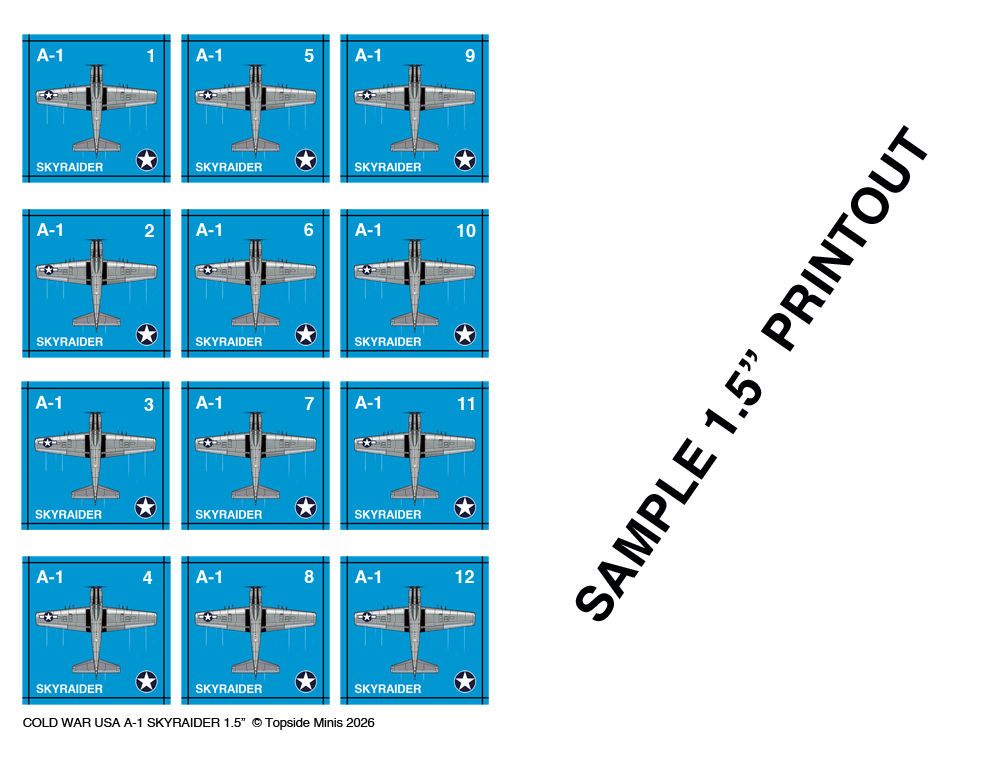
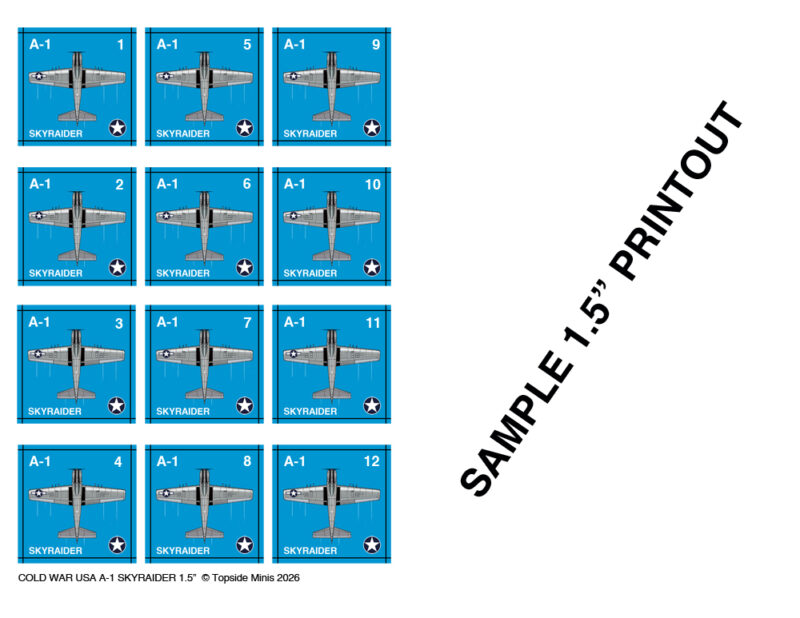
- 12 1.5” square counter images
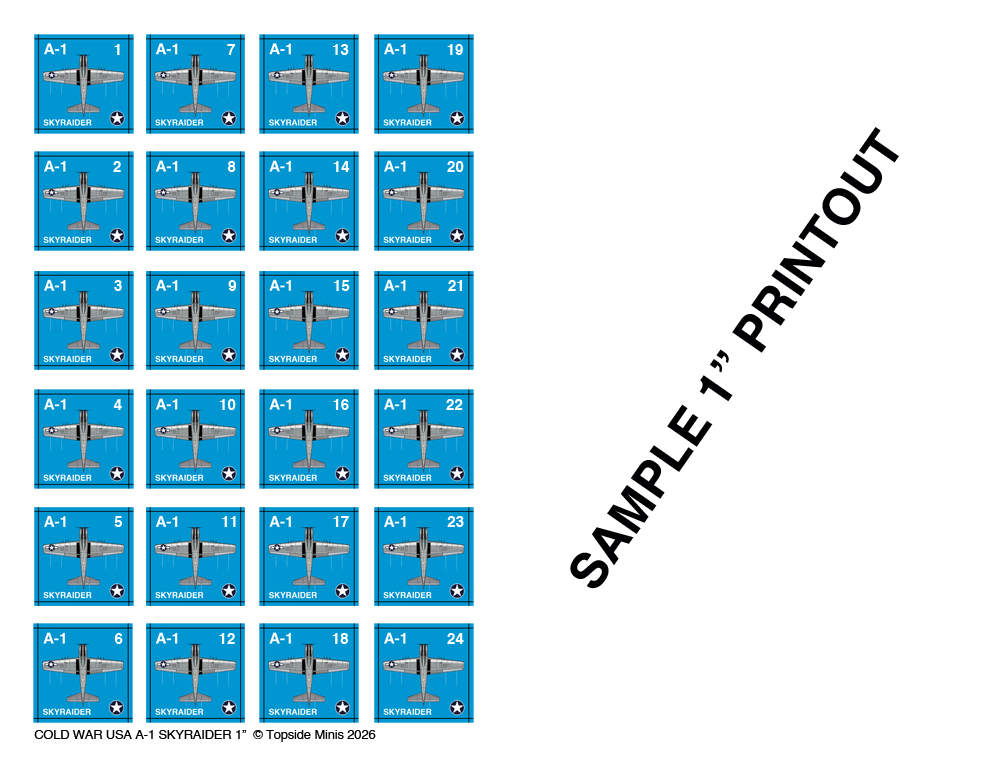
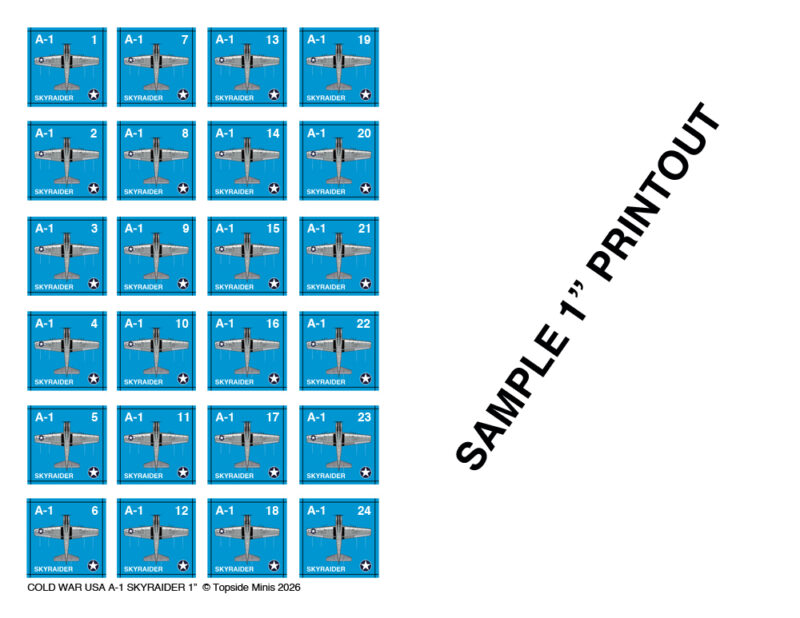
- 24 1” square counter images
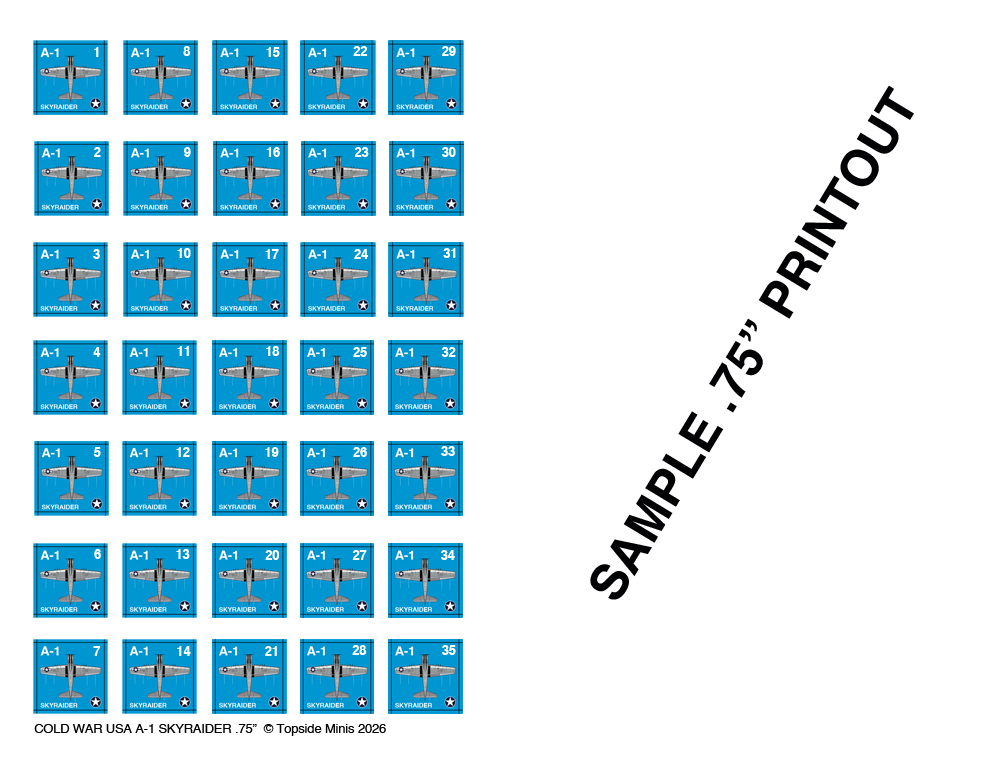
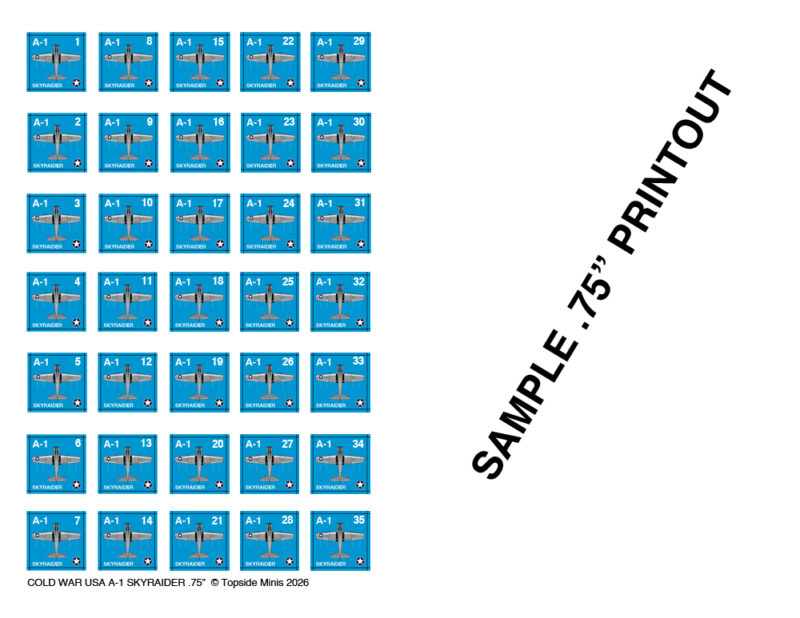
- 35 .75” square counter images
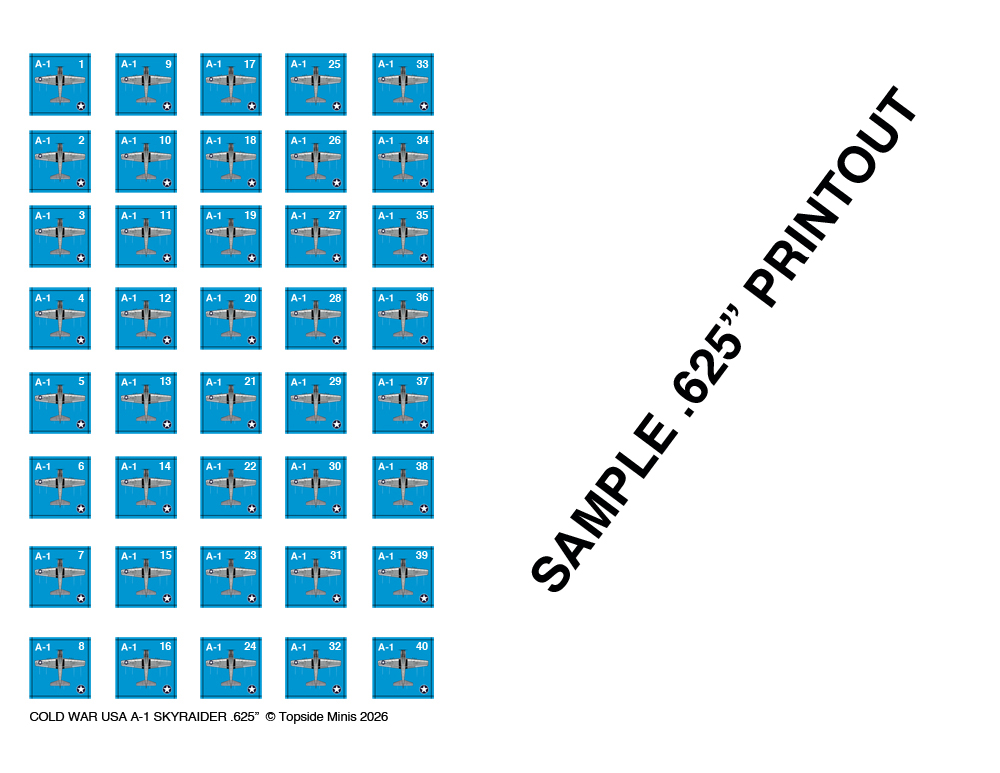
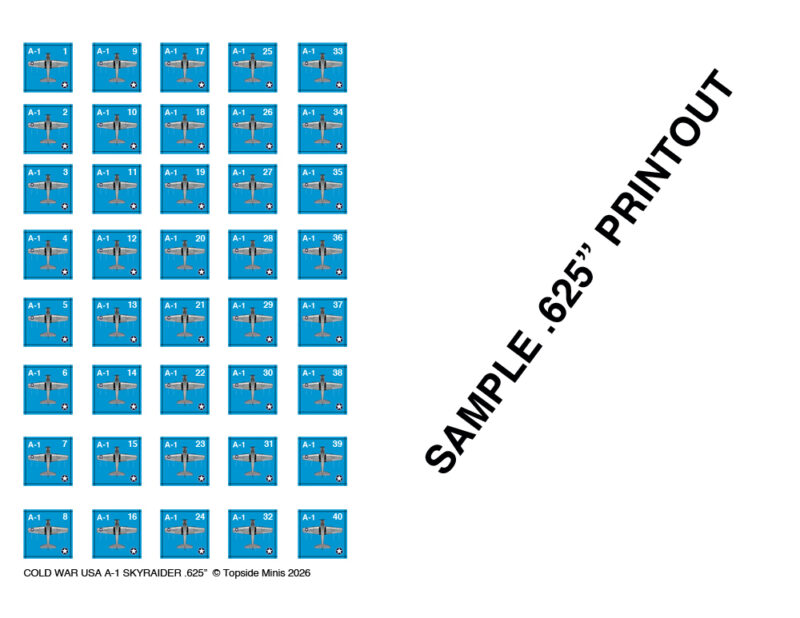
- 40 .625” square counter images
- Numbered Images to assist with game organization and tracking
- Printable PDF format for personal gaming use
Each image size is contained on a ½ sheet.
- Enables users to save paper and print 2 types of aircraft on the same page.
- Print one set of aircraft images then reverse the page in the printer and print a second type of your choice on the same page.
| Weight | N/A |
|---|---|
| Paper Size | A4 210 × 297 mm, Letter 8.5 x 11 |
Related products
Cold War Aircraft
Cold War Aircraft

Cold War Aircraft

Cold War Aircraft

Cold War Aircraft
Cold War Aircraft
Cold War Aircraft

Cold War Aircraft