
Su-27 Flanker – PDF
$1.95
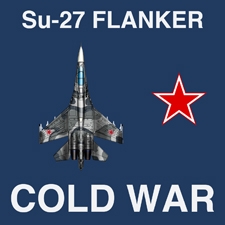
The Sukhoi Su-27 “Flanker” is a Soviet twin-engine, supersonic air superiority fighter developed to counter advanced Western aircraft such as the American F-15 Eagle. Entering operational service in 1985, the Su-27 combined exceptional maneuverability, long-range performance, powerful radar, and advanced air-to-air missiles. Designed to protect Soviet airspace and establish air superiority, the Flanker became one of the Soviet Union’s most formidable fighters during the final years of the Cold War. Following the dissolution of the Soviet Union, the Su-27 continued serving with Russia, Ukraine, and several foreign air forces, participating in conflicts across Africa and Eastern Europe.
| Title | Range | Discount |
|---|---|---|
| Cold War Aircraft - 10% Off | 5 - 9 | 10% |
| Cold War Aircraft - 15% Off | 10 - 19 | 15% |
| Cold War Aircraft - 20% Off | 20 + | 20% |
The Sukhoi Su-27 “Flanker” was developed during the 1970s as part of the Soviet Union’s effort to produce a new generation of fighters capable of challenging advanced American aircraft, particularly the McDonnell Douglas F-15 Eagle. Designed by the Sukhoi bureau under the Soviet PFI fighter development program, the Su-27 was intended to provide long-range air superiority, high maneuverability, and advanced interception capabilities. Its distinctive configuration featured a broad blended wing and fuselage, twin engines mounted in widely separated nacelles, twin vertical stabilizers, and a large lifting surface that contributed to exceptional aerodynamic performance. The aircraft first flew in 1977, underwent substantial redesign during development, and entered operational service in 1985.
The Su-27 became a major component of both the Soviet Air Forces (VVS) and the Soviet Air Defense Forces (PVO), serving in air superiority and long-range interception roles. Powered by two powerful Saturn AL-31F turbofan engines, the Flanker combined high speed, excellent acceleration, and exceptional maneuverability with substantial fuel capacity, allowing it to operate over considerably greater distances than many contemporary fighters. Its weapons included a 30 mm cannon, R-27 medium-range air-to-air missiles, and R-73 short-range infrared-guided missiles. The aircraft’s helmet-mounted sight and high-off-boresight missile capability provided significant advantages in close-range aerial combat. Its radar and infrared search-and-track system allowed pilots to detect and engage hostile aircraft under a variety of operational conditions.
During the final years of the Cold War, Soviet Su-27s regularly conducted air defense patrols and interception missions, particularly near NATO airspace and over strategically important regions such as the Baltic Sea, Black Sea, and Soviet Far East. Although the aircraft did not participate in major conventional combat operations before the dissolution of the Soviet Union, its introduction represented a substantial improvement in Soviet fighter capabilities. The Flanker attracted international attention through its appearances at Western airshows and its impressive maneuverability, including the dramatic high-angle-of-attack maneuver commonly known as the Pugachev’s Cobra. The Su-27’s combination of range, agility, and powerful air-to-air armament established it as one of the most capable Soviet fighters of its generation.
Following the collapse of the Soviet Union in 1991, the Su-27 continued serving with the air forces of Russia, Ukraine, Belarus, Kazakhstan, and other nations. Exported aircraft also entered service with China, Vietnam, Ethiopia, and several additional operators. Ethiopian Su-27s participated in the Eritrean-Ethiopian War (1998–2000), engaging Eritrean MiG-29 fighters in aerial combat and achieving reported victories. Russian and Ukrainian Su-27s have also participated in the Russo-Ukrainian War, conducting air defense, interception, and other combat missions. The aircraft’s basic design provided the foundation for an extensive family of advanced fighters, including the Su-30, Su-33, Su-34, and Su-35. The NATO-designated “Flanker” remains one of the most influential Soviet fighter designs of the late Cold War and a cornerstone of modern Russian combat aviation.
Service Branch: Soviet Air Forces (VVS); Soviet Air Defense Forces (PVO); Russian Aerospace Forces; Ukrainian Air Force; numerous foreign air forces
Soviet Service: 1985–1991
Post-Soviet Service: 1991–present (various operators)
Number Built: Approximately 680 Su-27 and Su-27UB aircraft; substantially more across the extended Flanker family
What’s Included:
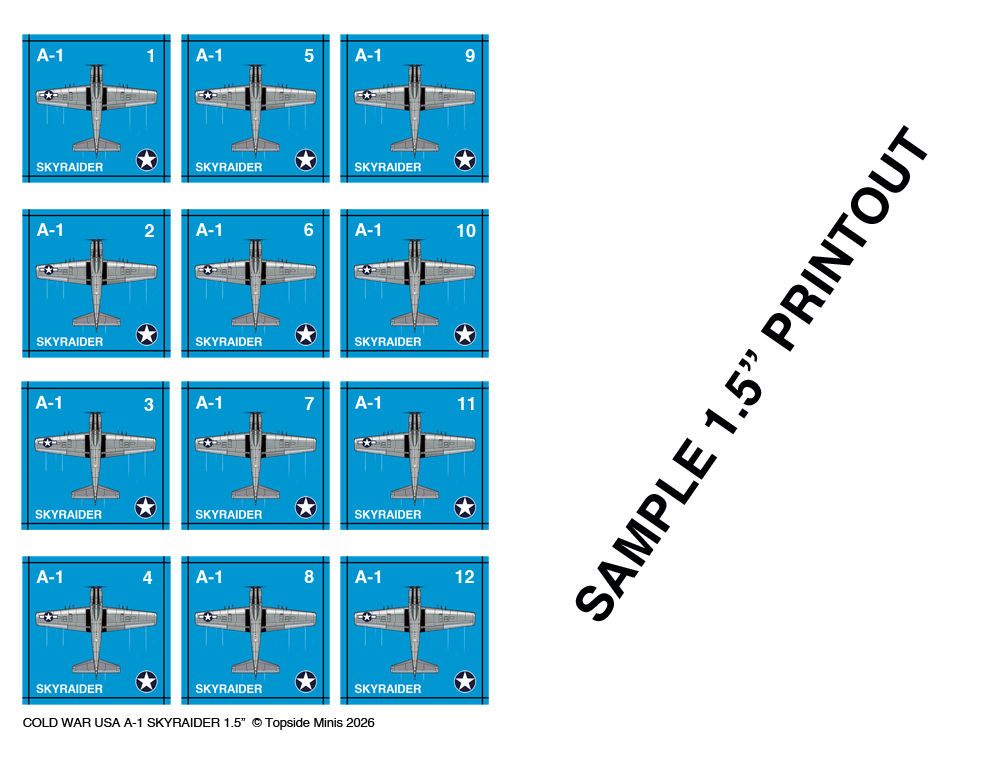
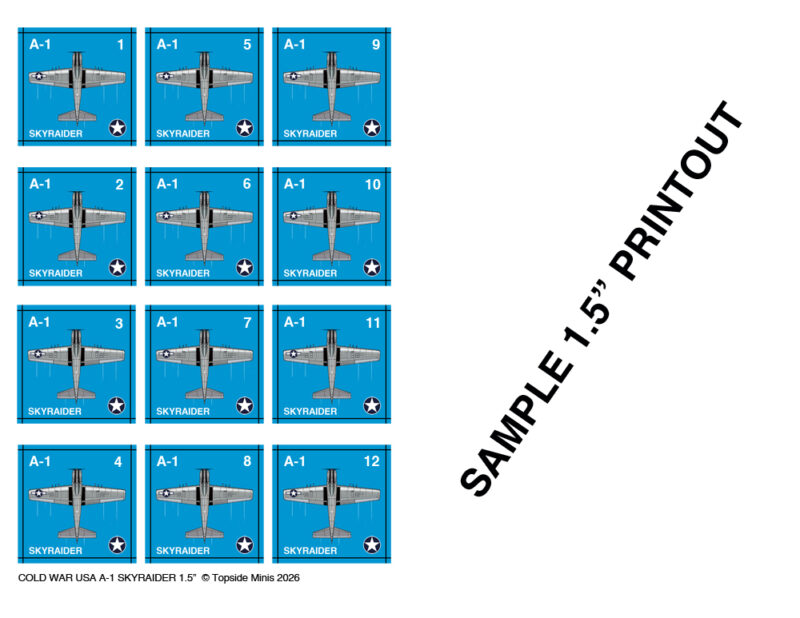
- 12 1.5” square counter images
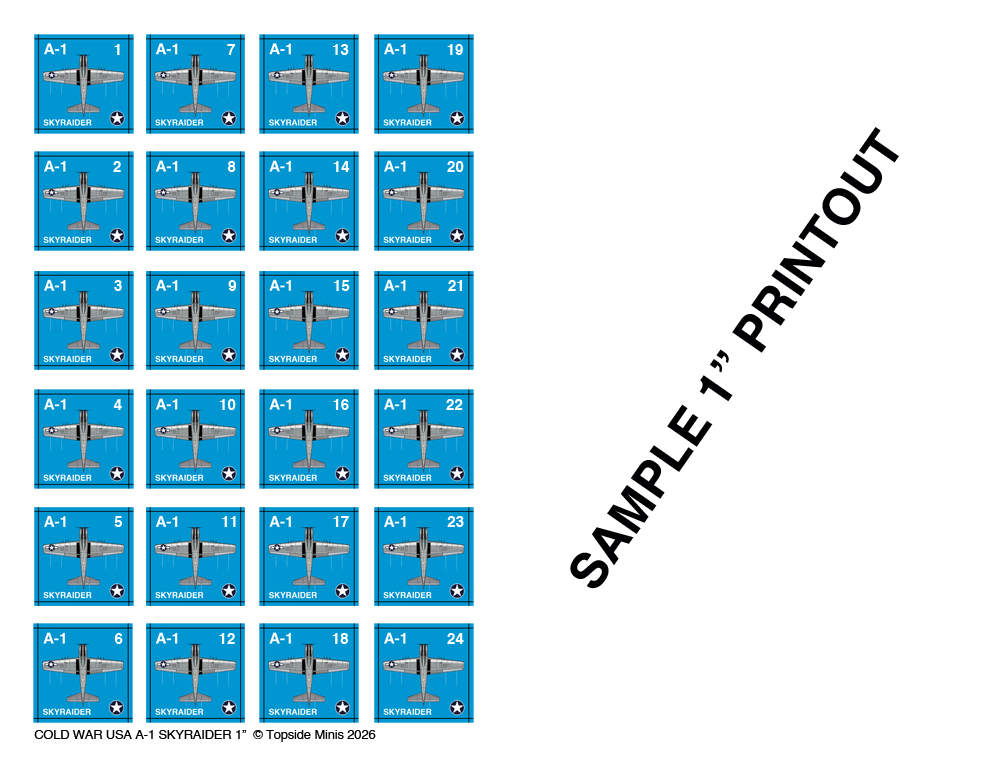
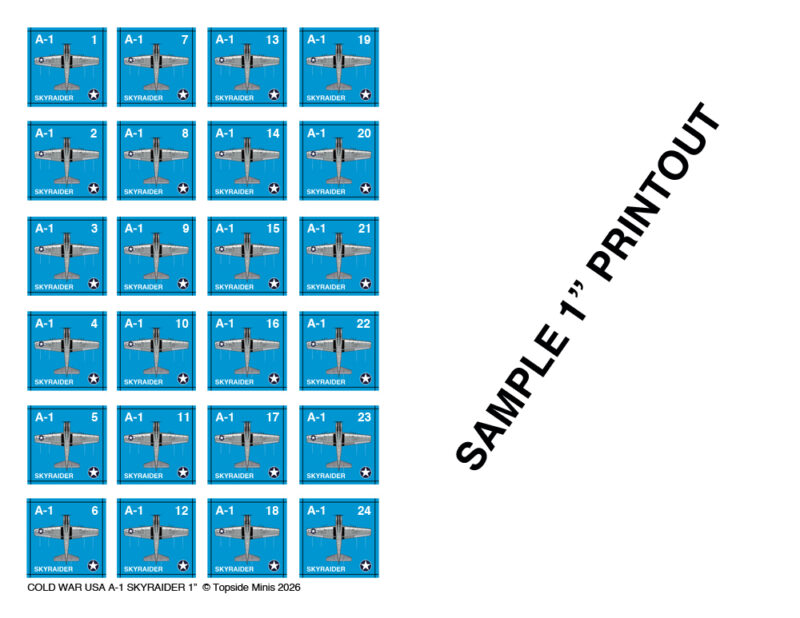
- 24 1” square counter images
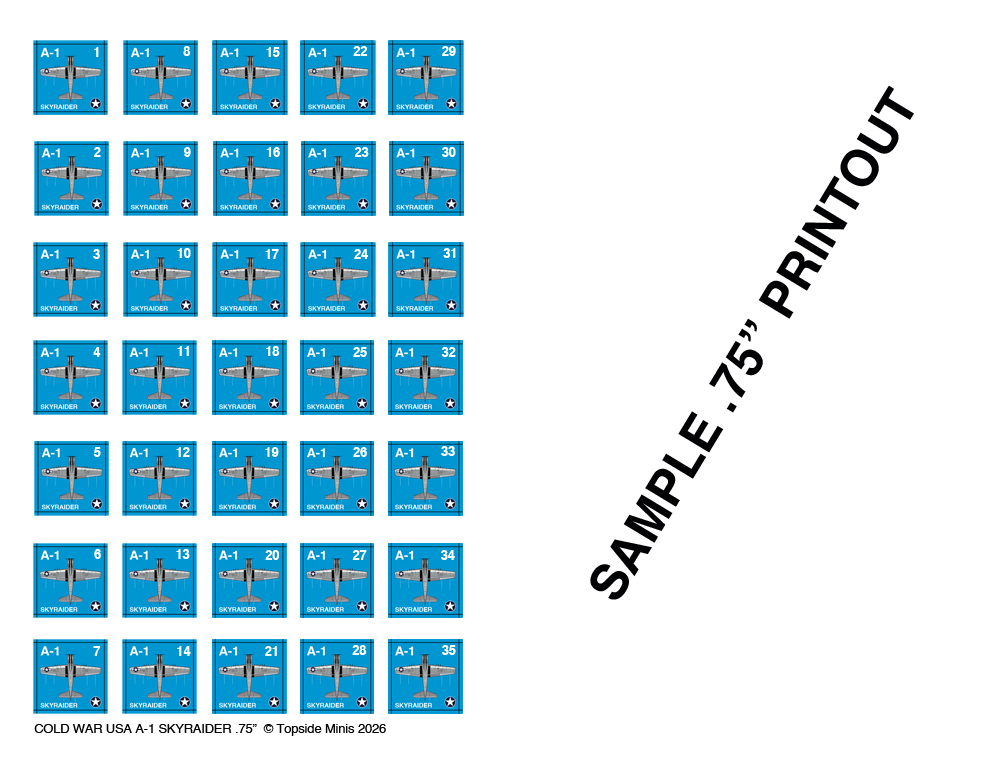
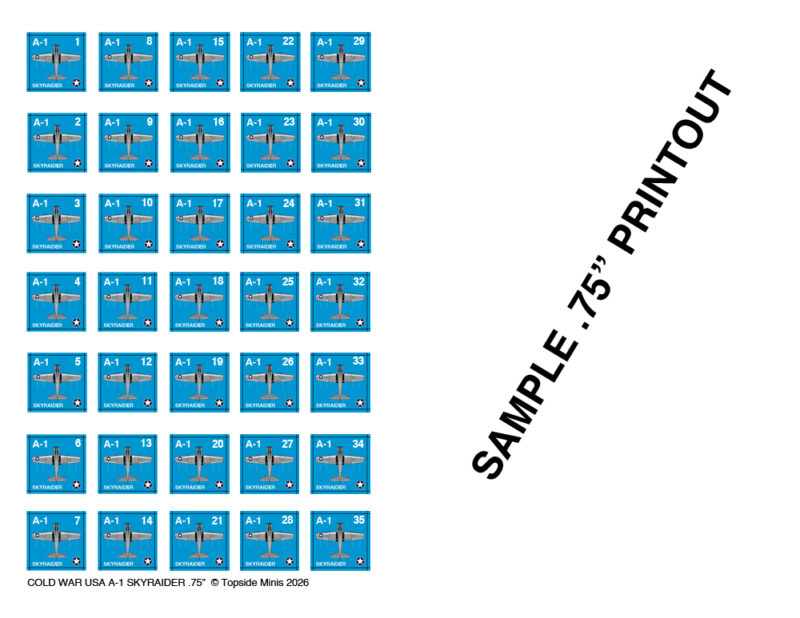
- 35 .75” square counter images
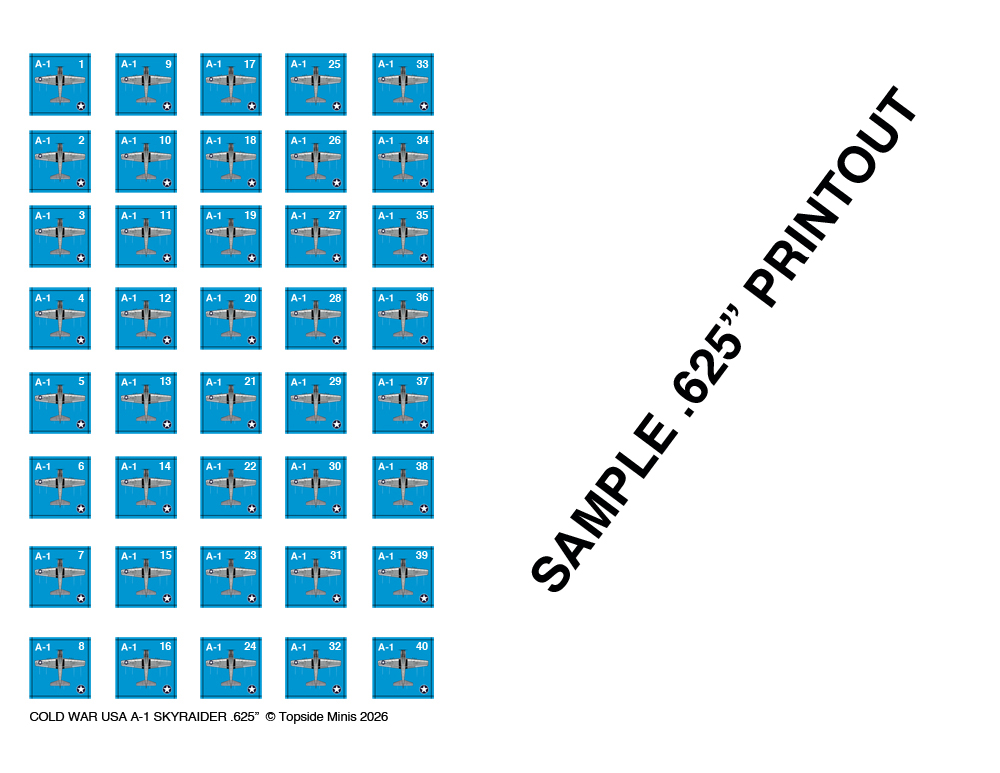
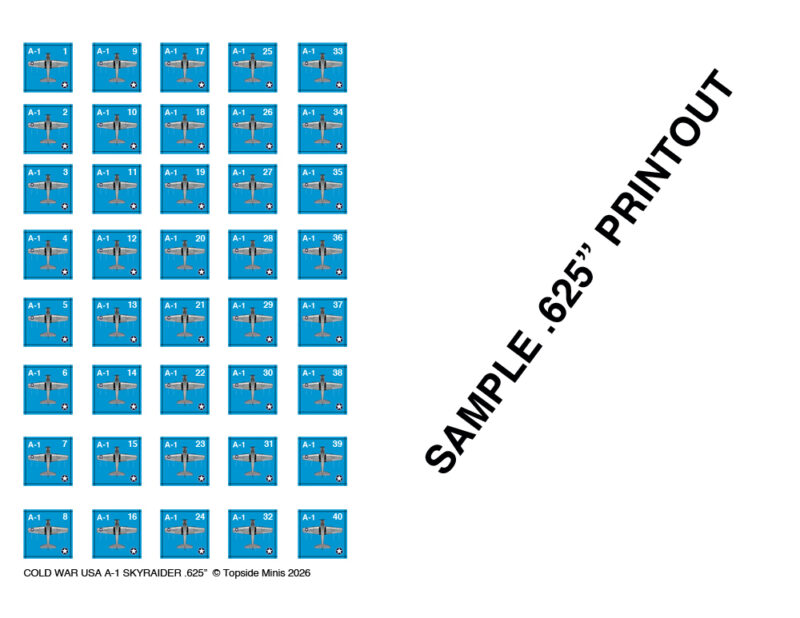
- 40 .625” square counter images
- Numbered Images to assist with game organization and tracking
- Printable PDF format for personal gaming use
Each image size is contained on a ½ sheet.
- Enables users to save paper and print 2 types of aircraft on the same page.
- Print one set of aircraft images then reverse the page in the printer and print a second type of your choice on the same page.
| Weight | N/A |
|---|---|
| Paper Size | A4 210 × 297 mm, Letter 8.5 x 11 |
Related products
Cold War Aircraft
Cold War Aircraft
Cold War Aircraft
Cold War Aircraft

Cold War Aircraft

Cold War Aircraft
Cold War Aircraft
Cold War Aircraft