Yak-38 Forger – PDF
$1.95
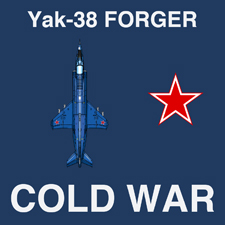
The Yakovlev Yak-38 “Forger” was a Soviet single-seat, vertical/short takeoff and landing (V/STOL) naval attack aircraft developed for operation aboard the Soviet Navy’s Kiev-class aviation cruisers. Entering service in 1976, the Yak-38 became the Soviet Union’s first operational fixed-wing V/STOL combat aircraft, providing limited ground attack, maritime strike, and fleet defense capabilities. Equipped with a main lift-and-cruise engine and two dedicated vertical lift engines, the Forger could operate from relatively small carrier decks without conventional catapults or arresting gear. The aircraft also underwent combat evaluation in Afghanistan during 1980, although its performance was restricted by high temperatures, limited payload, and short operational range.
| Title | Range | Discount |
|---|---|---|
| Cold War Aircraft - 10% Off | 5 - 9 | 10% |
| Cold War Aircraft - 15% Off | 10 - 19 | 15% |
| Cold War Aircraft - 20% Off | 20 + | 20% |
The Yakovlev Yak-38 “Forger” was developed during the late 1960s and early 1970s as the Soviet Union sought to introduce fixed-wing aviation aboard its expanding fleet of aviation cruisers. Designed by the Yakovlev Design Bureau, the aircraft evolved from the experimental Yak-36 V/STOL demonstrator but incorporated a substantially different propulsion arrangement. The Yak-38 employed a single Tumansky R-27V-300 lift-and-cruise turbojet engine with rotating exhaust nozzles, supplemented by two dedicated vertical lift engines mounted behind the cockpit. This configuration allowed the aircraft to take off and land vertically without conventional carrier launch and recovery equipment. The prototype first flew in January 1971, and the Yak-38 entered operational service with Soviet Naval Aviation in 1976, becoming the Soviet Union’s first operational fixed-wing V/STOL combat aircraft.
The Yak-38 was designed primarily for naval ground attack, limited maritime strike, and short-range fleet defense missions. Operating from the Soviet Navy’s Kiev-class aviation cruisers, including Kiev, Minsk, Novorossiysk, and Baku, the Forger provided these warships with an organic fixed-wing aviation capability. The aircraft could carry conventional bombs, unguided rockets, gun pods, and short-range air-to-air missiles, including the R-60. However, its relatively limited range, small weapons payload, and lack of an onboard radar significantly restricted its effectiveness as an interceptor or fleet defense fighter. The Yak-38 was better suited to attacks against lightly defended surface or ground targets than sustained air combat against modern Western fighters. Its V/STOL propulsion system also consumed considerable fuel during vertical takeoffs, reducing operational endurance and weapons capacity.
The Yak-38 underwent a limited combat evaluation during the Soviet-Afghan War. In 1980, four Yak-38 aircraft were deployed to Afghanistan under an experimental program commonly associated with Operation Romb, operating from a specially prepared site near Shindand. The deployment was intended to evaluate the aircraft’s ability to operate from austere locations and conduct ground attack missions under combat conditions. High temperatures, elevated operating conditions, and the aircraft’s limited thrust margins severely restricted performance, particularly during vertical takeoffs. The evaluation demonstrated significant operational limitations and did not lead to widespread use of the Yak-38 in Afghanistan. Most of the aircraft’s operational career was instead spent conducting training, patrol, and attack exercises from Soviet aviation cruisers in the Mediterranean, Atlantic, Indian Ocean, and Pacific.
During the 1980s, the improved Yak-38M “Forger-A” introduced more powerful engines and modifications intended to improve takeoff performance and operational capabilities. A two-seat training variant, the Yak-38U “Forger-B”, was also produced to support pilot conversion and carrier operations. Despite these improvements, the Yak-38 remained constrained by its short range, limited payload, and lack of advanced combat avionics. The aircraft was gradually withdrawn following the dissolution of the Soviet Union, with the remaining fleet retired during the early 1990s. Although the Soviet Navy subsequently pursued the more advanced supersonic Yak-141 V/STOL fighter, that program never entered operational service. The NATO-designated “Forger” nevertheless represented an important milestone in Soviet naval aviation, establishing the Soviet Union’s first operational shipborne fixed-wing V/STOL capability.
Manufacturer: Yakovlev Design Bureau; Saratov Aviation Plant
Service Branch: Soviet Naval Aviation; Russian Naval Aviation
Soviet Service: 1976–1991
Post-Soviet Service: 1991–1992 (Russia)
Number Built: Approximately 231 aircraft across the Yak-38 family, including Yak-38M and Yak-38U variants
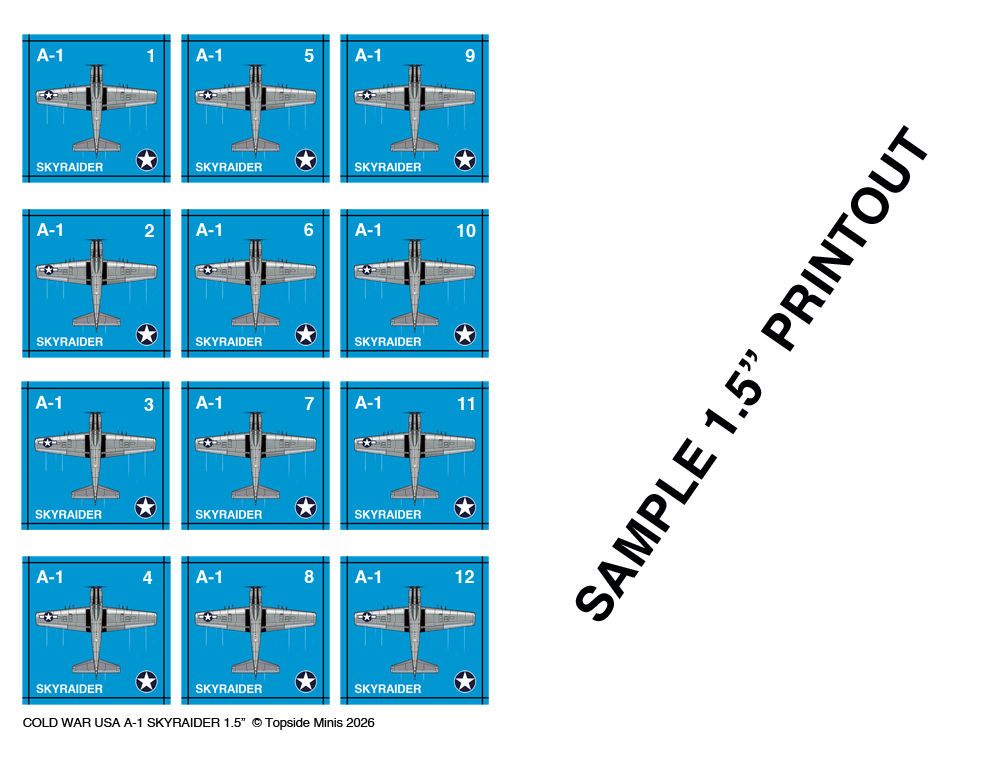
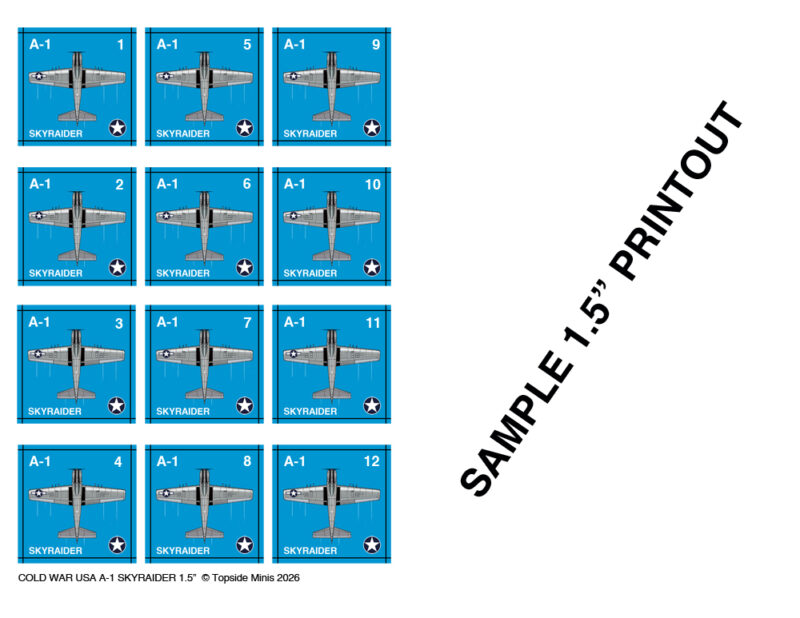
- 12 1.5” square counter images
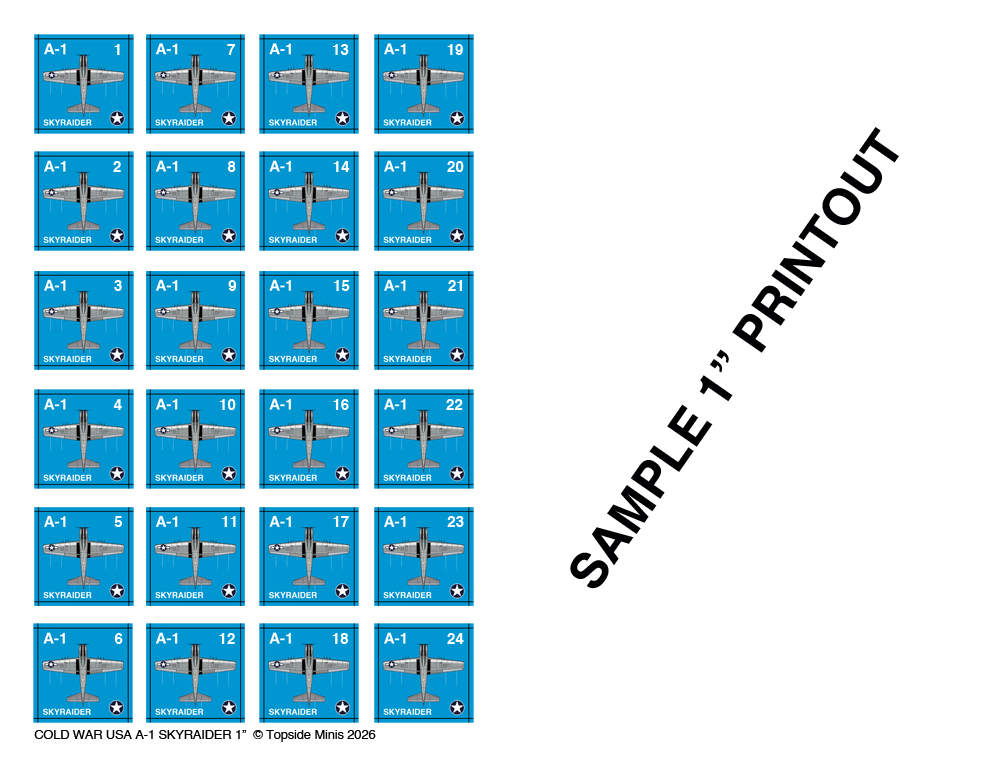
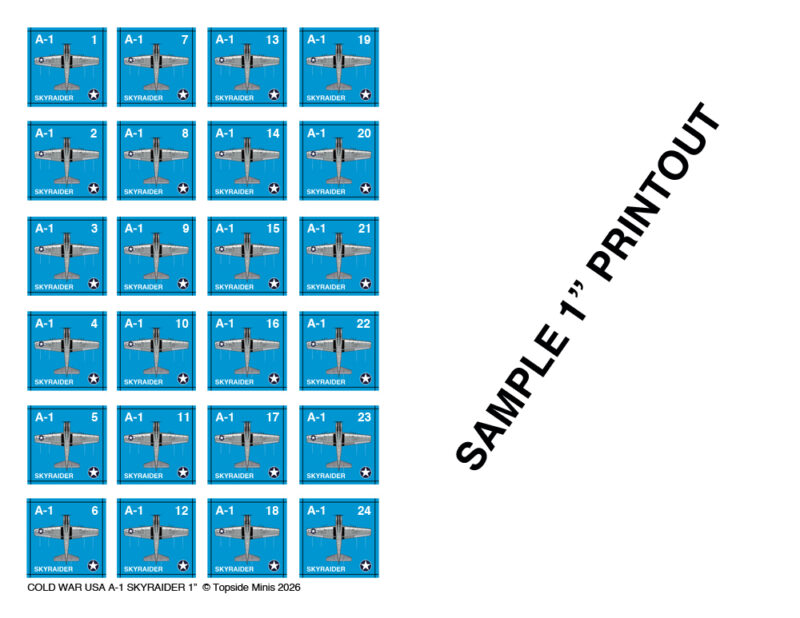
- 24 1” square counter images
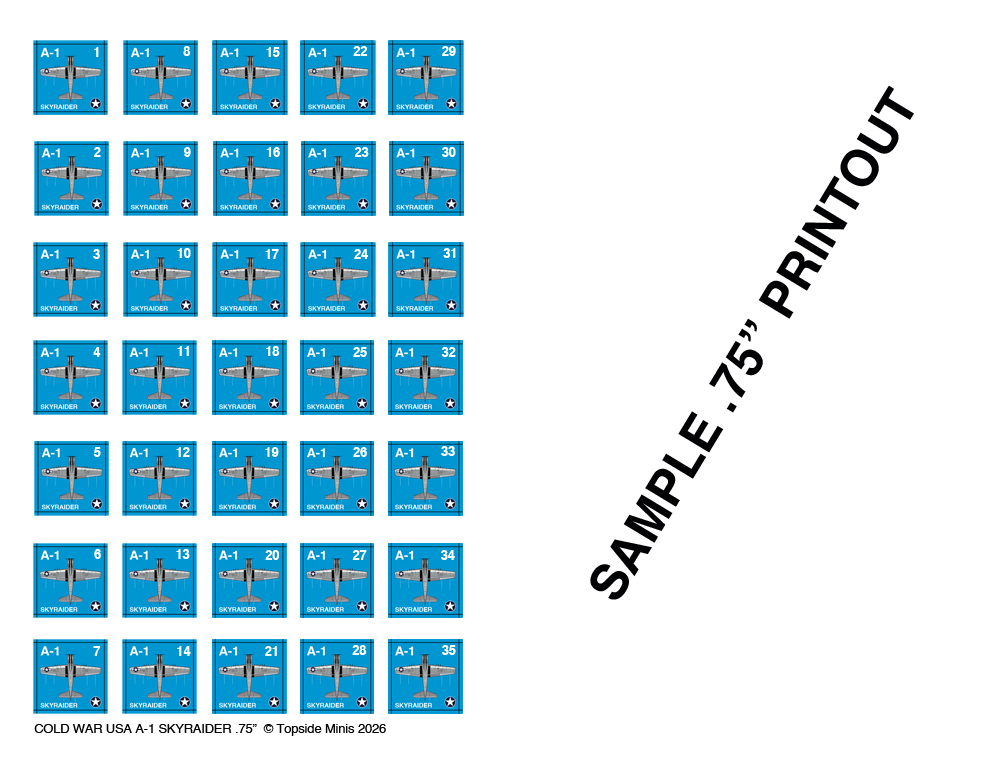
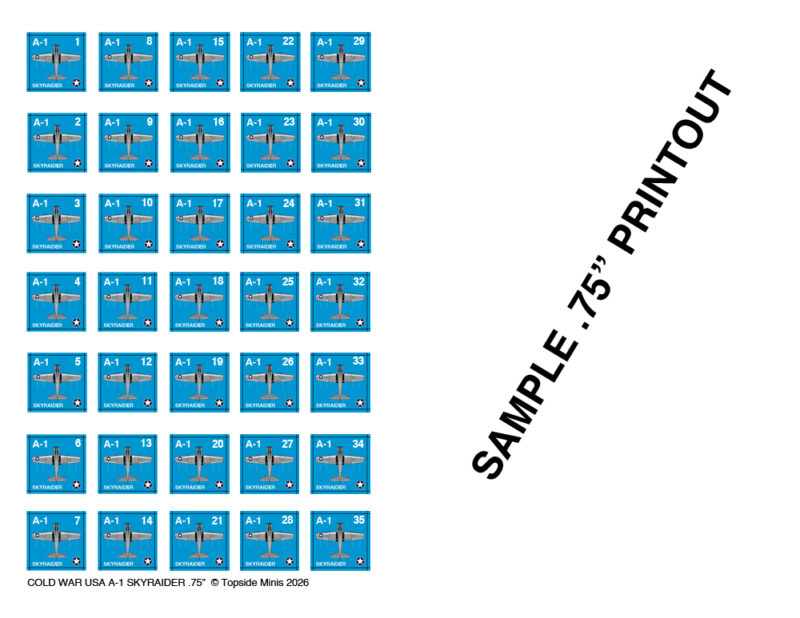
- 35 .75” square counter images
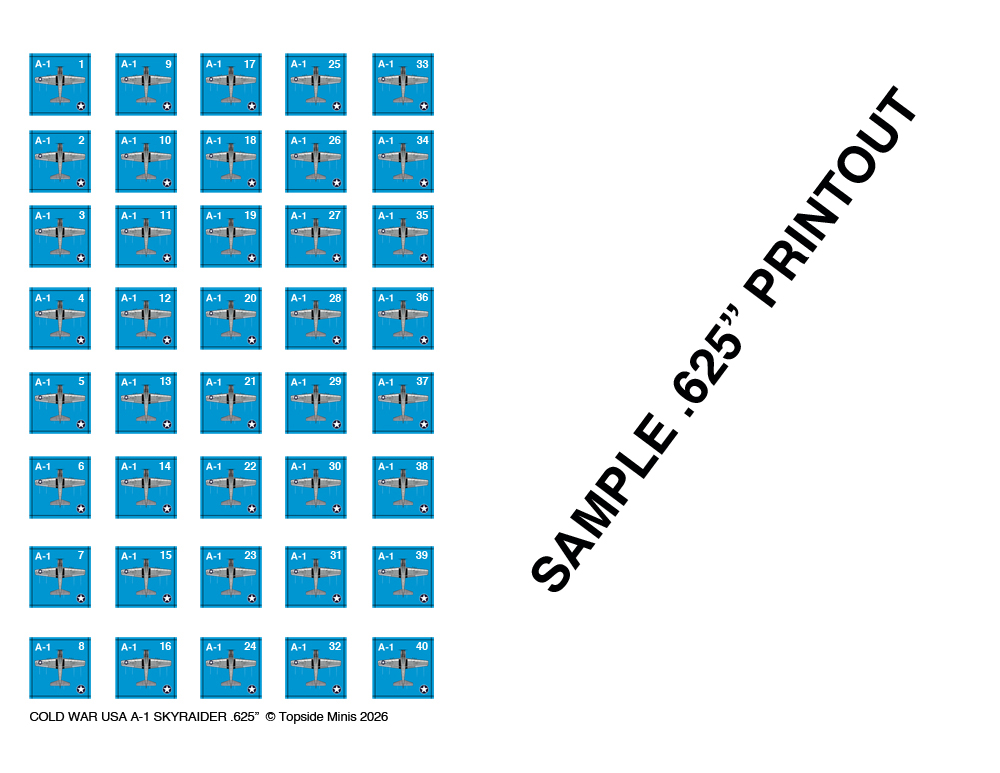
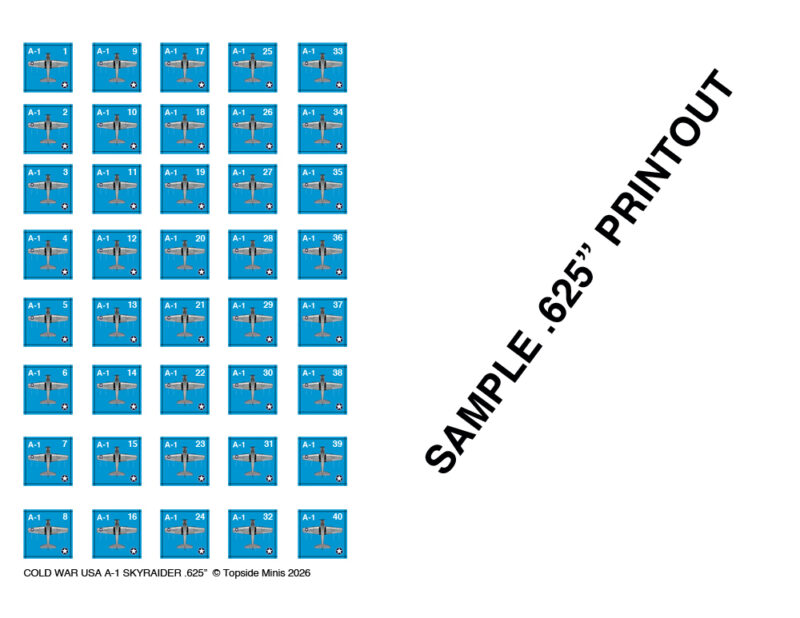
- 40 .625” square counter images
- Numbered Images to assist with game organization and tracking
- Printable PDF format for personal gaming use
Each image size is contained on a ½ sheet.
- Enables users to save paper and print 2 types of aircraft on the same page.
- Print one set of aircraft images then reverse the page in the printer and print a second type of your choice on the same page.
| Weight | N/A |
|---|---|
| Paper Size | A4 210 × 297 mm, Letter 8.5 x 11 |
Related products
Cold War Aircraft
Cold War Aircraft
Cold War Aircraft
Cold War Aircraft

Cold War Aircraft
Cold War Aircraft


Cold War Era
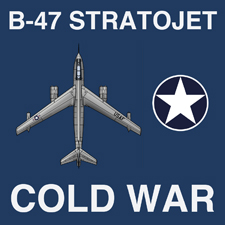
Cold War Aircraft