
Tu-16N Badger – PDF
$1.95
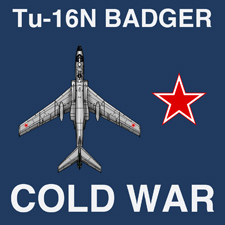
The Tupolev Tu-16N “Badger” was a Soviet aerial refueling tanker developed from the Tu-16 twin-engine jet bomber to extend the operational range of Soviet long-range and naval strike aircraft. Entering service during the late 1950s, the Tu-16N employed a wingtip-to-wingtip refueling system designed primarily to support compatible Tu-16 bombers and missile carriers. Operating with Soviet Long-Range Aviation and Naval Aviation, the tanker played an important supporting role in Cold War strategic and maritime operations, allowing Soviet aircraft to undertake extended missions beyond their normal unrefueled range.
| Title | Range | Discount |
|---|---|---|
| Cold War Aircraft - 10% Off | 5 - 9 | 10% |
| Cold War Aircraft - 15% Off | 10 - 19 | 15% |
| Cold War Aircraft - 20% Off | 20 + | 20% |
The Tupolev Tu-16N “Badger” was developed during the 1950s as the Soviet Union expanded its aerial refueling capabilities to support long-range bomber and naval aviation operations. Based on the successful Tu-16 twin-engine jet bomber, the Tu-16N was adapted to transfer fuel to compatible aircraft in flight, extending their operational range and endurance. The conversion built upon Soviet experience with earlier Tu-4 Bull tanker experiments, particularly the unusual wingtip-to-wingtip refueling system. By adapting an existing bomber airframe, Soviet aviation engineers were able to introduce a tanker capable of accompanying jet-powered bombers without requiring an entirely new aircraft design.
The Tu-16N employed a distinctive wingtip-to-wingtip aerial refueling arrangement in which the receiving aircraft flew alongside the tanker rather than directly behind it. A flexible hose and specialized connecting equipment allowed fuel to be transferred between the aircraft while maintaining close formation. This system required careful coordination between the crews and was particularly demanding during adverse weather or turbulence. Unlike later tanker aircraft equipped with conventional hose-and-drogue or flying-boom systems, the Tu-16N was intended to refuel aircraft specifically equipped for the Soviet wingtip system. Its primary receivers were compatible Tu-16 bombers and missile-carrying variants.
The Tu-16N supported Soviet Long-Range Aviation and Naval Aviation during the Cold War, when aerial refueling became increasingly important for extended bomber patrols and maritime strike missions. Soviet naval aviation relied on long-range aircraft to locate and threaten NATO surface forces, including aircraft carrier groups operating in the Atlantic, Mediterranean, and Pacific. By extending the range of Tu-16 bombers and missile carriers, tanker support increased the flexibility of Soviet naval operations and allowed aircraft to operate farther from their home airbases. Although the Tu-16N was not a combat aircraft in the conventional sense, its refueling capability contributed to the effectiveness of Soviet long-range aviation.
As Soviet bomber and tanker technology advanced, the Tu-16N gradually became less important. More capable aircraft, including the Myasishchev M-4 tanker conversions and later Ilyushin Il-78, provided greater fuel capacity and more conventional aerial refueling arrangements. Nevertheless, Tu-16N aircraft continued serving in specialized support roles during much of the Cold War. The Tu-16N represented an important stage in the development of Soviet aerial refueling, demonstrating the operational use of a system originally tested with the Tu-4 and helping extend the reach of Soviet jet bombers and maritime strike aircraft.
Service Branch: Soviet Air Forces (Long-Range Aviation); Soviet Naval Aviation
Soviet Service: Late 1950s–1980s
Number Built: Converted from existing Tu-16 bombers; exact conversion total not reliably established
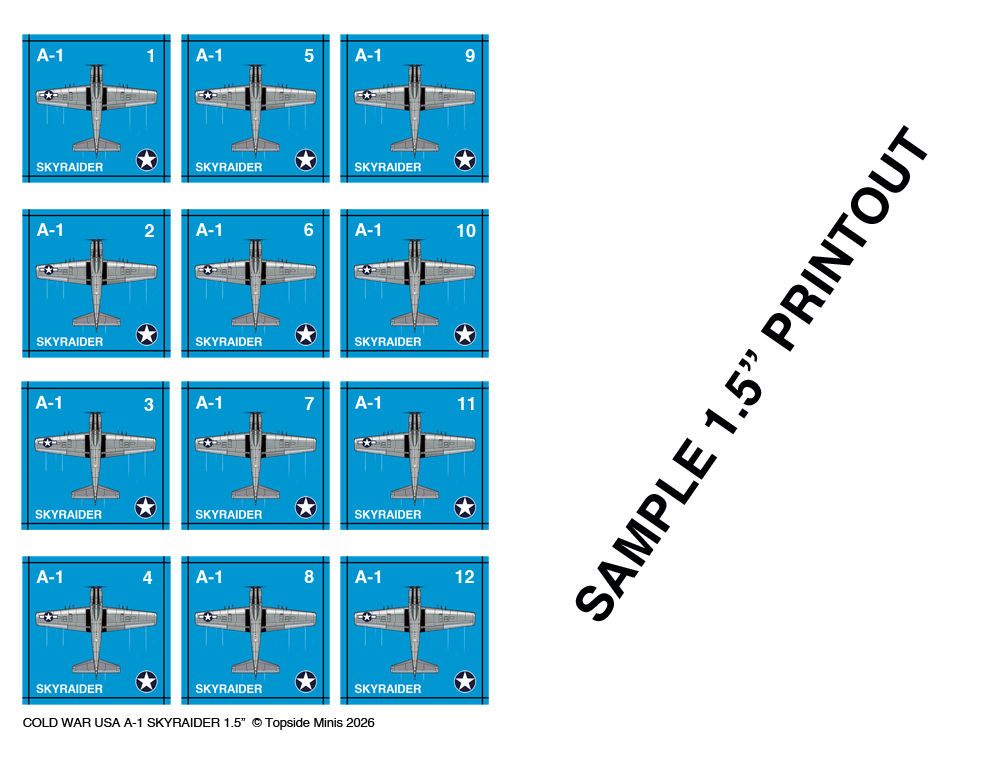
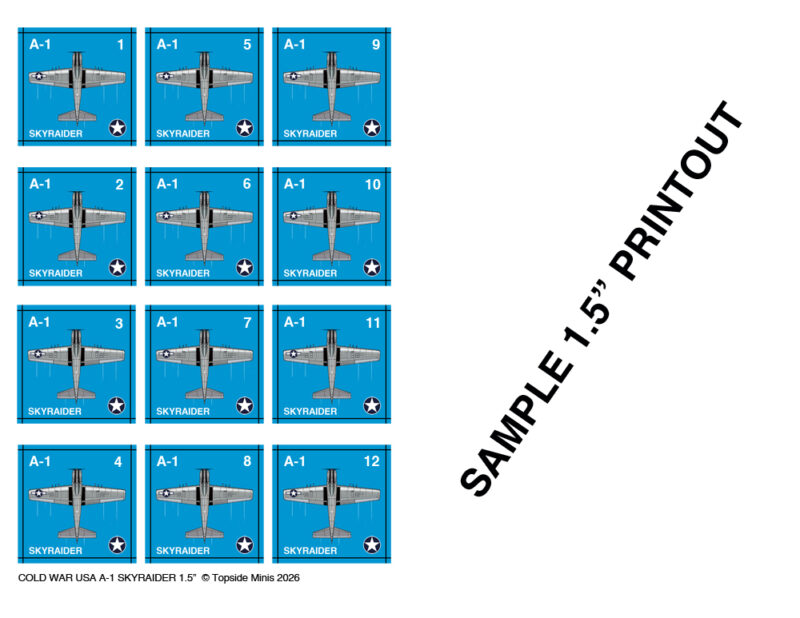
- 12 1.5” square counter images
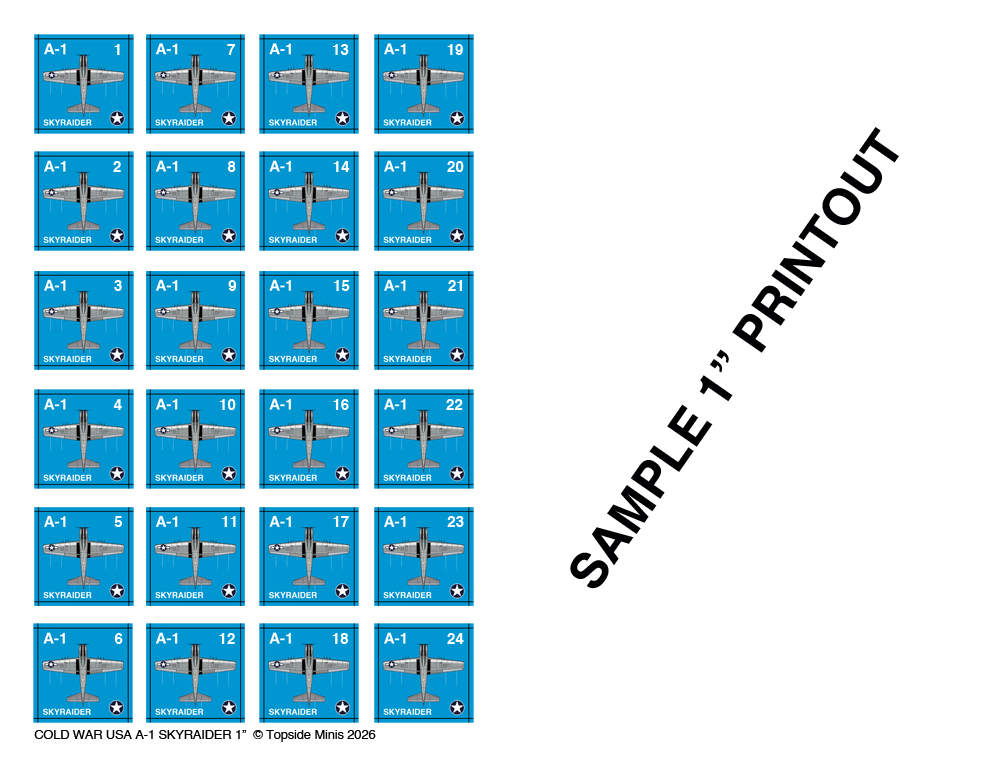
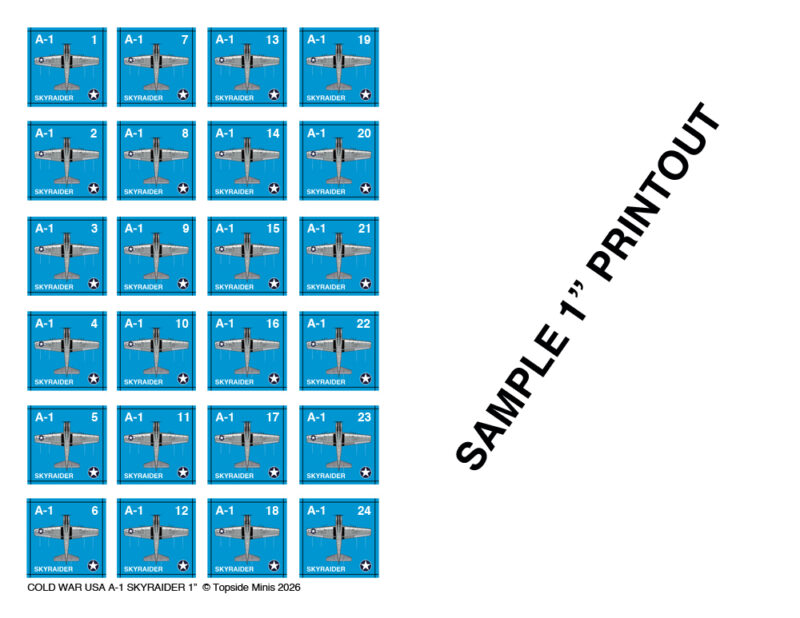
- 24 1” square counter images
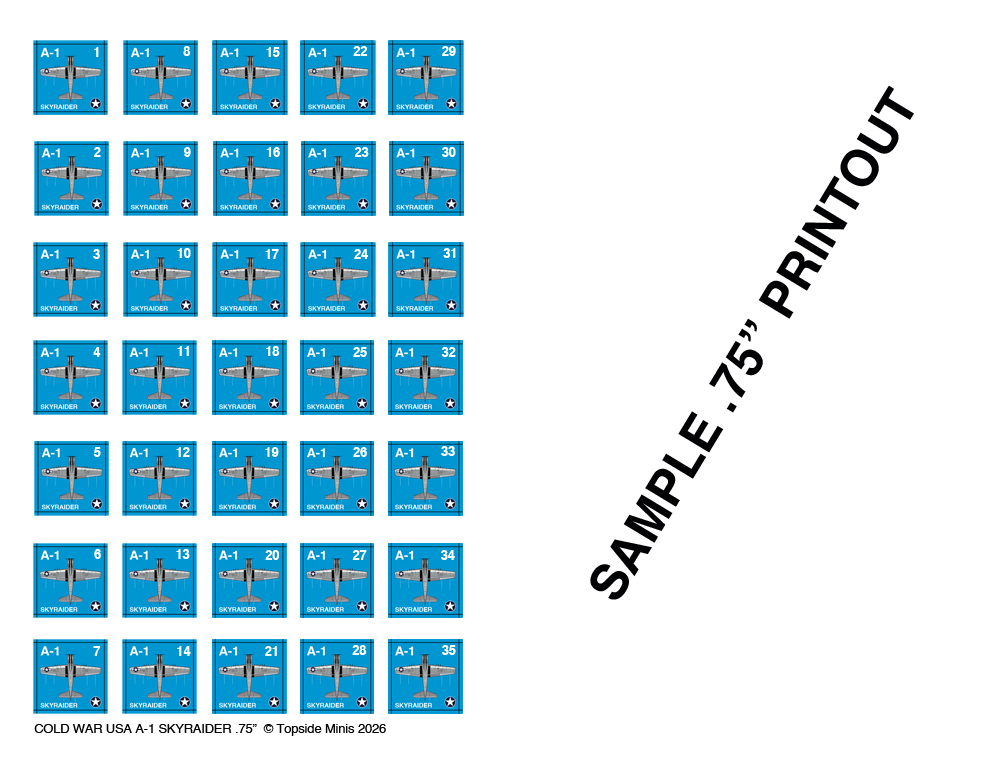
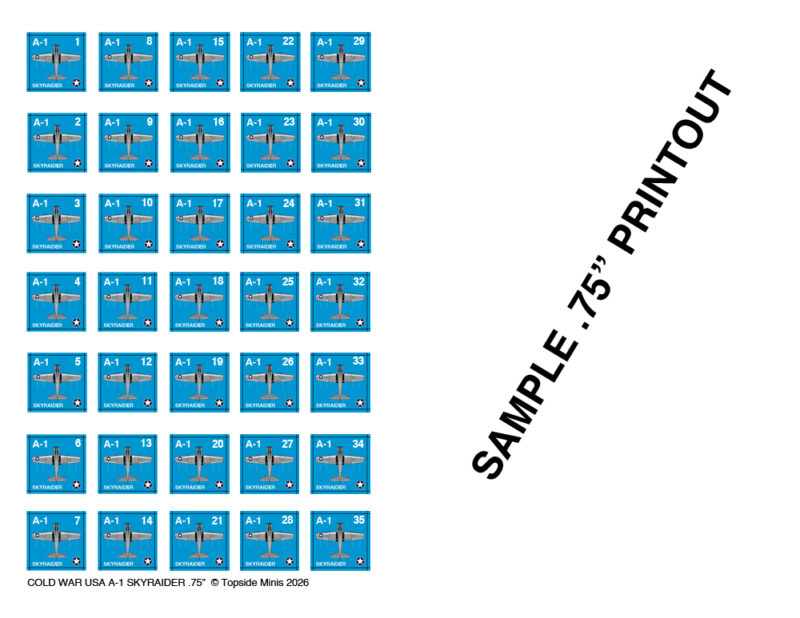
- 35 .75” square counter images
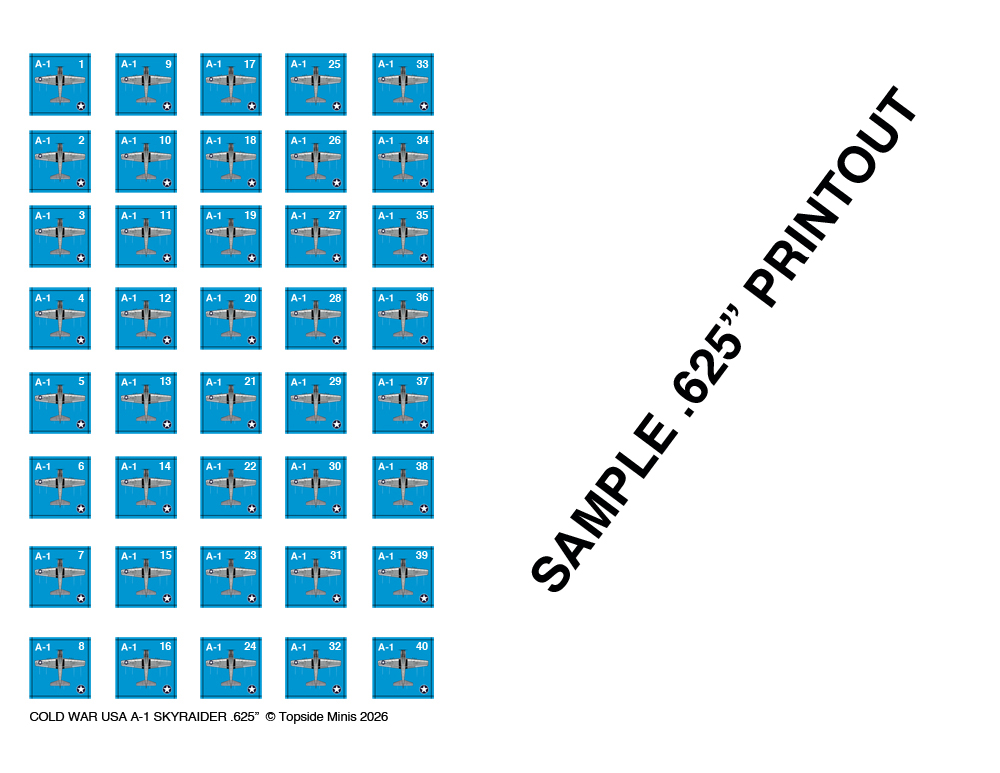
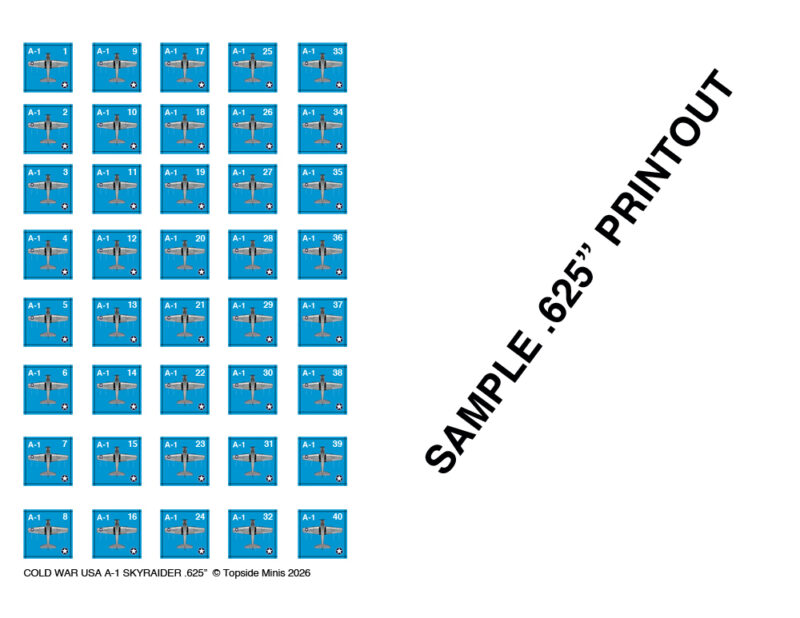
- 40 .625” square counter images
- Numbered Images to assist with game organization and tracking
- Printable PDF format for personal gaming use
Each image size is contained on a ½ sheet.
- Enables users to save paper and print 2 types of aircraft on the same page.
- Print one set of aircraft images then reverse the page in the printer and print a second type of your choice on the same page.
| Weight | N/A |
|---|---|
| Paper Size | A4 210 × 297 mm, Letter 8.5 x 11 |
Related products
Cold War Aircraft
Cold War Aircraft
Cold War Aircraft

Cold War Aircraft

Cold War Aircraft
Cold War Aircraft


Cold War Era
Cold War Aircraft