
Su-25 Frogfoot – PDF
$1.95
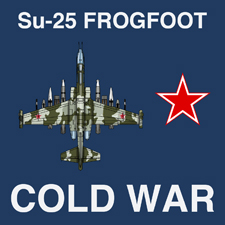
The Sukhoi Su-25 “Frogfoot” is a Soviet twin-engine, armored ground-attack aircraft developed to provide close air support for ground forces operating in heavily defended combat environments. Entering operational service in 1981, the Su-25 became one of the Soviet Union’s principal attack aircraft during the final decade of the Cold War. Designed for survivability, low-altitude operations, and the delivery of a wide variety of conventional weapons, the Frogfoot saw extensive combat during the Soviet-Afghan War and subsequently participated in numerous conflicts across Eastern Europe, the Caucasus, Africa, and the Middle East.
| Title | Range | Discount |
|---|---|---|
| Cold War Aircraft - 10% Off | 5 - 9 | 10% |
| Cold War Aircraft - 15% Off | 10 - 19 | 15% |
| Cold War Aircraft - 20% Off | 20 + | 20% |
The Sukhoi Su-25 “Frogfoot” was developed during the late 1960s and 1970s to provide the Soviet Union with a dedicated close air support aircraft capable of operating directly over the battlefield. Designed by the Sukhoi bureau, the Su-25 emphasized rugged construction, maneuverability at low altitude, and protection against ground fire rather than supersonic performance. Its twin-engine configuration, armored cockpit, protected fuel systems, and reinforced airframe were intended to improve survivability during attacks against enemy troops, armored vehicles, artillery positions, and fortified defenses. The aircraft first flew in 1975 and entered operational service with the Soviet Air Forces in 1981, becoming the Soviet counterpart in battlefield role to the American Fairchild Republic A-10 Thunderbolt II.
The Su-25 became an important component of Soviet Frontal Aviation (VVS), providing direct air support to advancing ground forces and conducting attacks against tactical targets near the front lines. Unlike high-speed fighter-bombers such as the Su-17 and MiG-27, the Frogfoot was optimized for relatively low-speed attack missions and sustained operations from forward airfields. Its fixed, swept-wing design and widely separated engines contributed to its ruggedness, while its weapons included a built-in 30 mm cannon, unguided rockets, conventional bombs, cluster munitions, and guided air-to-surface missiles. Later versions introduced improved navigation equipment, targeting systems, and weapons capabilities, while the two-seat Su-25UB provided operational conversion and combat training.
The Su-25 received its first major combat experience during the Soviet-Afghan War (1979–1989), where it became one of the most heavily employed Soviet ground-attack aircraft. Frogfoots conducted close air support, interdiction, and bombing missions against Afghan resistance positions, supply routes, and fortified mountain strongholds. The aircraft proved effective in difficult terrain, but increasingly encountered portable surface-to-air missiles, particularly the American-supplied FIM-92 Stinger introduced during the later stages of the conflict. Soviet crews adapted their tactics by employing defensive flares, modifying attack profiles, and improving aircraft protection. Despite combat losses, the Su-25 earned a reputation for durability and the ability to return to base after sustaining substantial battle damage.
Following the dissolution of the Soviet Union, the Su-25 continued serving with Russia and several former Soviet republics, participating in numerous regional conflicts. Russian and Georgian Su-25s were employed during the 2008 Russo-Georgian War, while Russian aircraft also operated during the Chechen conflicts and the Syrian Civil War. Ukrainian Su-25s have been extensively employed during the Russo-Ukrainian War, alongside Russian Frogfoots conducting ground-attack missions. Export versions have served with Iraq, Bulgaria, Czechoslovakia, Angola, Ethiopia, and other nations, with combat employment including the Iran-Iraq War and conflicts in Africa. Upgraded variants such as the Su-25SM and Su-25SM3 have extended the aircraft’s operational life through improved avionics, navigation, and weapons systems. The NATO-designated “Frogfoot” remains one of the most recognizable dedicated ground-attack aircraft developed during the Cold War.
Service Branch: Soviet Air Forces (VVS); Russian Aerospace Forces; Ukrainian Air Force; numerous foreign air forces
Soviet Service: 1981–1991
Post-Soviet Service: 1991–present (various operators)
Number Built: Approximately 1,000 aircraft across the Su-25 family
What’s Included:
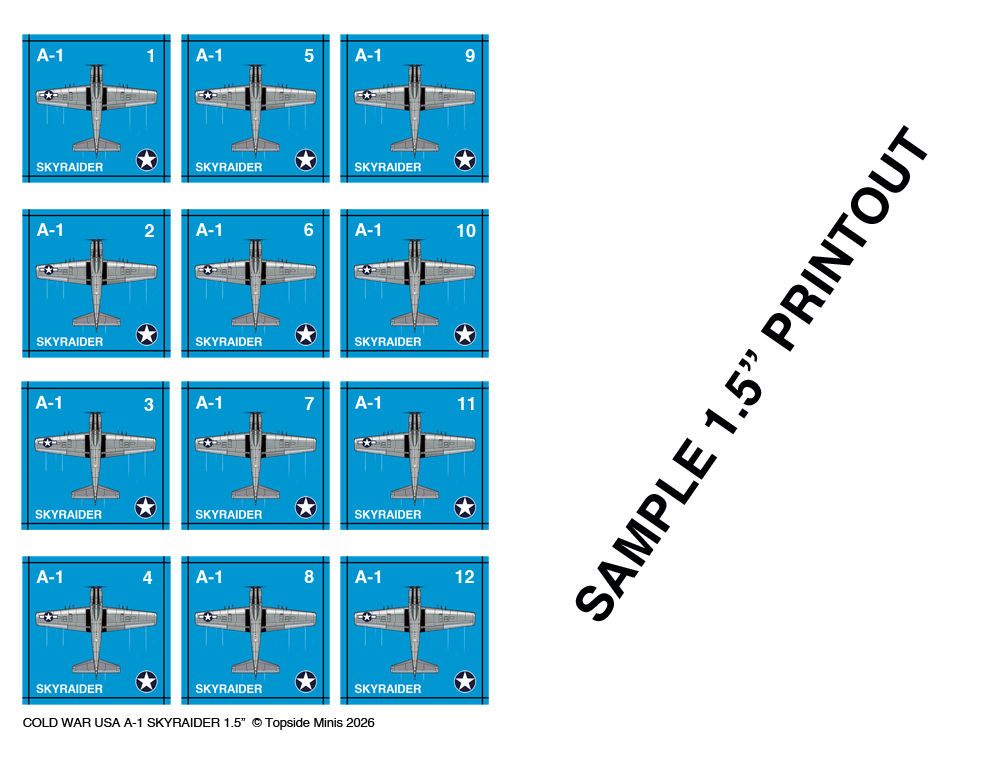
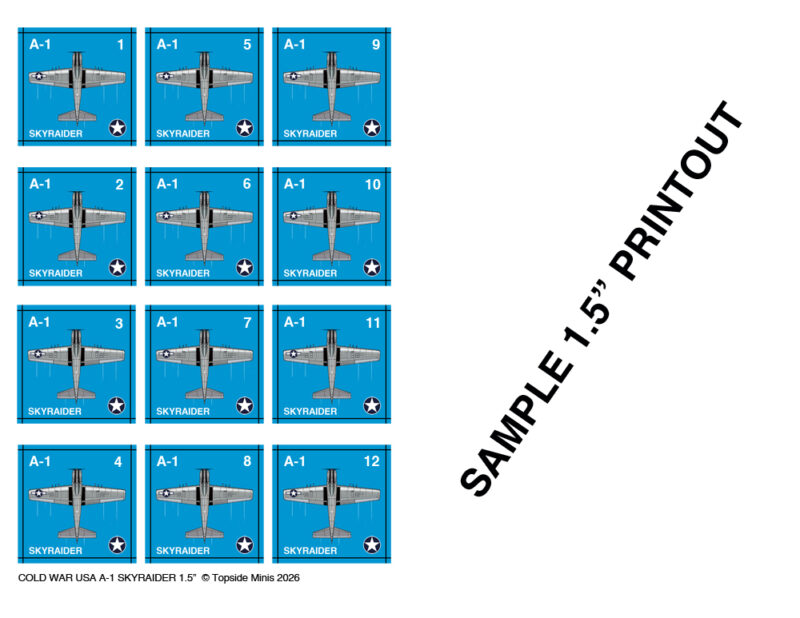
- 12 1.5” square counter images
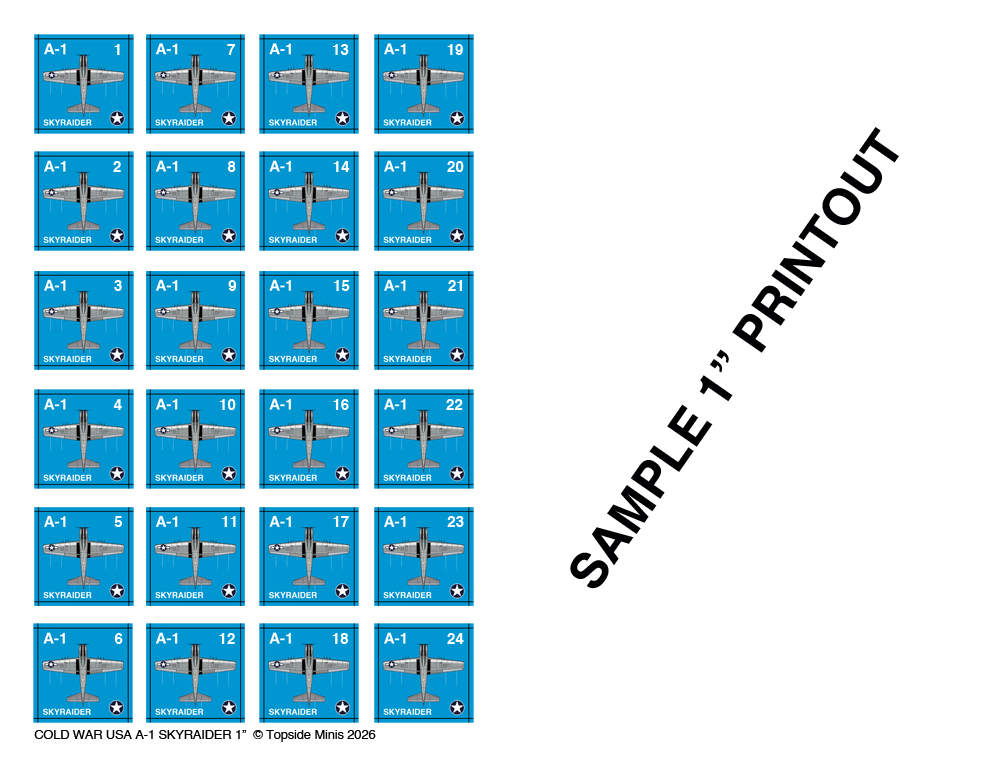
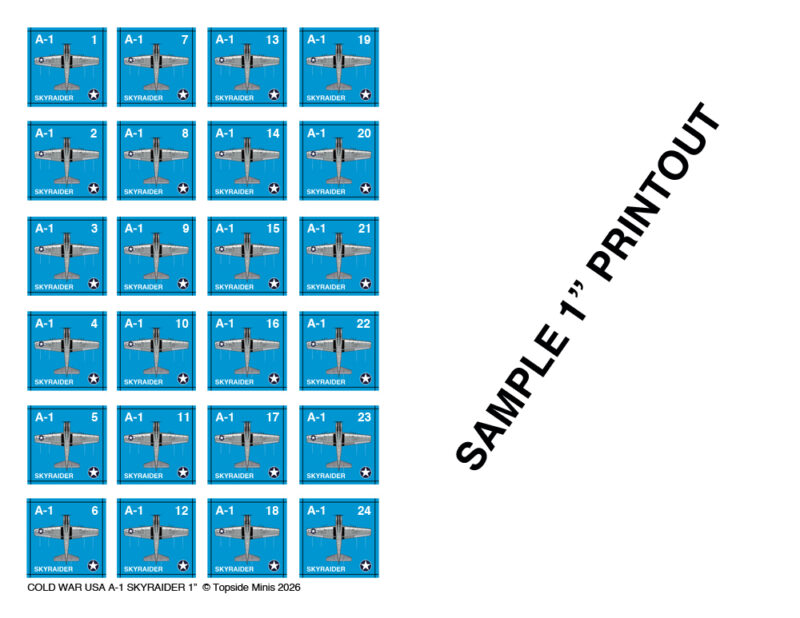
- 24 1” square counter images
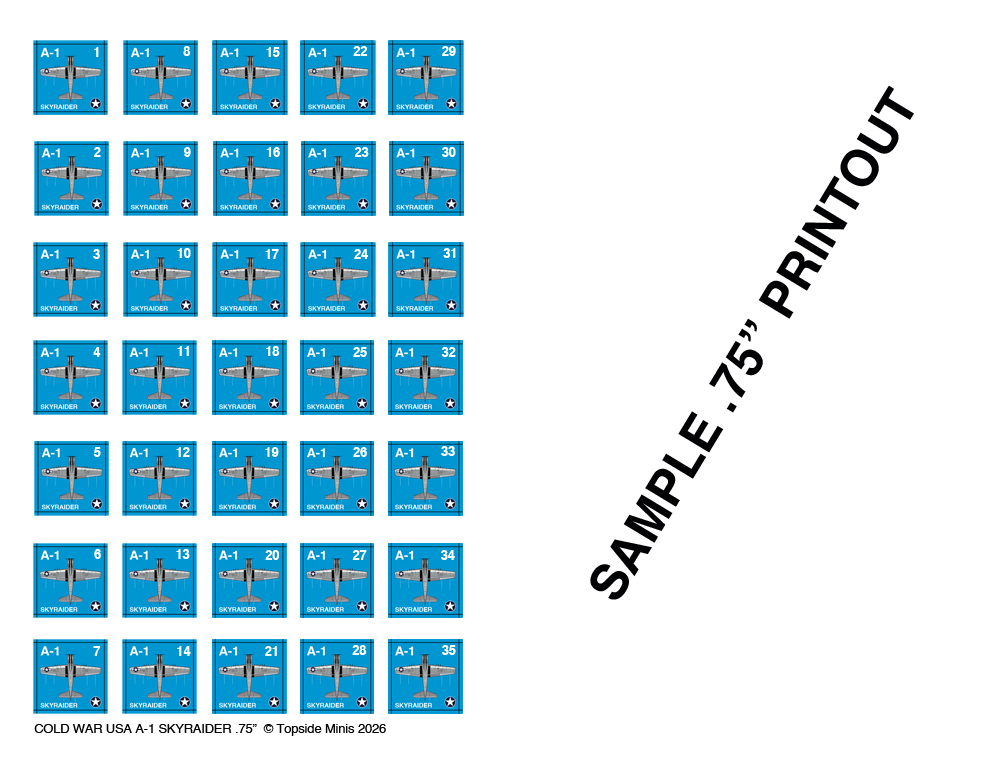
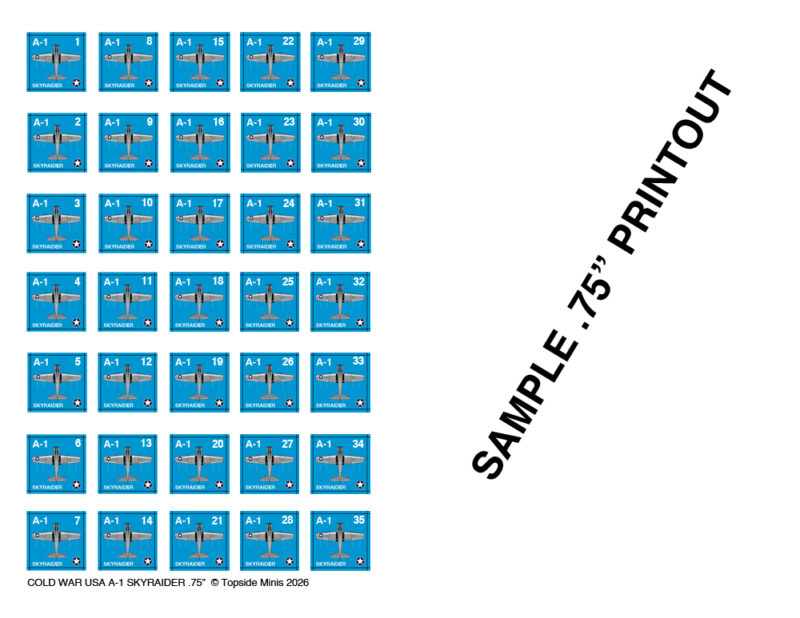
- 35 .75” square counter images
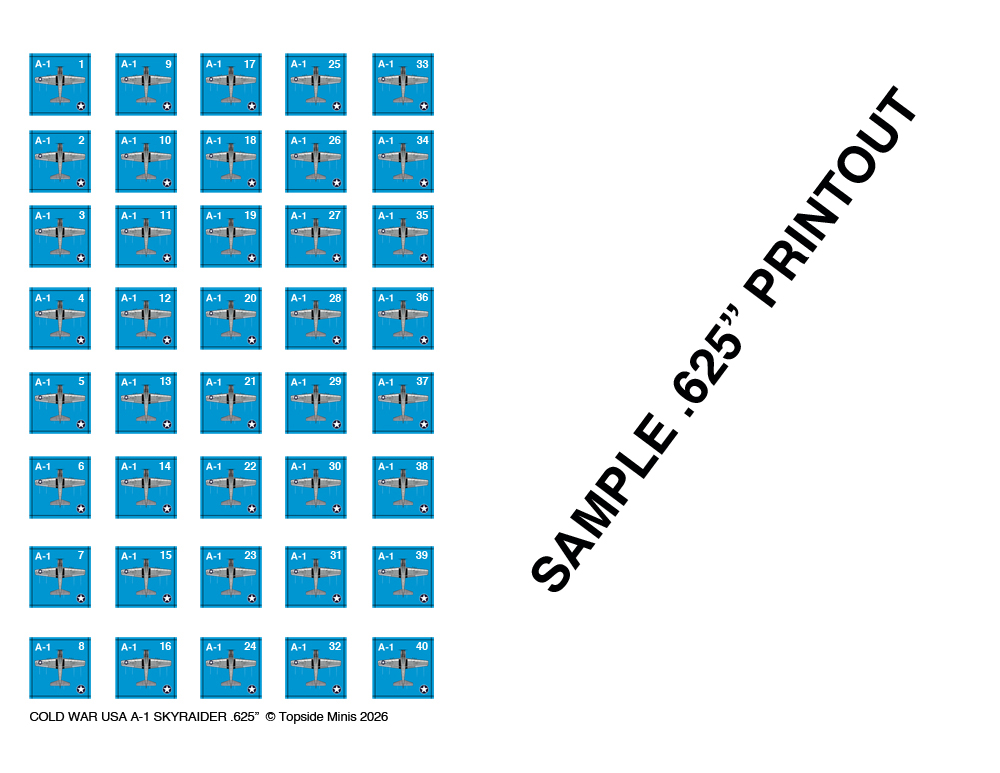
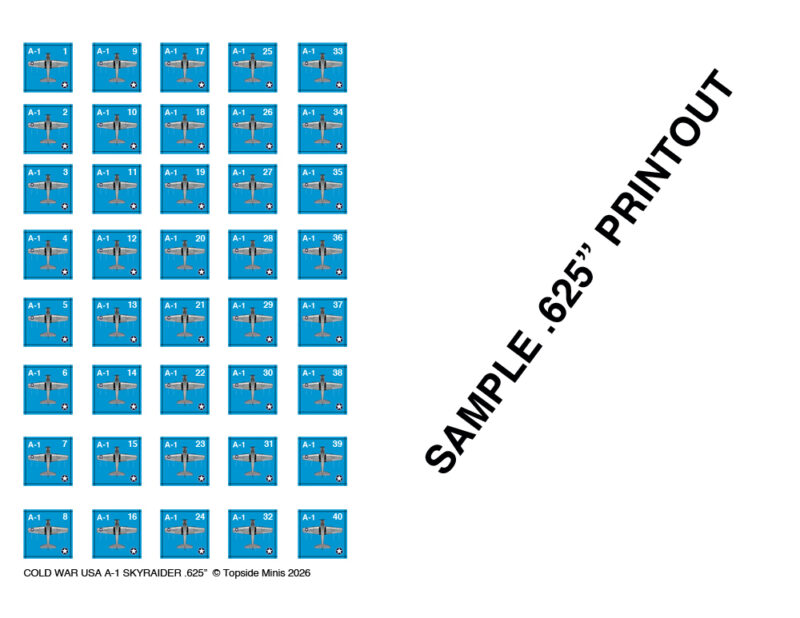
- 40 .625” square counter images
- Numbered Images to assist with game organization and tracking
- Printable PDF format for personal gaming use
Each image size is contained on a ½ sheet.
- Enables users to save paper and print 2 types of aircraft on the same page.
- Print one set of aircraft images then reverse the page in the printer and print a second type of your choice on the same page.
| Weight | N/A |
|---|---|
| Paper Size | A4 210 × 297 mm, Letter 8.5 x 11 |
Related products

Cold War Aircraft
Cold War Aircraft
Cold War Aircraft
Cold War Aircraft
Cold War Aircraft

Cold War Aircraft

Cold War Aircraft
Cold War Aircraft