OV-10 Bronco – PDF
$1.95
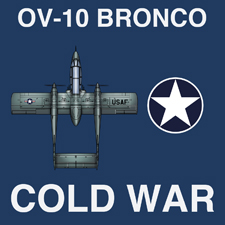
The North American Rockwell OV-10 Bronco was a twin-engine turboprop aircraft developed for forward air control, observation, reconnaissance, and light attack missions. Designed for operations from short, unimproved airfields, the Bronco served with the U.S. Air Force, Navy, and Marine Corps. It saw extensive combat during the Vietnam War and later participated in operations in the Persian Gulf, becoming one of the most recognizable American counterinsurgency and battlefield observation aircraft of the Cold War.
| Title | Range | Discount |
|---|---|---|
| Cold War Aircraft - 10% Off | 5 - 9 | 10% |
| Cold War Aircraft - 15% Off | 10 - 19 | 15% |
| Cold War Aircraft - 20% Off | 20 + | 20% |
The North American Rockwell OV-10 Bronco was developed during the 1960s in response to a U.S. military requirement for a versatile aircraft capable of forward air control, observation, reconnaissance, and light attack missions. Designed by North American Aviation, which later became part of North American Rockwell, the Bronco featured a distinctive twin-boom configuration, two turboprop engines, and excellent visibility from its tandem cockpit. Its rugged construction and short takeoff and landing capabilities allowed it to operate from relatively primitive airfields close to the battlefield, providing direct support to ground forces.
Entering operational service in 1968, the OV-10 was adopted by the U.S. Air Force, U.S. Marine Corps, and U.S. Navy. The Bronco was particularly well suited to forward air control (FAC), where crews identified enemy positions, marked targets with smoke rockets, coordinated air strikes, and monitored battlefield activity. Unlike the earlier O-1 Bird Dog, the OV-10 offered greater speed, improved survivability, and the ability to carry a variety of weapons, including machine guns, rockets, and light bombs. Its versatility also allowed it to perform armed reconnaissance, convoy escort, and counterinsurgency missions.
The Bronco saw extensive combat during the Vietnam War, where it operated over South Vietnam, Laos, and Cambodia. Air Force OV-10s became closely associated with forward air control missions, directing American strike aircraft against enemy troop concentrations, supply routes, and fortified positions. Marine Corps Broncos provided similar support to ground operations, while Navy aircraft assigned to the VAL-4 “Black Ponies” squadron conducted armed patrols and close air support missions in the Mekong Delta. The OV-10’s ability to remain over contested areas and respond rapidly to developing threats made it an important component of American air operations in Southeast Asia.
Following Vietnam, the Bronco remained in American military service and was exported to several foreign air forces, including those of Indonesia, Thailand, the Philippines, and Venezuela. During the 1991 Persian Gulf War (Operation Desert Storm), Marine Corps OV-10s conducted forward air control and reconnaissance missions supporting coalition ground forces. Broncos also participated in counterinsurgency operations overseas, notably with the Philippine Air Force, which employed the aircraft against insurgent forces for many years. Although eventually replaced in U.S. military service by more modern aircraft and targeting systems, the OV-10 demonstrated the continuing value of a dedicated observation and light attack platform. Its extensive combat history and distinctive design established the Bronco as one of the most successful specialized battlefield support aircraft of the Cold War.
Service Branch: U.S. Air Force; U.S. Marine Corps; U.S. Navy
U.S. Service: 1968–1995 (regular military service)
Number Built: 360
What’s Included:
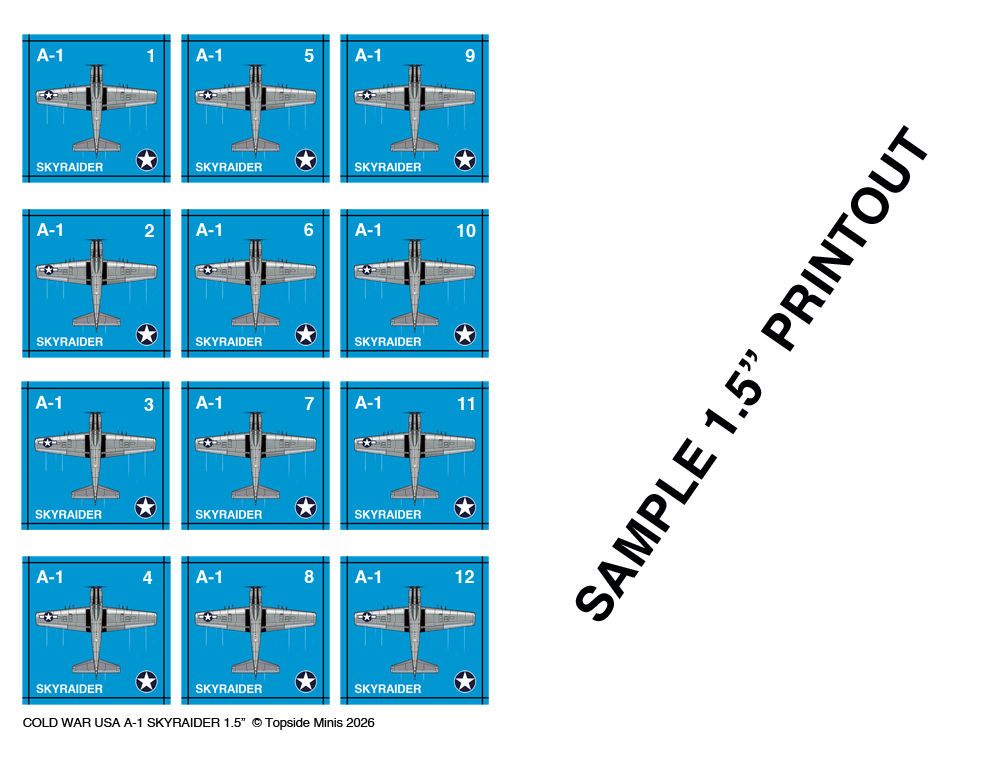
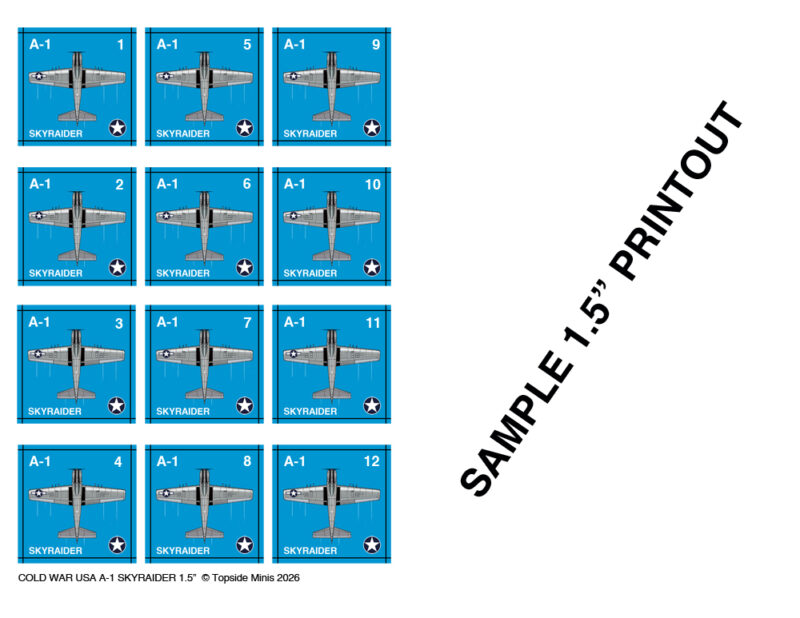
- 12 1.5” square counter images
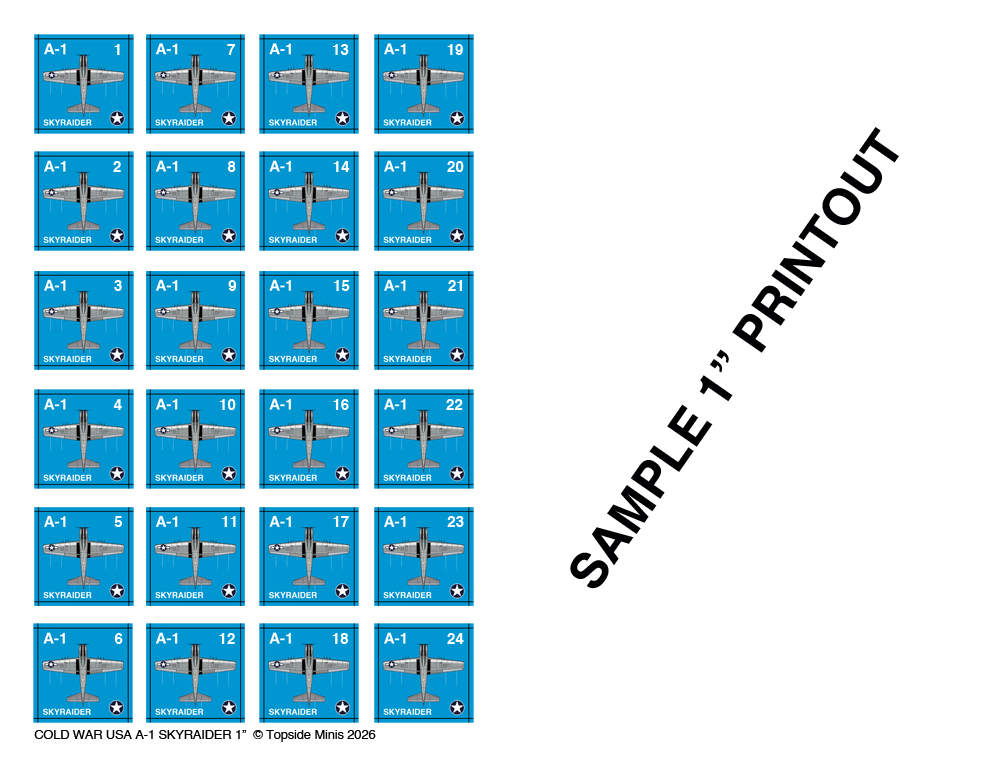
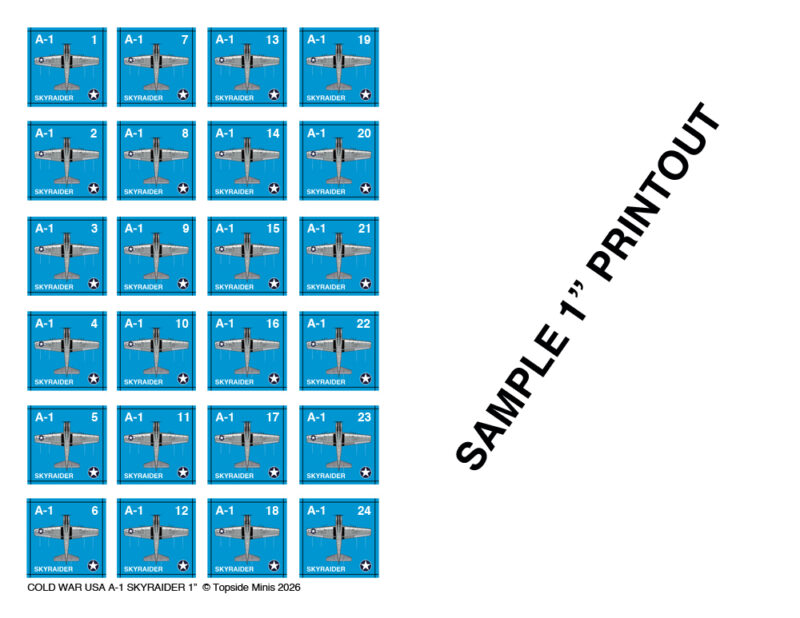
- 24 1” square counter images
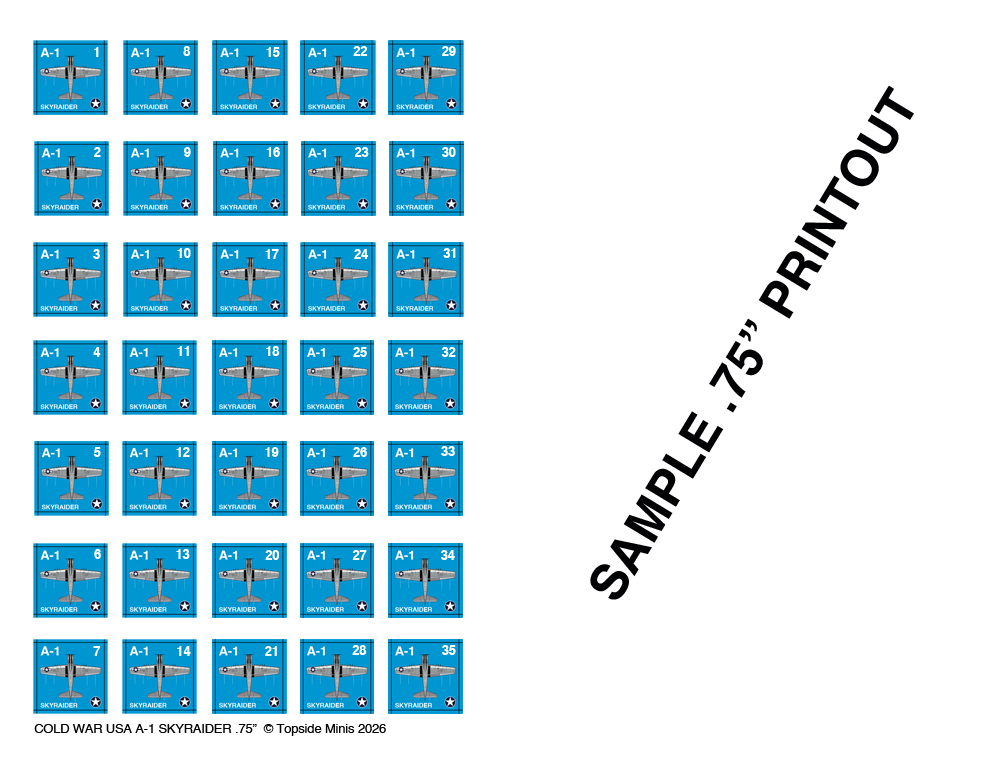
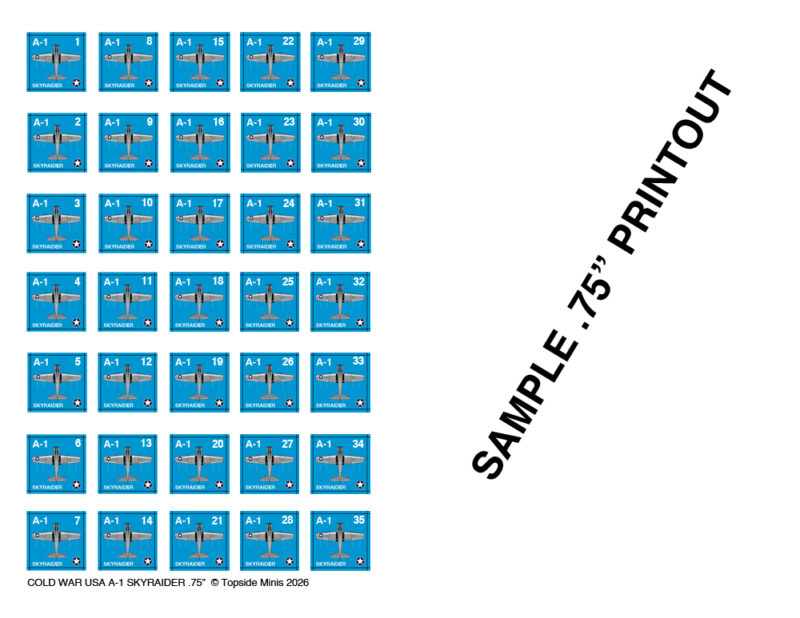
- 35 .75” square counter images
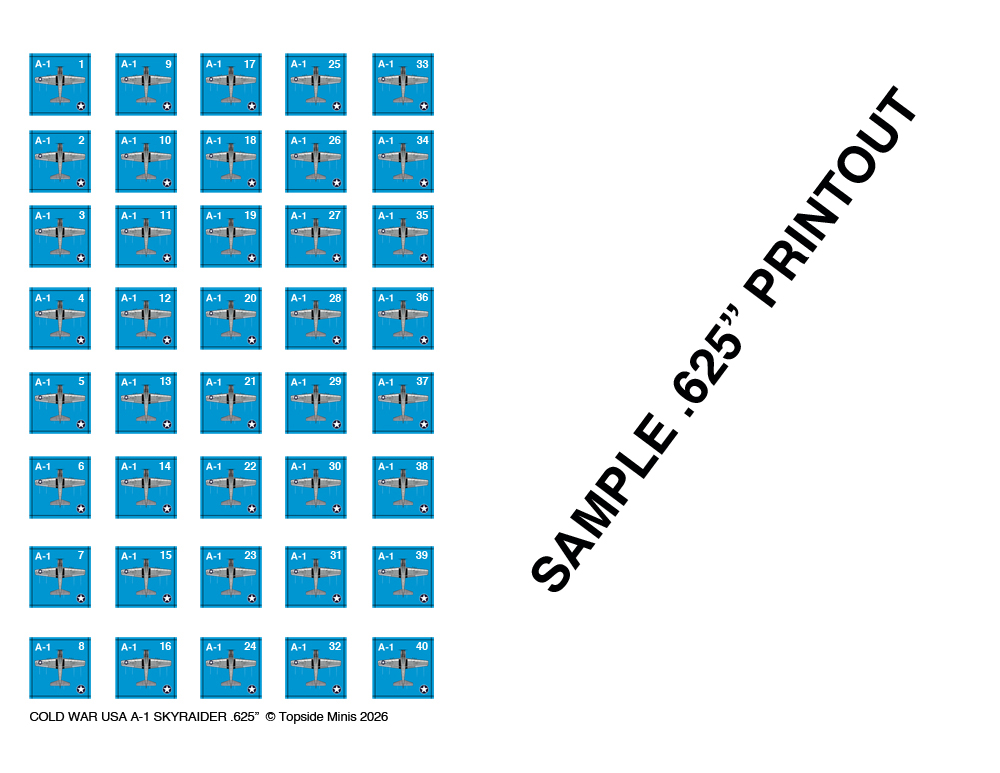
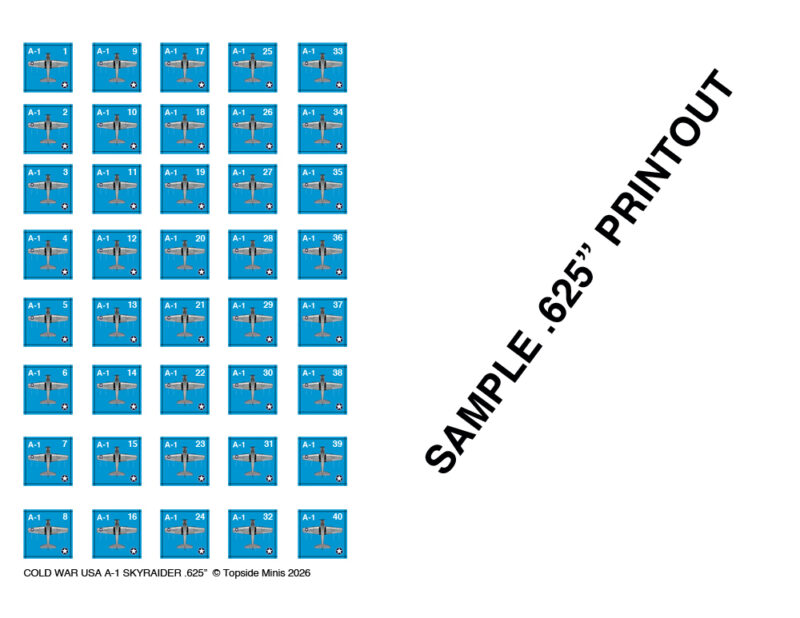
- 40 .625” square counter images
- Numbered Images to assist with game organization and tracking
- Printable PDF format for personal gaming use
Each image size is contained on a ½ sheet.
- Enables users to save paper and print 2 types of aircraft on the same page.
- Print one set of aircraft images then reverse the page in the printer and print a second type of your choice on the same page.
| Weight | N/A |
|---|---|
| Paper Size | A4 210 × 297 mm, Letter 8.5 x 11 |
Related products
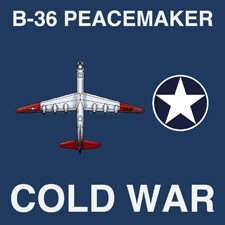
Cold War Aircraft
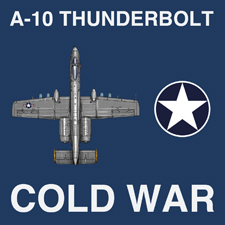
Cold War Aircraft
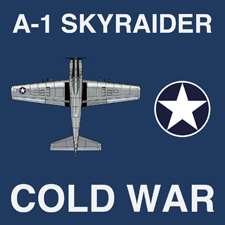
Cold War Aircraft
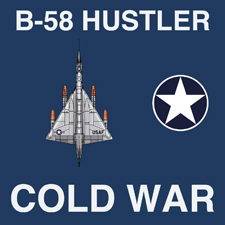
Cold War Aircraft
Cold War Aircraft
Cold War Aircraft
Cold War Aircraft
Cold War Aircraft