OV-1 Mohawk – PDF
$1.95
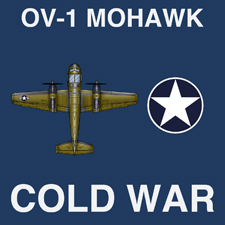
The Grumman OV-1 Mohawk was a twin-engine U.S. Army observation and tactical reconnaissance aircraft developed for battlefield surveillance, intelligence gathering, and target identification. Equipped with advanced photographic, infrared, and radar reconnaissance systems, the Mohawk served extensively during the Vietnam War and later supported U.S. military operations in Central America and the Persian Gulf.
| Title | Range | Discount |
|---|---|---|
| Cold War Aircraft - 10% Off | 5 - 9 | 10% |
| Cold War Aircraft - 15% Off | 10 - 19 | 15% |
| Cold War Aircraft - 20% Off | 20 + | 20% |
The Grumman OV-1 Mohawk was developed during the late 1950s to provide the U.S. Army with a dedicated battlefield surveillance and tactical reconnaissance aircraft. Designed to operate from relatively short and unimproved airfields, the twin-engine turboprop Mohawk combined rugged construction, excellent crew visibility, and sophisticated reconnaissance equipment. Unlike lighter observation aircraft such as the O-1 Bird Dog, which relied primarily on visual observation and forward air control, the OV-1 was designed to gather detailed battlefield intelligence using specialized sensors and photographic systems.
Entering U.S. Army service in 1959, the Mohawk was produced in several variants with different reconnaissance capabilities. The OV-1A emphasized visual and photographic reconnaissance, while the OV-1B introduced side-looking airborne radar (SLAR) capable of detecting activity across large areas of terrain. The OV-1C incorporated infrared surveillance equipment for identifying heat sources and activity during darkness or poor visibility. Later OV-1D aircraft combined multiple reconnaissance capabilities, greatly improving the Army’s ability to monitor enemy movements and identify potential targets.
The Mohawk saw extensive operational service during the Vietnam War, where it conducted reconnaissance missions over South Vietnam, Laos, and other areas of Southeast Asia. Its missions included locating enemy troop concentrations, monitoring supply routes, identifying vehicle movements, and gathering intelligence on infiltration activity along the Ho Chi Minh Trail. The aircraft’s infrared and radar capabilities proved particularly valuable for nighttime surveillance and operations in areas where dense vegetation and poor weather limited conventional observation. Although primarily a reconnaissance aircraft, some Mohawks also conducted armed operations early in the war, carrying rockets and machine-gun pods before restrictions on Army fixed-wing combat aircraft curtailed this role.
Following Vietnam, the OV-1 continued serving with the U.S. Army in reconnaissance and intelligence-gathering roles, including operations associated with Central America during the 1980s. During the 1991 Persian Gulf War (Operation Desert Storm), Mohawks conducted battlefield surveillance missions supporting coalition operations against Iraqi forces. Their ability to detect and track ground activity remained valuable despite the introduction of newer reconnaissance technologies. The Mohawk was eventually retired from U.S. Army service in 1996, ending nearly four decades of service. Its extensive combat-theater experience and specialized reconnaissance capabilities made it one of the most distinctive U.S. Army aircraft of the Cold War.
Service Branch: U.S. Army
U.S. Service: 1959–1996
Number Built: 380
What’s Included:
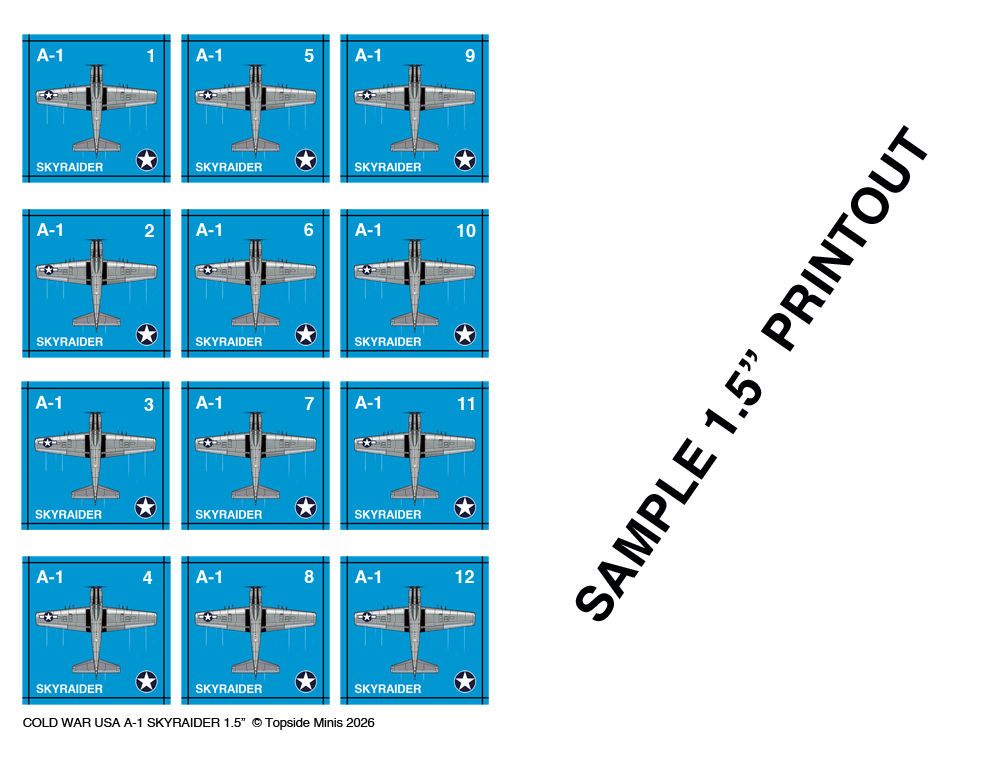
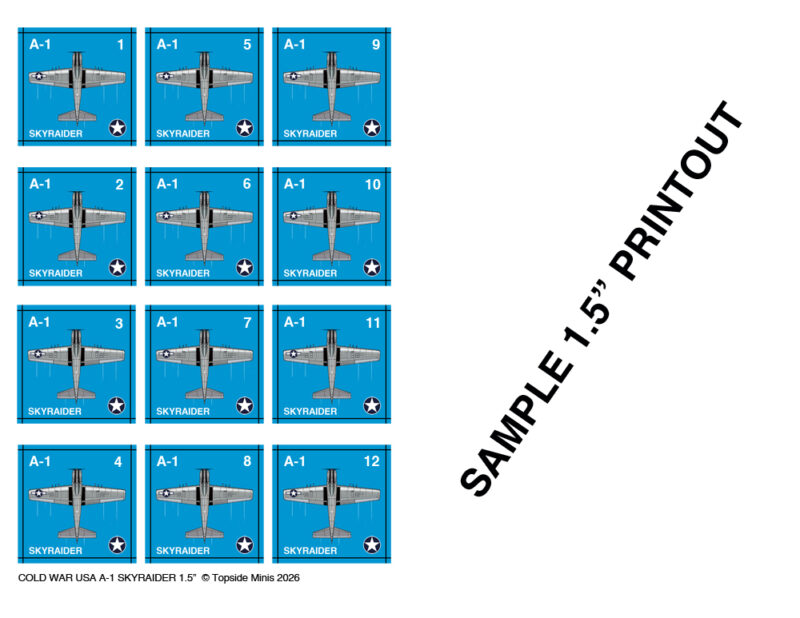
- 12 1.5” square counter images
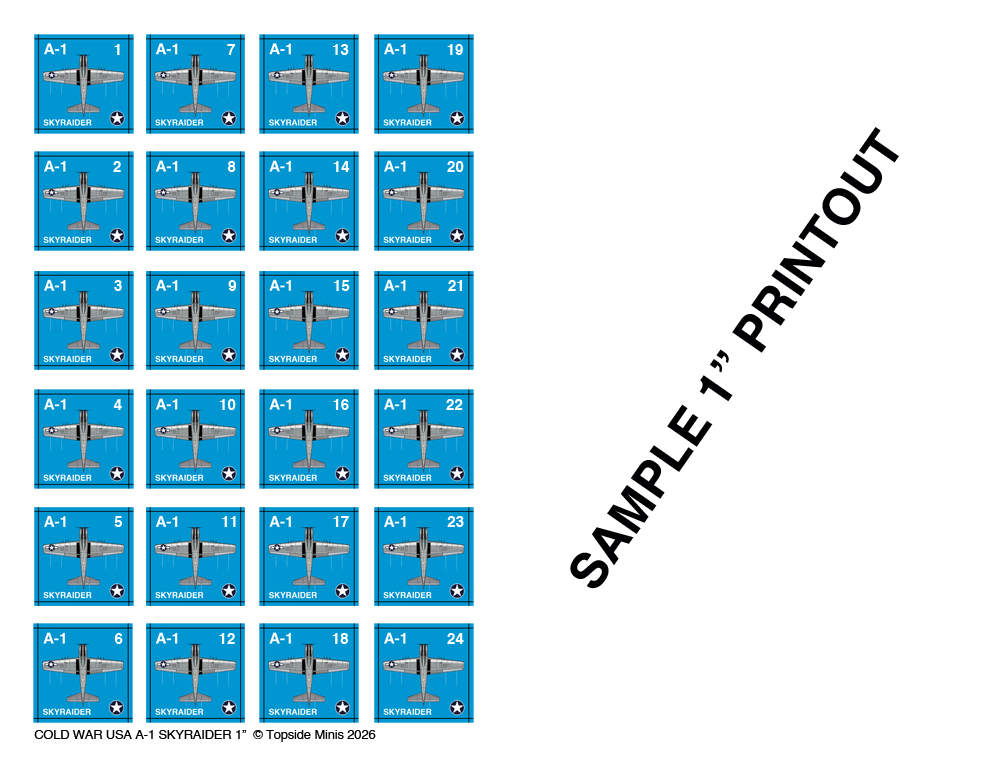
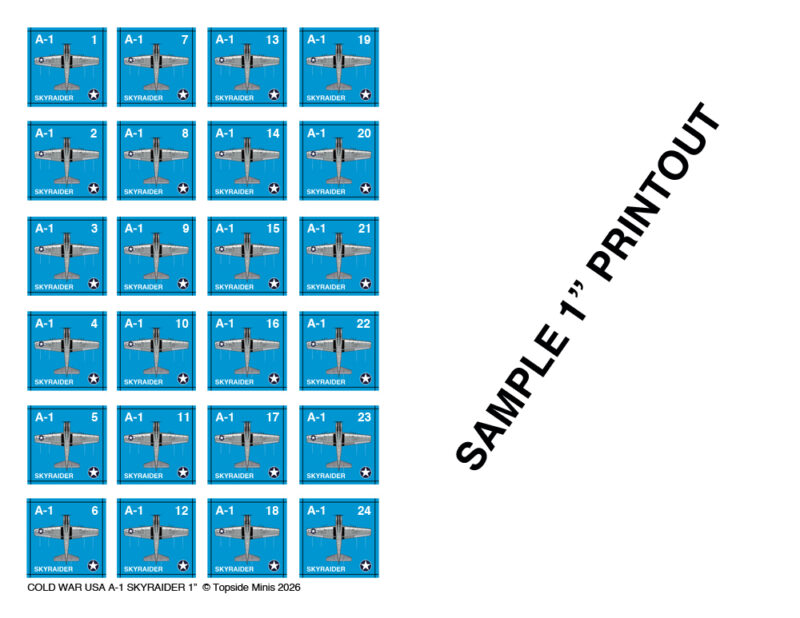
- 24 1” square counter images
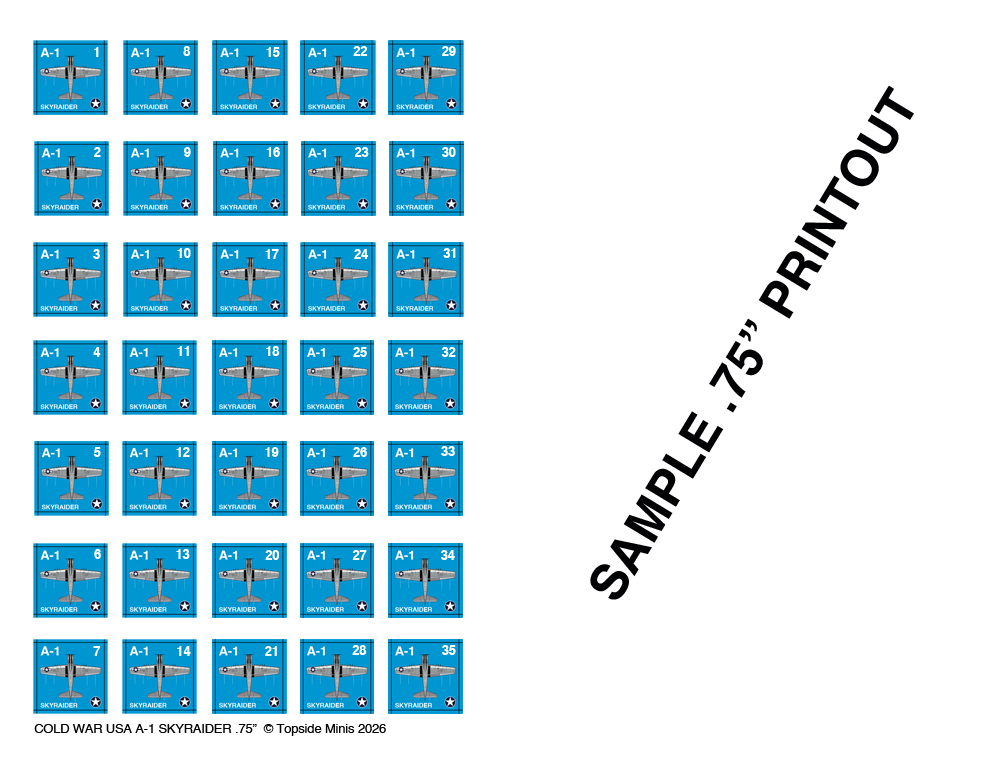
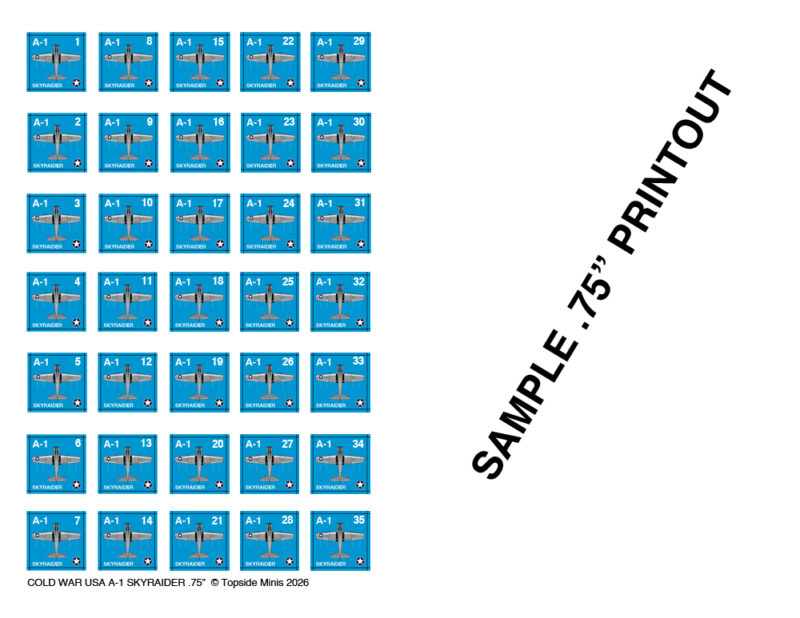
- 35 .75” square counter images
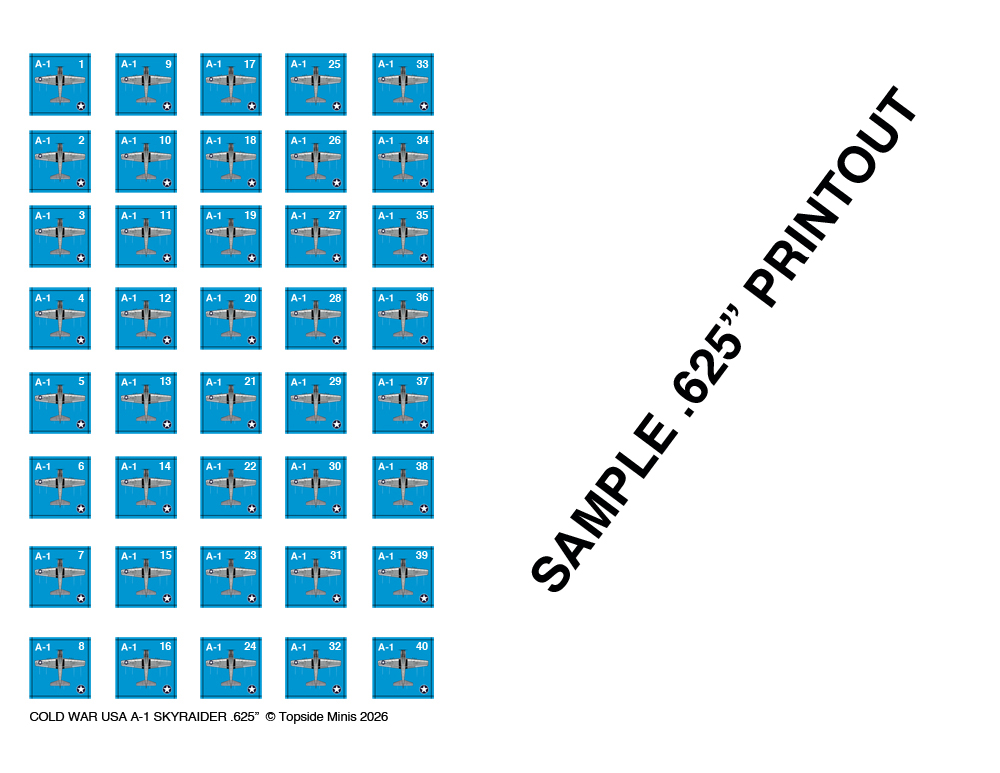
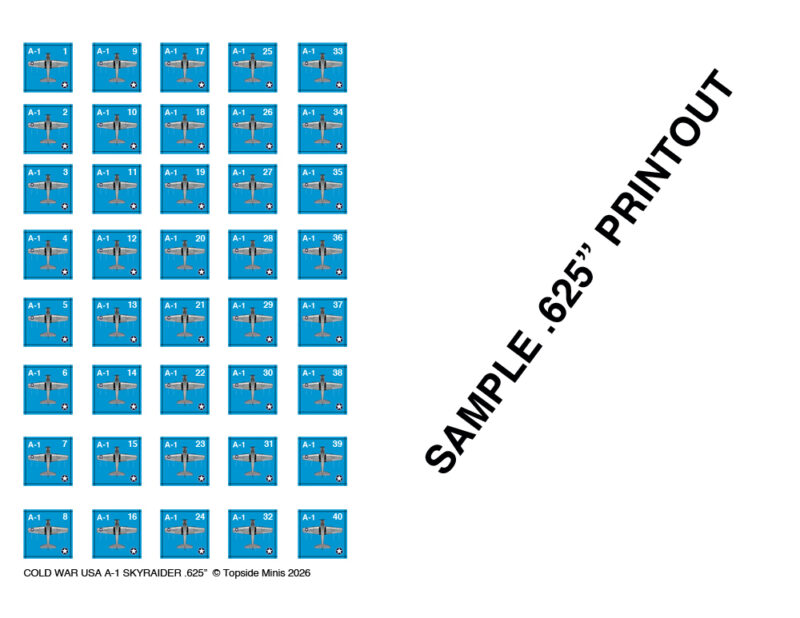
- 40 .625” square counter images
- Numbered Images to assist with game organization and tracking
- Printable PDF format for personal gaming use
Each image size is contained on a ½ sheet.
- Enables users to save paper and print 2 types of aircraft on the same page.
- Print one set of aircraft images then reverse the page in the printer and print a second type of your choice on the same page.
| Weight | N/A |
|---|---|
| Paper Size | A4 210 × 297 mm, Letter 8.5 x 11 |
Related products

Cold War Aircraft
Cold War Aircraft
Cold War Aircraft
Cold War Aircraft
Cold War Aircraft
Cold War Aircraft
Cold War Aircraft

Cold War Aircraft