O-1 Bird Dog – PDF
$1.95
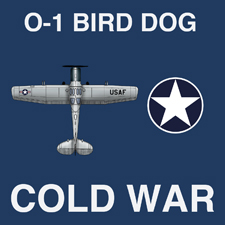
The Cessna O-1 Bird Dog was a lightweight observation and liaison aircraft used by the U.S. military for reconnaissance, artillery spotting, communications, and forward air control. Small, rugged, and capable of operating from short primitive airstrips, the Bird Dog became particularly associated with the Vietnam War, where it was widely used to locate enemy forces and direct air strikes.
| Title | Range | Discount |
|---|---|---|
| Cold War Aircraft - 10% Off | 5 - 9 | 10% |
| Cold War Aircraft - 15% Off | 10 - 19 | 15% |
| Cold War Aircraft - 20% Off | 20 + | 20% |
The Cessna O-1 Bird Dog was developed in the late 1940s to meet a U.S. Army requirement for a modern observation and liaison aircraft to replace the light aircraft inherited from World War II. Derived from the civilian Cessna 170, the military aircraft was originally designated the L-19 and entered service in 1950. Its excellent visibility, low-speed handling, and ability to operate from short and unimproved airfields made it well suited to supporting ground forces.
The Bird Dog first saw extensive combat during the Korean War, where it performed artillery observation, reconnaissance, communications, medical evacuation coordination, and other liaison duties. Flying close to the battlefield at low altitude, its crews could locate enemy positions and relay information directly to commanders and artillery units. In 1962, the aircraft was redesignated O-1 under the new unified U.S. military aircraft designation system.
The O-1 became especially prominent during the Vietnam War, serving with the U.S. Army, U.S. Air Force, and South Vietnamese Air Force. One of its most important missions was forward air control (FAC). Bird Dog crews searched for enemy positions, marked targets—often with smoke rockets—and directed strike aircraft onto them. Their ability to remain over the battlefield at low speed gave forward air controllers an excellent view of ground activity, although operating low and slow also exposed the aircraft to enemy ground fire.
More capable observation aircraft such as the O-2 Skymaster and OV-10 Bronco gradually assumed many of the Bird Dog’s combat duties, but the O-1 remained an important symbol of airborne observation and forward air control in Southeast Asia. Its service in both Korea and Vietnam made the Bird Dog one of the most recognizable American light observation aircraft of the early Cold War.
Service Branch: U.S. Army; U.S. Air Force; U.S. Marine Corps; South Vietnamese Air Force
U.S. Service: 1950–1974
Number Built: 3,431
What’s Included:
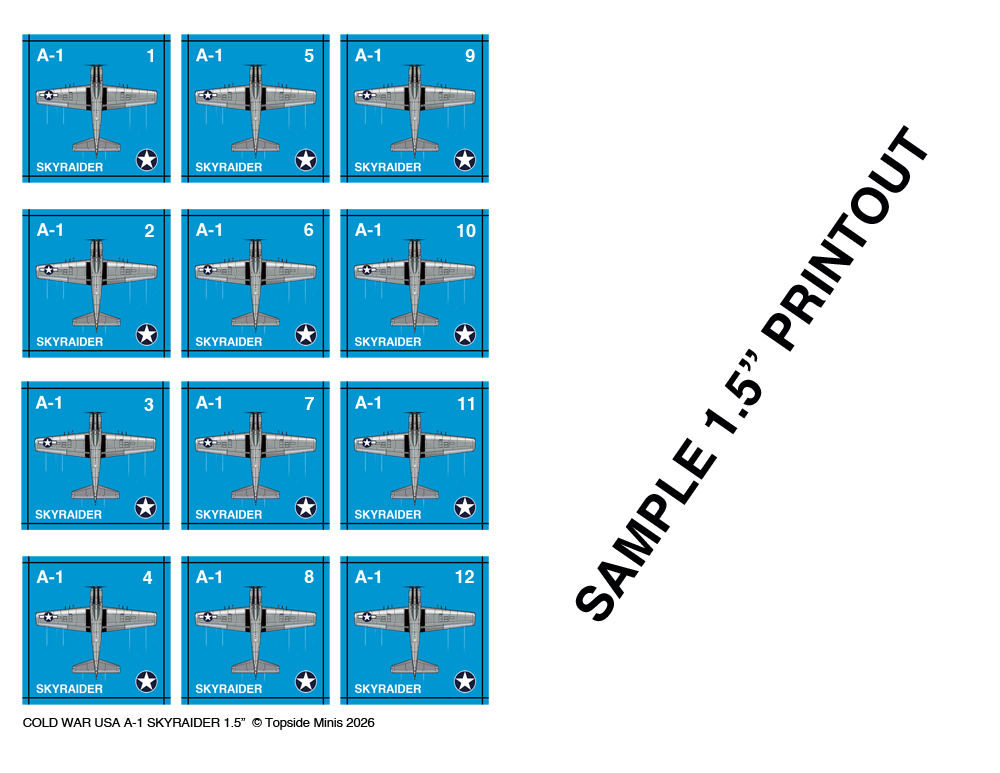
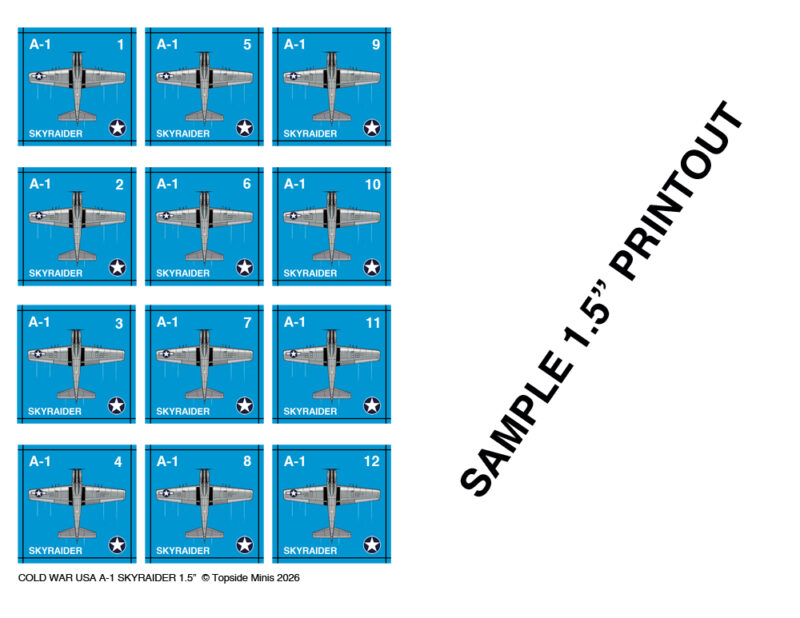
- 12 1.5” square counter images
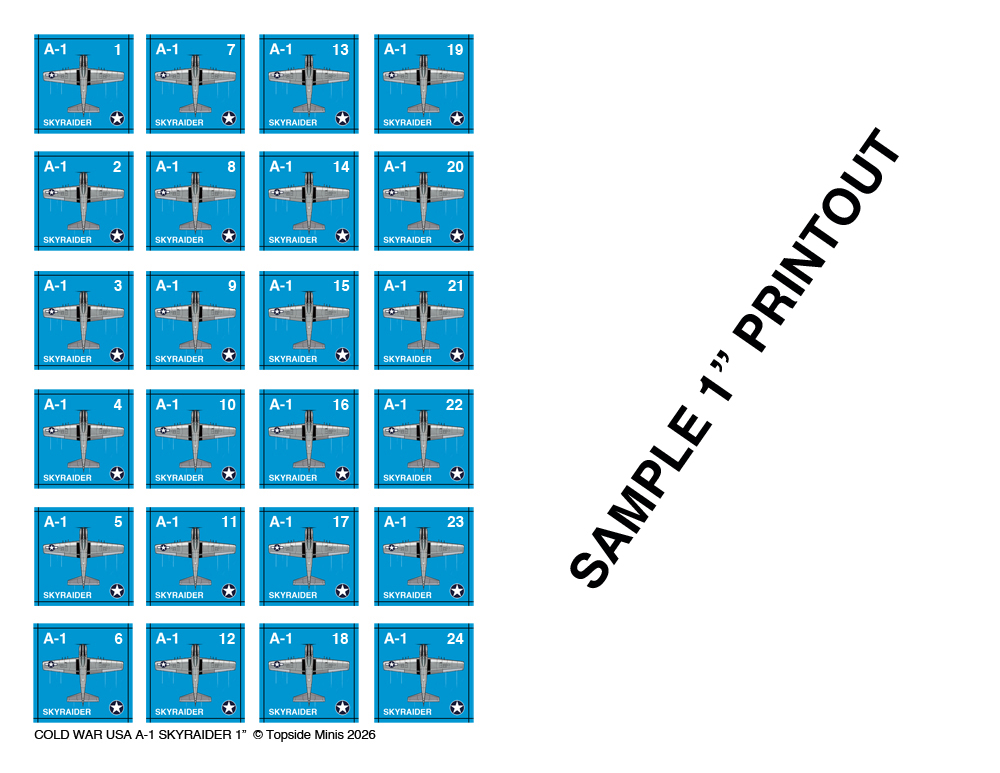
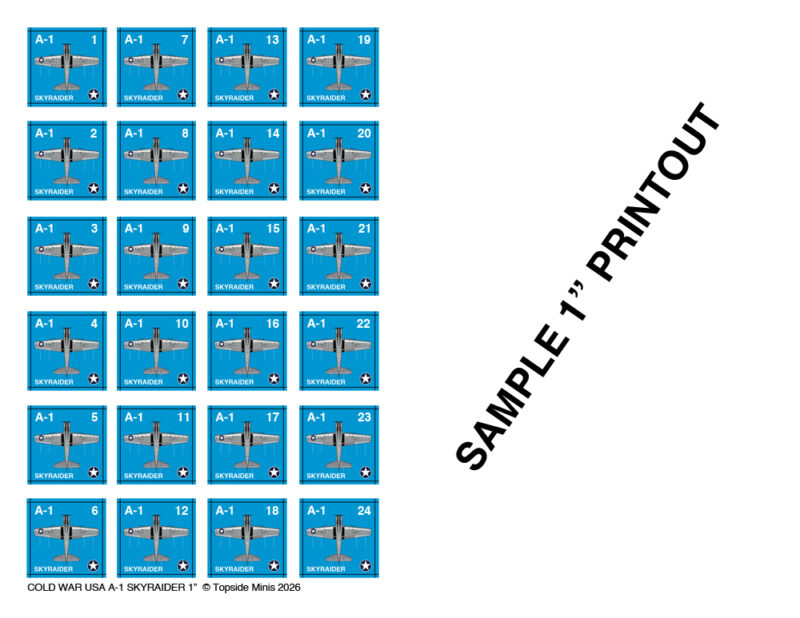
- 24 1” square counter images
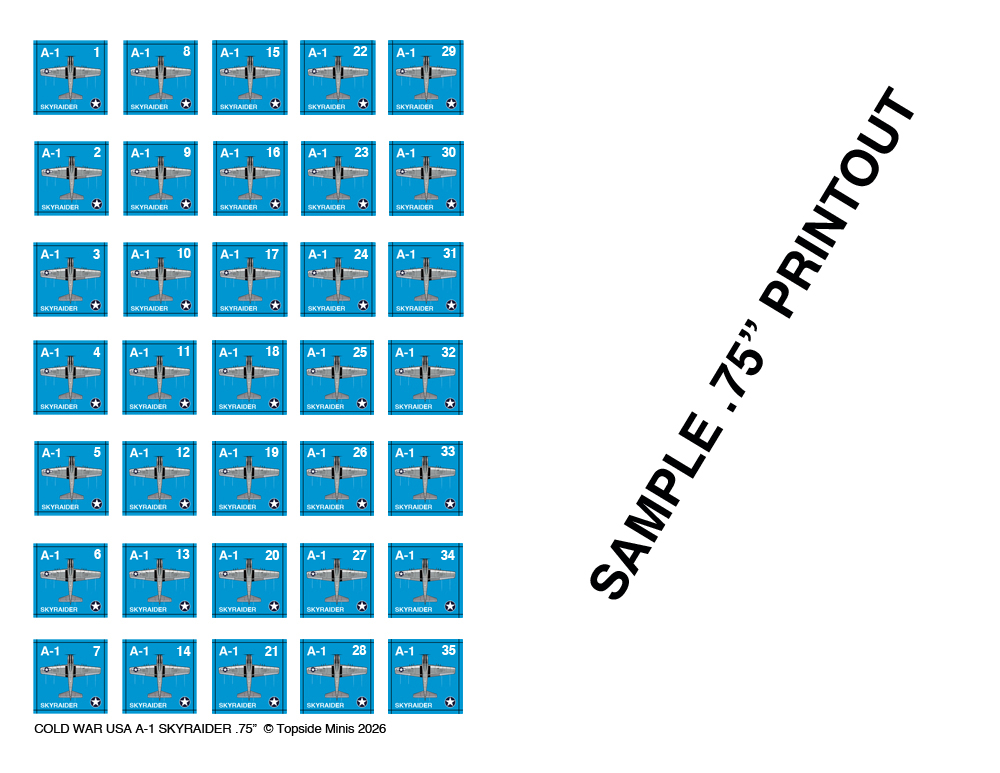
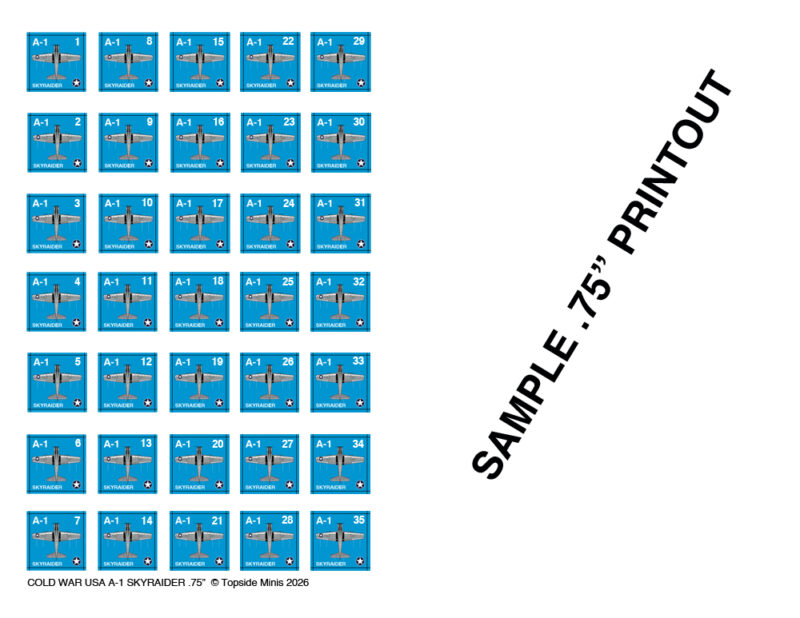
- 35 .75” square counter images
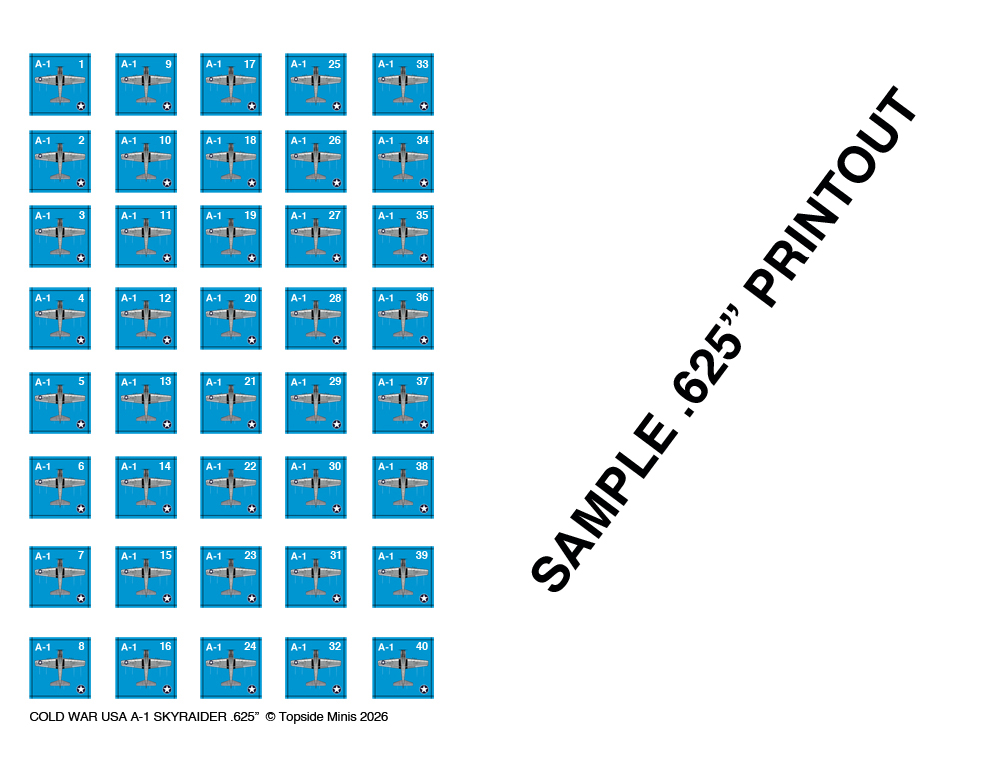
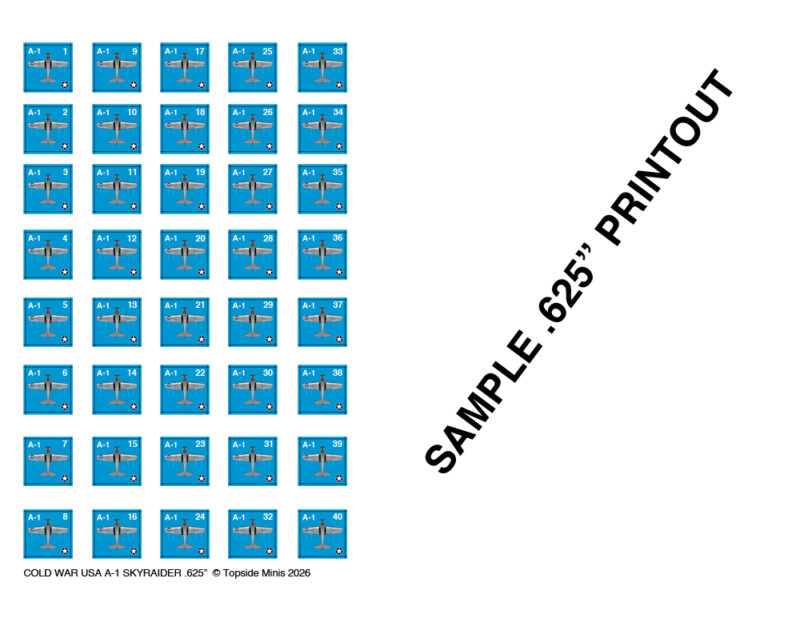
- 40 .625” square counter images
- Numbered Images to assist with game organization and tracking
- Printable PDF format for personal gaming use
Each image size is contained on a ½ sheet.
- Enables users to save paper and print 2 types of aircraft on the same page.
- Print one set of aircraft images then reverse the page in the printer and print a second type of your choice on the same page.
| Weight | N/A |
|---|---|
| Paper Size | A4 210 × 297 mm, Letter 8.5 x 11 |
Related products
Cold War Aircraft
Cold War Aircraft
Cold War Aircraft
Cold War Aircraft
Cold War Aircraft
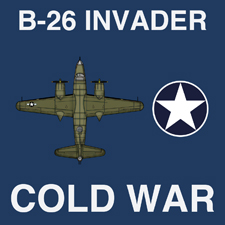
Cold War Aircraft
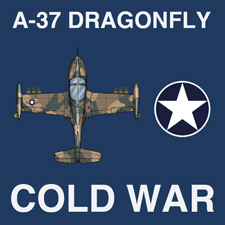
Cold War Aircraft
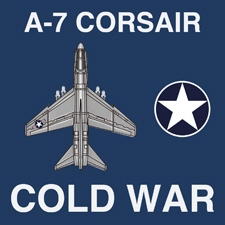
Cold War Aircraft