MiG-21 Fishbed – PDF
$2.45
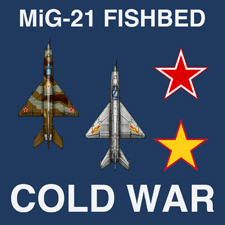
The Mikoyan-Gurevich MiG-21 “Fishbed” was a lightweight Soviet supersonic fighter and interceptor that became one of the most widely produced and widely operated combat aircraft of the Cold War. Serving with the Soviet Union and dozens of allied nations, the MiG-21 saw extensive combat in Vietnam, the Middle East, South Asia, and numerous other conflicts.
| Title | Range | Discount |
|---|---|---|
| Cold War Aircraft - 10% Off | 5 - 9 | 10% |
| Cold War Aircraft - 15% Off | 10 - 19 | 15% |
| Cold War Aircraft - 20% Off | 20 + | 20% |
The Mikoyan-Gurevich MiG-21 “Fishbed” was developed during the 1950s as the Soviet Union sought a lightweight fighter combining supersonic speed, rapid climb, and effective interception capability in a relatively simple and economical aircraft. Its distinctive delta wing, nose-mounted air intake, and compact design produced a fighter capable of Mach 2 performance while remaining suitable for large-scale production and operation from comparatively basic airfields. The MiG-21 entered Soviet service around the end of the 1950s and quickly became one of the principal fighters of both the Soviet Air Forces and Soviet Air Defense Forces.
The MiG-21 was produced in numerous variants and continually improved with more capable radar, engines, missiles, fuel capacity, and avionics. Its relatively low cost and straightforward construction also made it an ideal aircraft for export. MiG-21s equipped Warsaw Pact nations and Soviet-aligned air forces throughout Asia, Africa, and the Middle East, while licensed production in Czechoslovakia and India further expanded the aircraft’s enormous worldwide presence.
The Fishbed achieved particular prominence during the Vietnam War, where Soviet-supplied MiG-21s served with the Vietnam People’s Air Force. North Vietnamese pilots used the MiG-21 primarily as a fast interceptor, frequently employing ground-controlled interception to attack American strike formations before disengaging. MiG-21s fought U.S. aircraft including the F-4 Phantom II and F-105 Thunderchief and became one of the principal aerial opponents encountered by American pilots over North Vietnam.
The MiG-21 also saw extensive combat in the Arab-Israeli conflicts, the Indo-Pakistani wars, and numerous regional conflicts in Africa and Asia. Although later Soviet fighters such as the MiG-23 and MiG-29 eventually replaced it in front-line service, the Fishbed remained operational in several countries for decades. Its enormous production run, worldwide distribution, and extensive combat history make the MiG-21 one of the defining fighter aircraft of the Cold War.
Service Branch: Soviet Air Forces; Soviet Air Defense Forces; numerous Soviet-allied air forces
Soviet Service: 1959–1991
Number Built: Approximately 10,600 in the Soviet Union; 11,000+ including licensed production
What’s Included:
For both versions of the aircraft
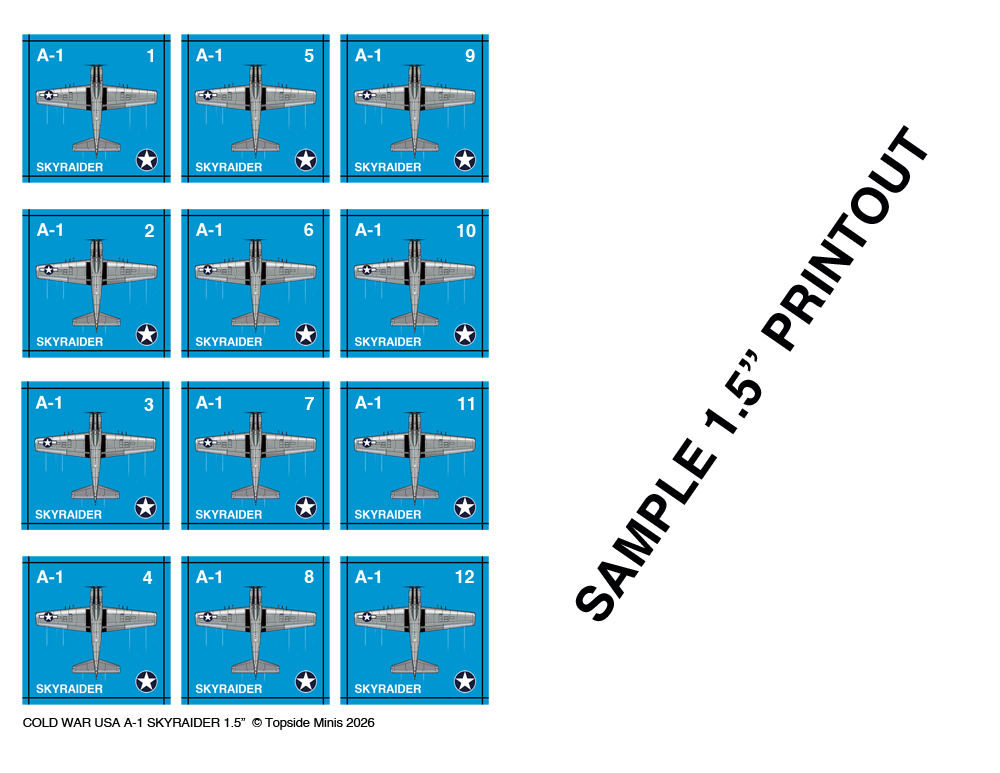
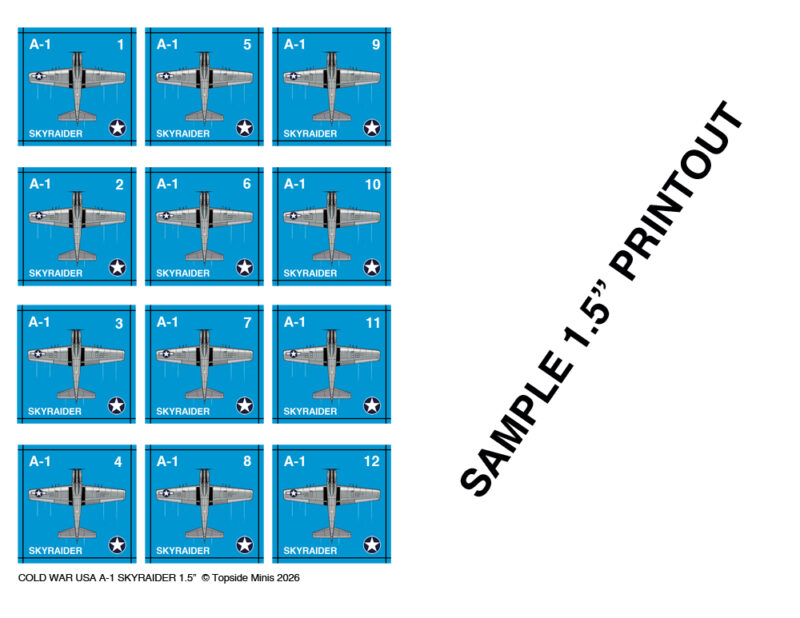
- 12 1.5” square counter images
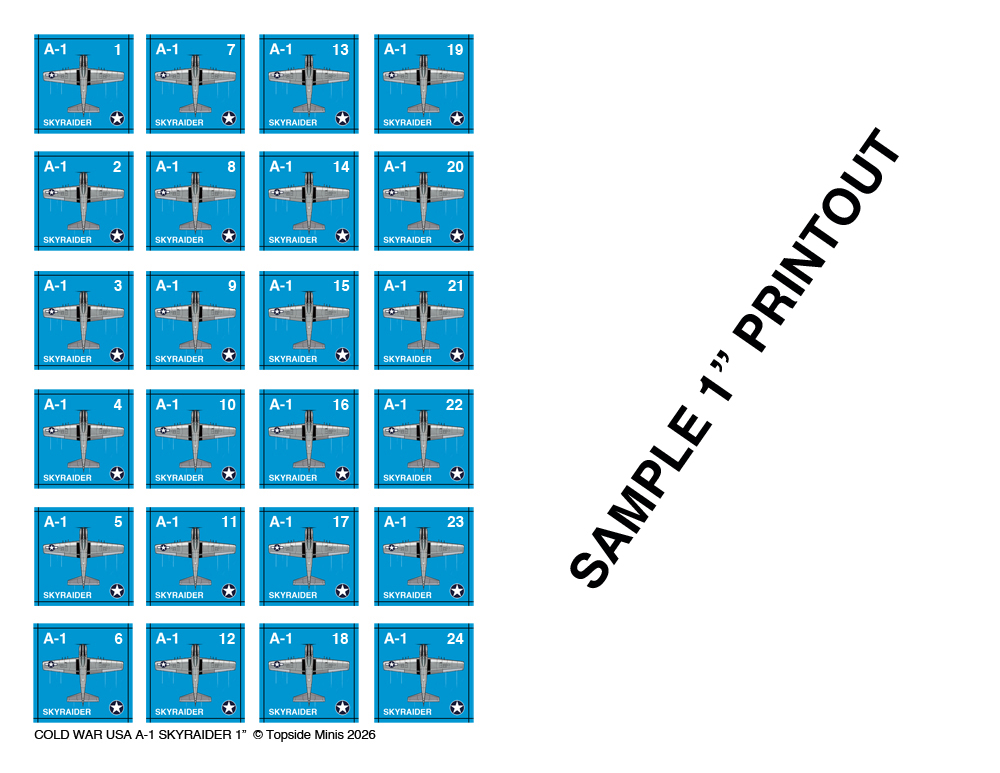
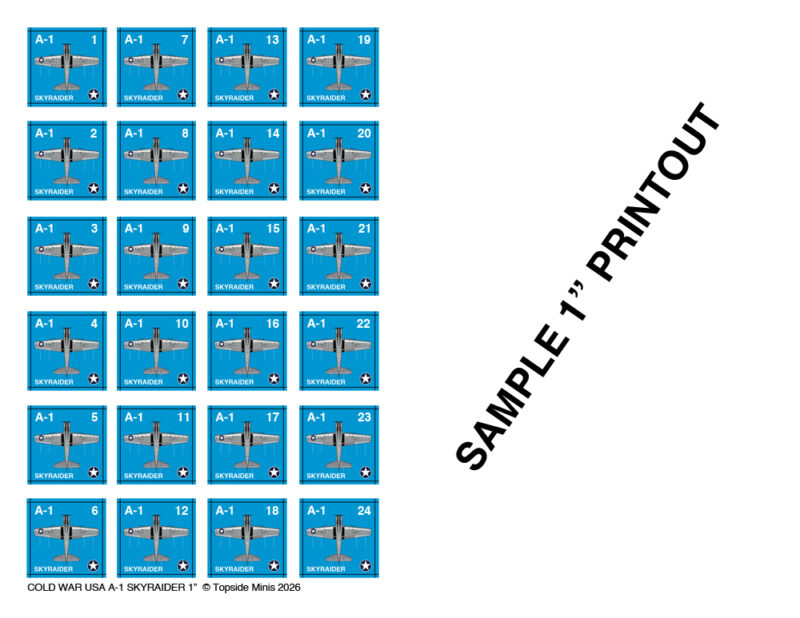
- 24 1” square counter images
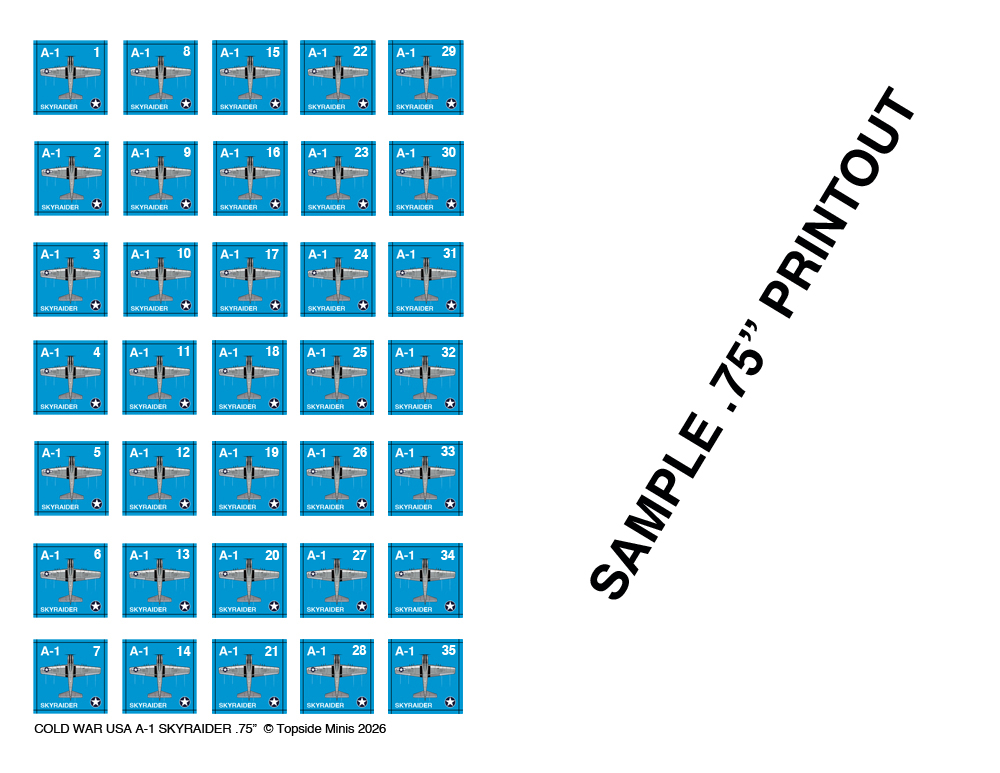
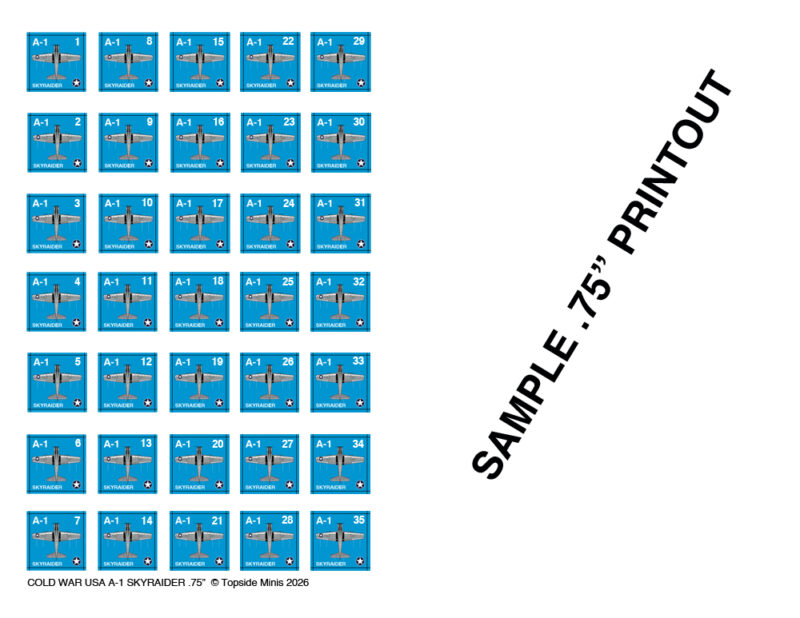
- 35 .75” square counter images
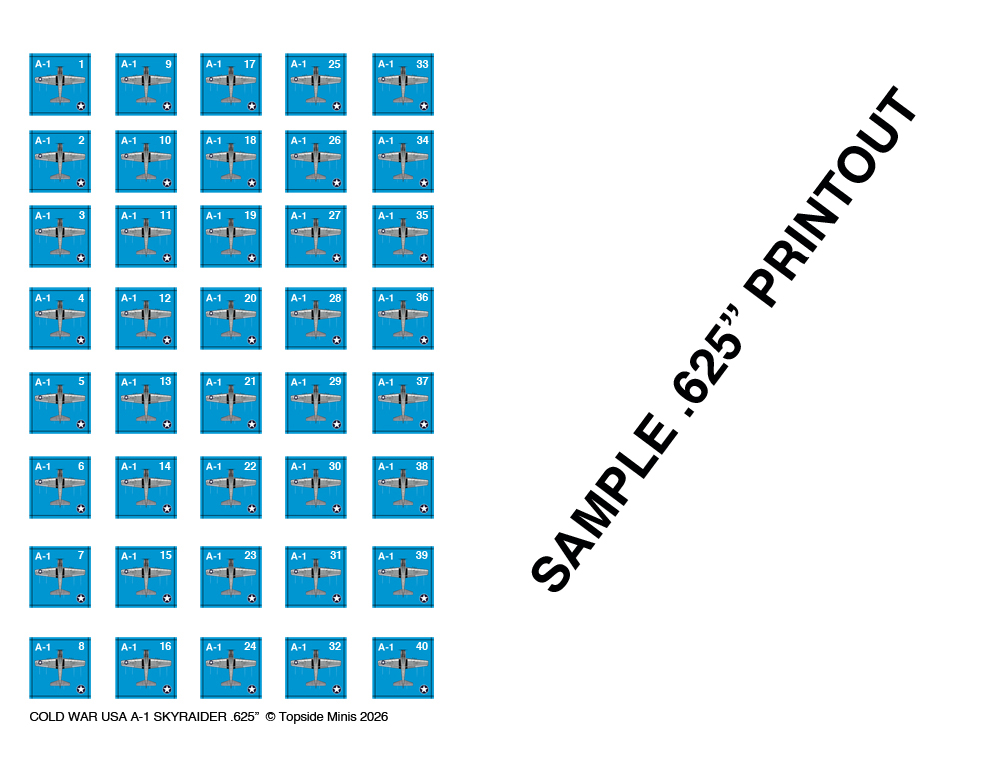
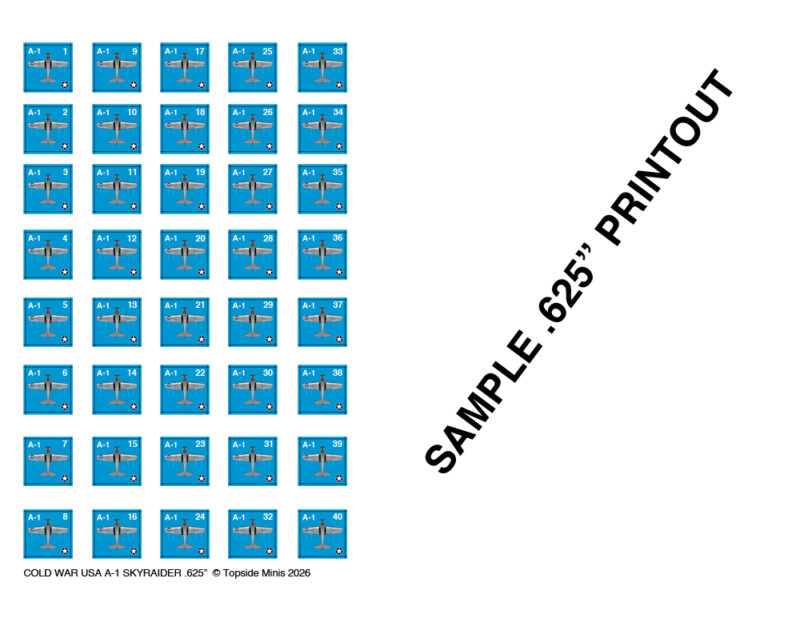
- 40 .625” square counter images
- Numbered Images to assist with game organization and tracking
- Printable PDF format for personal gaming use
Each image size is contained on a ½ sheet.
- Enables users to save paper and print 2 types of aircraft on the same page.
- Print one set of aircraft images then reverse the page in the printer and print a second type of your choice on the same page.
| Weight | N/A |
|---|---|
| Paper Size | A4 210 × 297 mm, Letter 8.5 x 11 |
Related products
Cold War Aircraft
Cold War Aircraft
Cold War Aircraft
Cold War Aircraft
Cold War Aircraft
Cold War Aircraft
Cold War Aircraft
Cold War Aircraft