E-1 Tracer / E-2 Hawkeye – PDF
$2.45
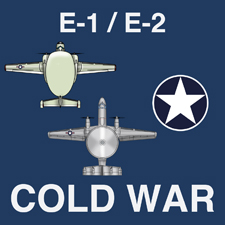
This collection features two of the U.S. Navy’s most important airborne early warning aircraft: the Grumman E-1 Tracer and Grumman E-2 Hawkeye. Designed to detect incoming threats far beyond the fleet, these aircraft provided carrier battle groups with the early warning and command capabilities that became essential to naval operations throughout the Cold War.
| Title | Range | Discount |
|---|---|---|
| Cold War Aircraft - 10% Off | 5 - 9 | 10% |
| Cold War Aircraft - 15% Off | 10 - 19 | 15% |
| Cold War Aircraft - 20% Off | 20 + | 20% |
As aircraft and missile technology advanced during the Cold War, the U.S. Navy recognized the need to detect enemy aircraft and coordinate fleet defenses long before hostile forces reached the carrier task force. To meet this challenge, Grumman Aircraft Engineering Corporation developed a series of airborne early warning aircraft that dramatically extended the fleet’s radar coverage. The E-1 Tracer and its successor, the E-2 Hawkeye, became the eyes of the carrier battle group, providing commanders with the information needed to direct fighter intercepts and coordinate air operations.
The Grumman E-1 Tracer entered service during the late 1950s as the Navy’s first purpose-built carrier-based airborne early warning aircraft. Equipped with a distinctive radar dome mounted above the fuselage, the E-1 provided early detection of approaching aircraft and improved fleet air defense during a period of rapidly increasing Cold War tensions. Although limited by the technology of its era, the Tracer proved the value of airborne radar platforms and laid the foundation for future generations of naval surveillance aircraft.
The Grumman E-2 Hawkeye entered service during the 1960s as a far more capable successor. Featuring a larger rotating radar dome, advanced radar systems, and improved command-and-control capabilities, the Hawkeye became the centerpiece of carrier-based airborne early warning operations. Throughout the Cold War, the E-2 supported U.S. Navy operations around the world, directing interceptor aircraft, managing airspace, and providing long-range surveillance. Continuously upgraded over the decades, the Hawkeye remains in frontline service today and continues to play a critical role in modern naval aviation.
Together, the E-1 Tracer and E-2 Hawkeye illustrate the evolution of airborne early warning technology and the growing importance of battle management, surveillance, and command-and-control in modern naval warfare. Their contributions fundamentally changed how carrier strike groups defend themselves and coordinate air operations.
What’s Included For Each Aircraft:
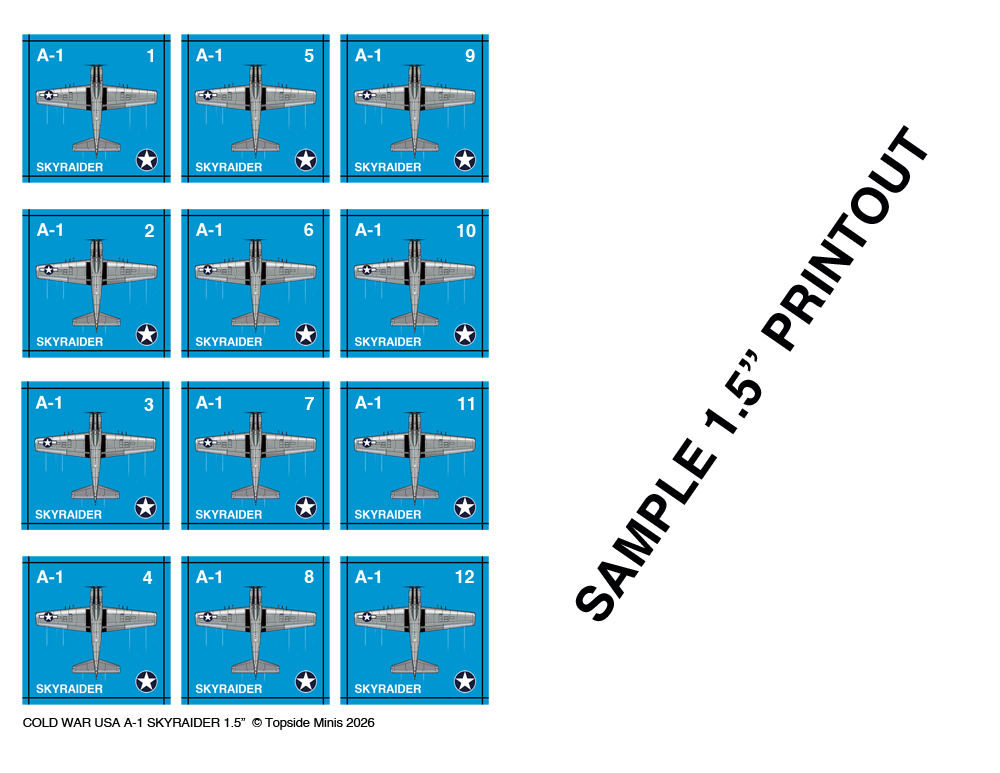
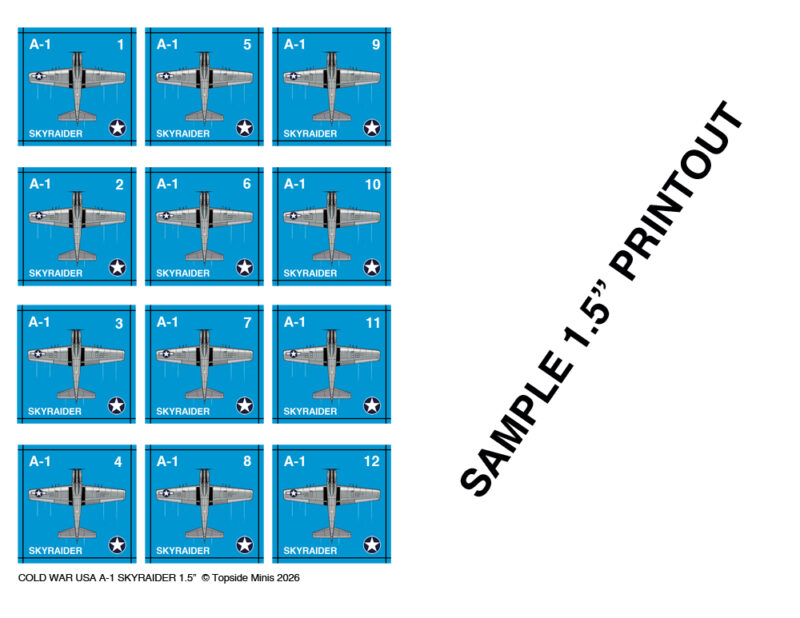
- 6 1.5” square counter images
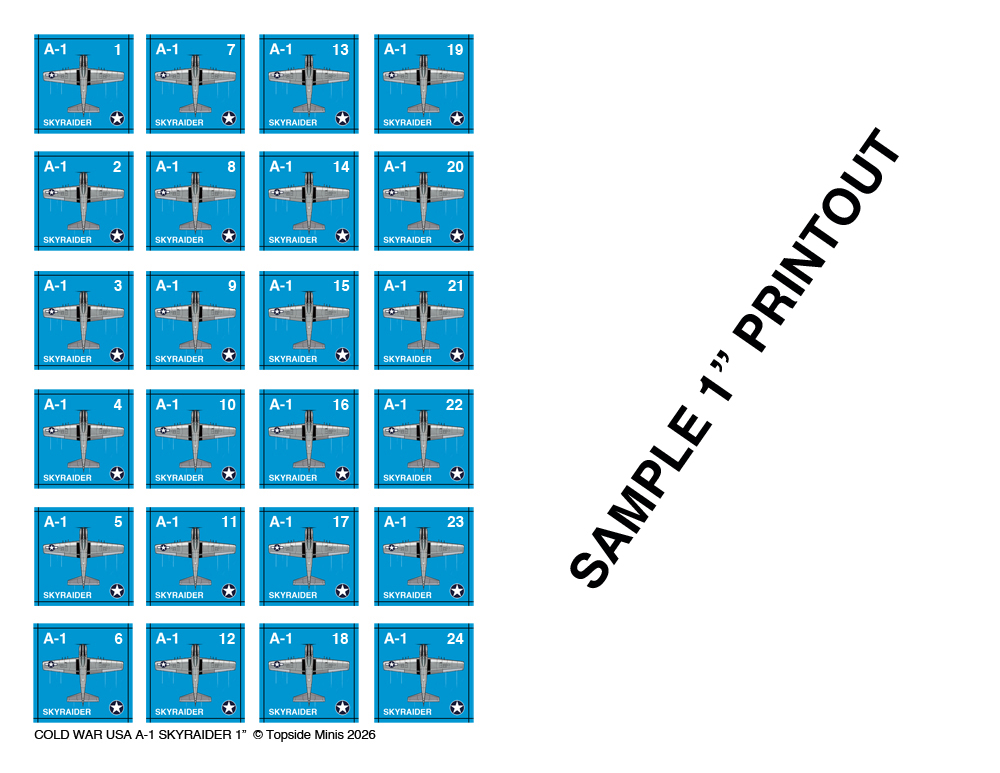
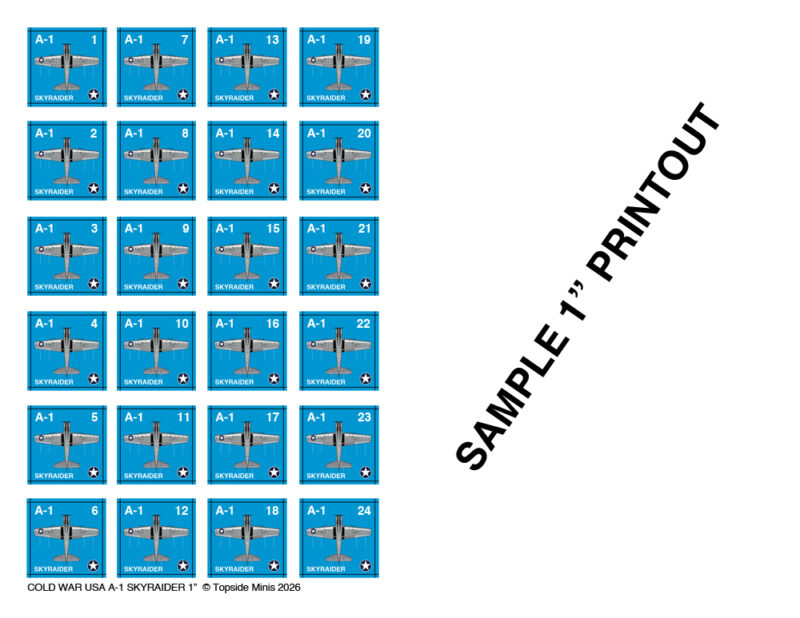
- 12 1” square counter images
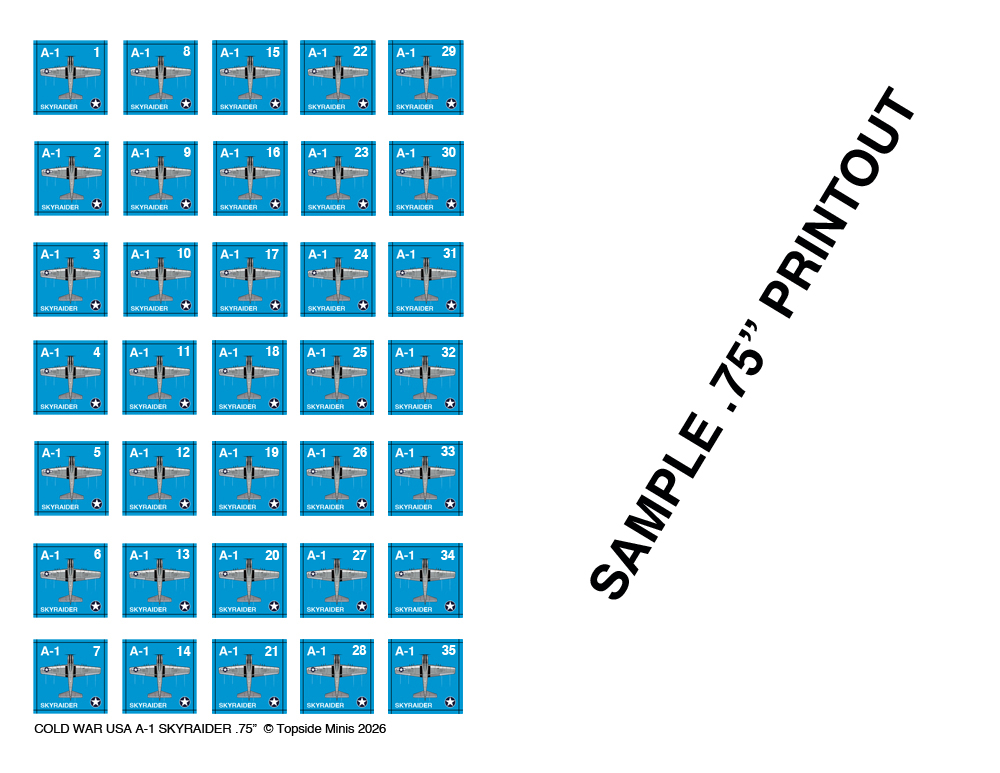
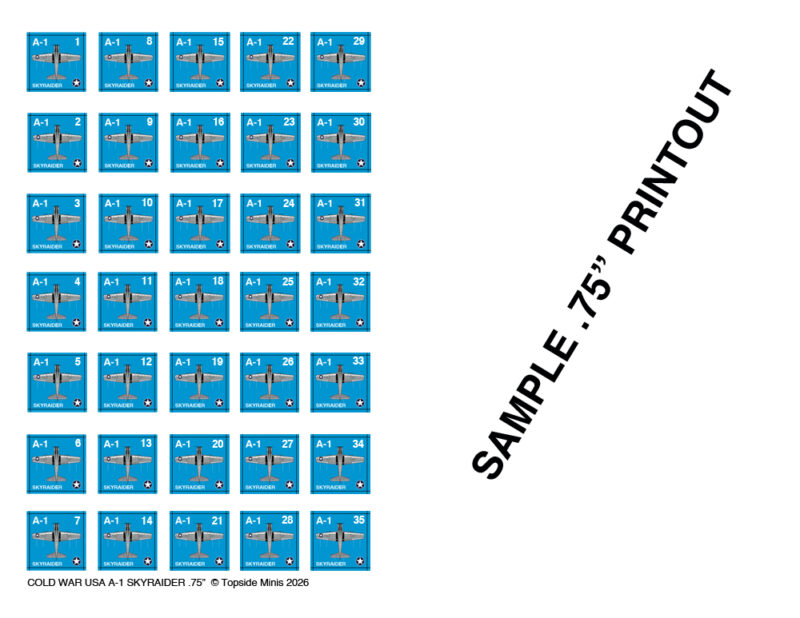
- 17 .75” square counter images
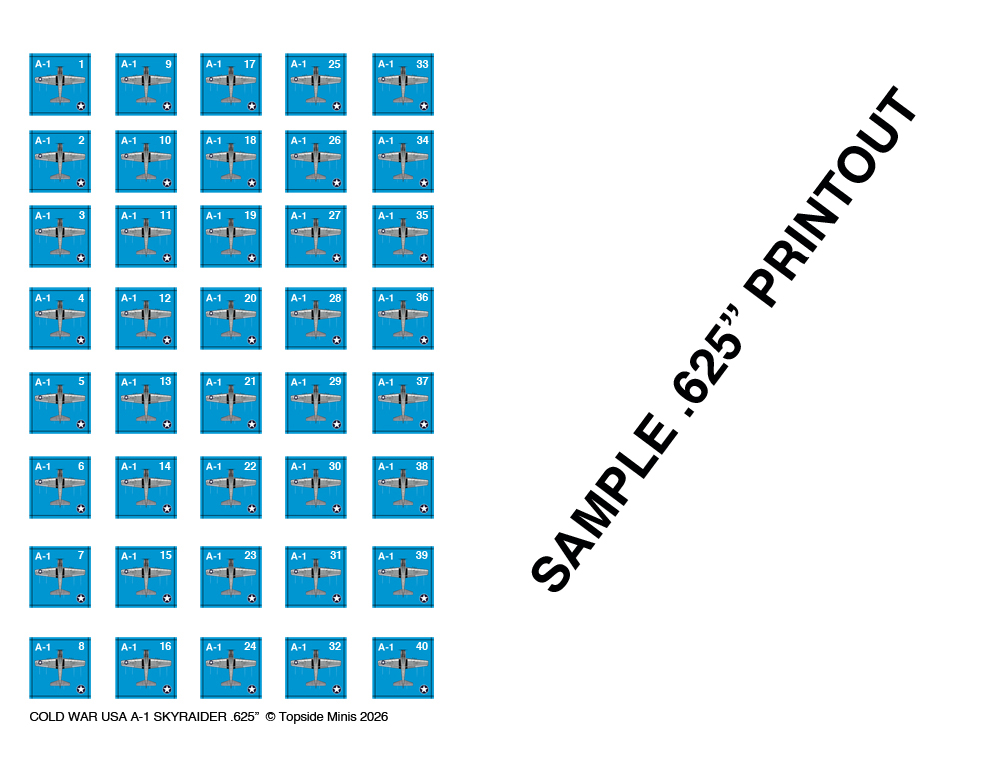
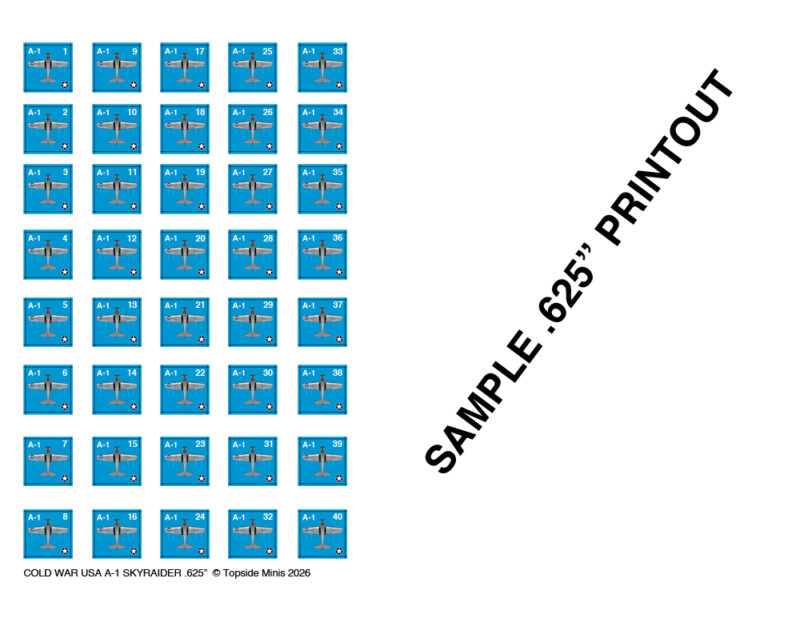
- 20 .625” square counter images
- Numbered Images to assist with game organization and tracking
- Printable PDF format for personal gaming use
Each image size is contained on a ½ sheet.
- Enables users to save paper and print 2 types of aircraft on the same page.
- Print one set of aircraft images then reverse the page in the printer and print a second type of your choice on the same page.
| Weight | N/A |
|---|---|
| Paper Size | A4 210 × 297 mm, Letter 8.5 x 11 |
Related products
Cold War Aircraft
Cold War Aircraft
Cold War Aircraft
Cold War Aircraft
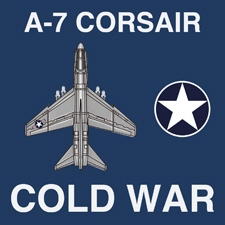
Cold War Aircraft
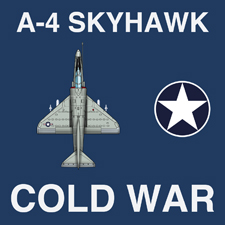
Cold War Aircraft
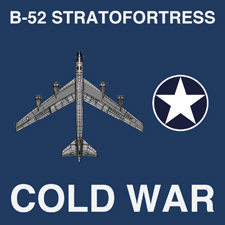
Cold War Aircraft
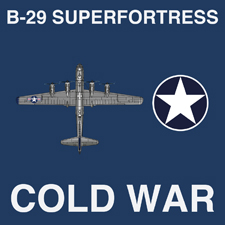
Cold War Aircraft